
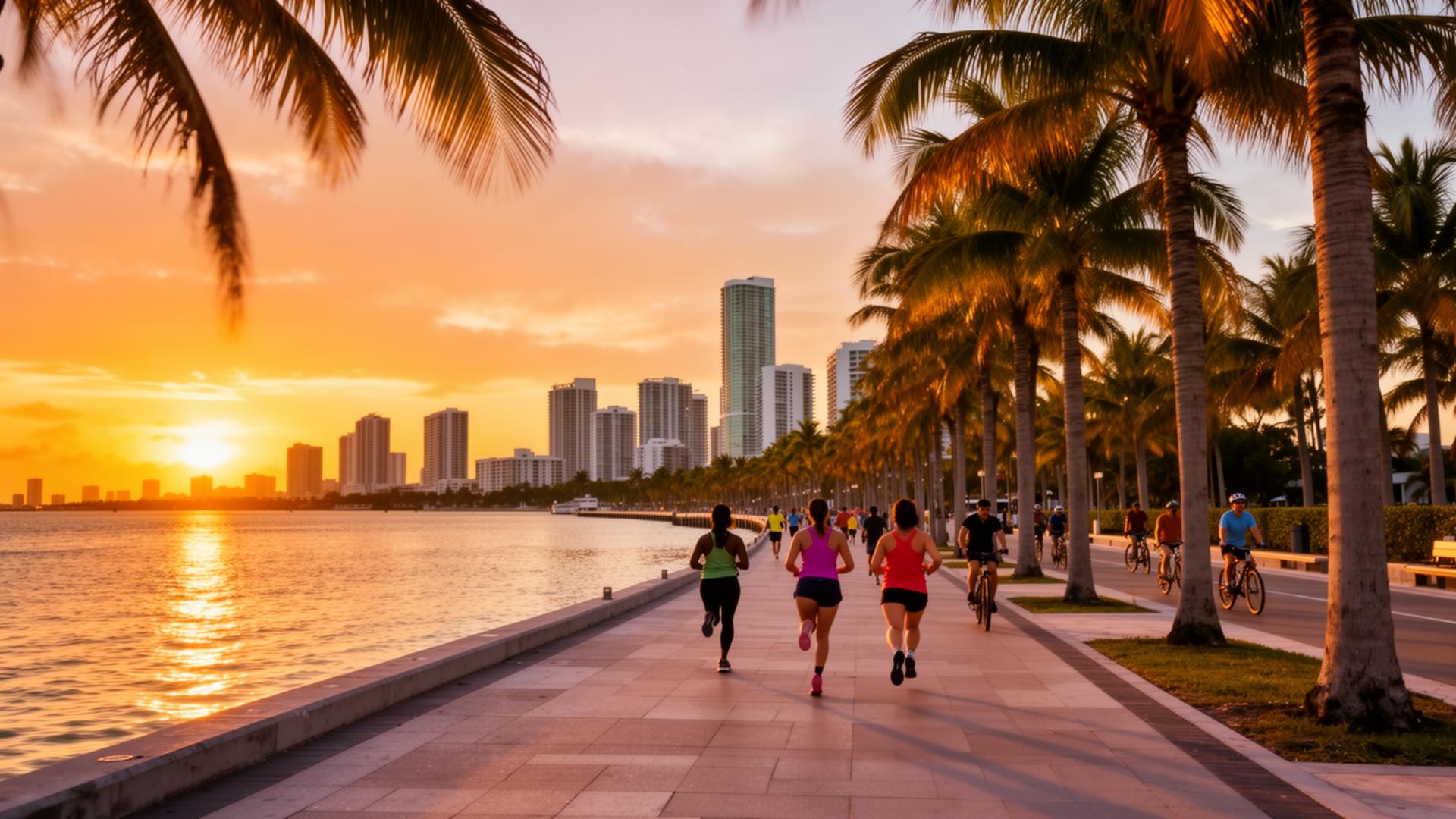
South Miami's urban-suburban real estate mix
Can you get a walkable downtown and a low-rise residential setting in the same Miami-Dade address? In the City of South Miami, largely yes. South Miami is a small municipality between Coral Gables and Pinecrest with a compact commercial core on Sunset Drive served by the Metrorail South Miami station, wrapped by tree-lined single-family streets. It markets itself as "the City of Pleasant Living" and its downtown is walkable enough to run errands on foot [1]. The result is a hybrid: a boutique urban center next to low-density residential blocks, priced above the national average and below Miami's waterfront neighborhoods.
Last updated: July 2026
What the 2026 numbers show
South Miami's market cooled measurably into 2026. Over the three months ending in April 2026, the median sale price was about $921,000, down roughly 21% from the same period a year earlier [2]. Homes also took longer to sell, a median of about 103 days versus 52 days the prior year, while closed volume rose slightly, from 25 sales to 32 in April [2]. Redfin notes South Miami's median sale price runs about 69% above the national average [2].
For a buyer, a double-digit year-over-year price decline paired with longer marketing times means negotiating leverage has shifted and asking prices need to be checked against recent closings. For a seller, it means pricing to the current comp set rather than to last year's peak. Either way, a single quarter's median in a small city can swing on a few high-end sales, so treat the figure as directional and underwrite individual comparables.
The urban-suburban structure
The reason South Miami reads as both urban and suburban is physical. Its central business district on Sunset Drive is compact and transit-served, with the Metrorail station putting Downtown and the airport within a rail ride [1]. Step a few blocks off the commercial core and the housing stock is predominantly low-rise, single-family, on established lots. That contrast, a small walkable center surrounded by residential streets, is the neighborhood's defining feature and the thing pricing is really paying for.
One change worth tracking: the Shops at Sunset Place, the open-air mall that opened in 1999, was approved for demolition and redevelopment in 2025, with plans for a mixed-use, walkable district on the site [1]. Redevelopment of that scale can affect nearby values and construction conditions for years, so buyers near the core should factor it into any hold analysis. Construction disruption during the build period and a larger walkable district afterward pull value in different directions, and the net effect depends on your timeline. If you plan a short hold, the disruption risk weighs more; a longer hold gives the completed district time to season.
Transit and the daily-cost equation
South Miami's Metrorail station on Sunset Drive is part of the underwriting story, not just a lifestyle note [1]. Rail access to Downtown, the health district, and the airport can reduce a household's reliance on a second vehicle, which is a real line item over a hold period. For a buyer weighing South Miami against a car-dependent submarket farther west, factor commuting cost and time into the comparison rather than looking at purchase price alone. The compact, transit-served core is a measurable part of what the median price reflects.
Transit and the daily-cost equation
South Miami's Metrorail station on Sunset Drive is part of the underwriting story, not just a lifestyle note [1]. Rail access to Downtown, the health district, and the airport can reduce a household's reliance on a second vehicle, which is a real line item over a hold period. For a buyer weighing South Miami against a car-dependent submarket farther west, factor commuting cost and time into the comparison rather than looking at purchase price alone. The compact, transit-served core is a measurable part of what the median price reflects.
How South Miami compares to its neighbors
South Miami sits between two higher-priced markets. Coral Gables offers a larger historic municipality with its own commercial districts, and Pinecrest offers larger lots and lower density to the south. South Miami's pitch is the middle ground: smaller lots than Pinecrest, a more compact and transit-served core than most of the Gables, at a median that in early 2026 sat below $1 million [2]. Which of the three fits depends on how much you weight lot size, walkability, and transit access.
Underwriting a purchase here
Because the market softened into 2026 [2], lean on closed comparables from the last two to three quarters, not active asking prices. Confirm the specific parcel's zoning and any proximity to the Sunset Place redevelopment site, and budget for inspection given the age of much of the housing stock. If you are choosing between South Miami and a neighboring city, a formal valuation on target properties will be more useful than a citywide median.
Buyers weighing South Miami against nearby areas can begin with a buyer consultation, and owners considering a sale can get a data-backed home valuation.
What the cooling market means for buyers and sellers
The year-over-year picture in early 2026, a median down about 21% and days on market roughly doubling to about 103, describes a market that has shifted toward buyers relative to a year earlier [2]. For a buyer, that means more inventory to choose from, more time to conduct due diligence, and more room to negotiate on price and terms. It does not mean every listing is mispriced; well-prepared homes in the walkable core still transact, and the small size of the South Miami market means a handful of sales can move the median in either direction.
For a seller, the same data argues for disciplined pricing to current closed comparables and realistic expectations on timeline. Homes priced to last year's peak tend to sit, and sitting inventory in a small market becomes its own signal to buyers. Pricing to the present comp set, presenting the home well, and being prepared for a longer marketing window are the practical responses to the current data. Whether you are buying or selling, the common thread is the same: work from recent closings on comparable South Miami properties rather than from a citywide average or last year's figures.
Frequently asked questions
Is South Miami a walkable neighborhood?
Its downtown on Sunset Drive is compact and served by the Metrorail South Miami station, so many errands can be done on foot, while surrounding residential streets are low-density [1].
What is the median home price in South Miami in 2026?
Over the three months ending April 2026, the median sale price was about $921,000, down roughly 21% year over year [2].
How long do homes take to sell in South Miami?
Recent data shows a median of about 103 days on market, up from about 52 days a year earlier [2].
What is happening with the Shops at Sunset Place?
The 1999 open-air mall was approved for demolition in 2025 and is slated to be redeveloped into a mixed-use, walkable district [1].
How does South Miami compare to Coral Gables and Pinecrest?
South Miami generally has smaller lots than Pinecrest and a more compact, transit-served core than most of Coral Gables, at a median that in early 2026 was below $1 million [2].
Gabriel
Sources
Gabriel A. Moyers, PA. eXp Realty. Florida License #3407280. Equal Housing Opportunity. This article is general information as of July 2026 and is not legal, tax, or financial advice. Verify current figures against authoritative sources before acting.
Thinking of selling your luxury property in Miami? Find out what your home is worth.
Get Your Home ValuationLooking for your dream home in Miami? Take our personalized home search quiz.
Start Your Home Search Quiz