
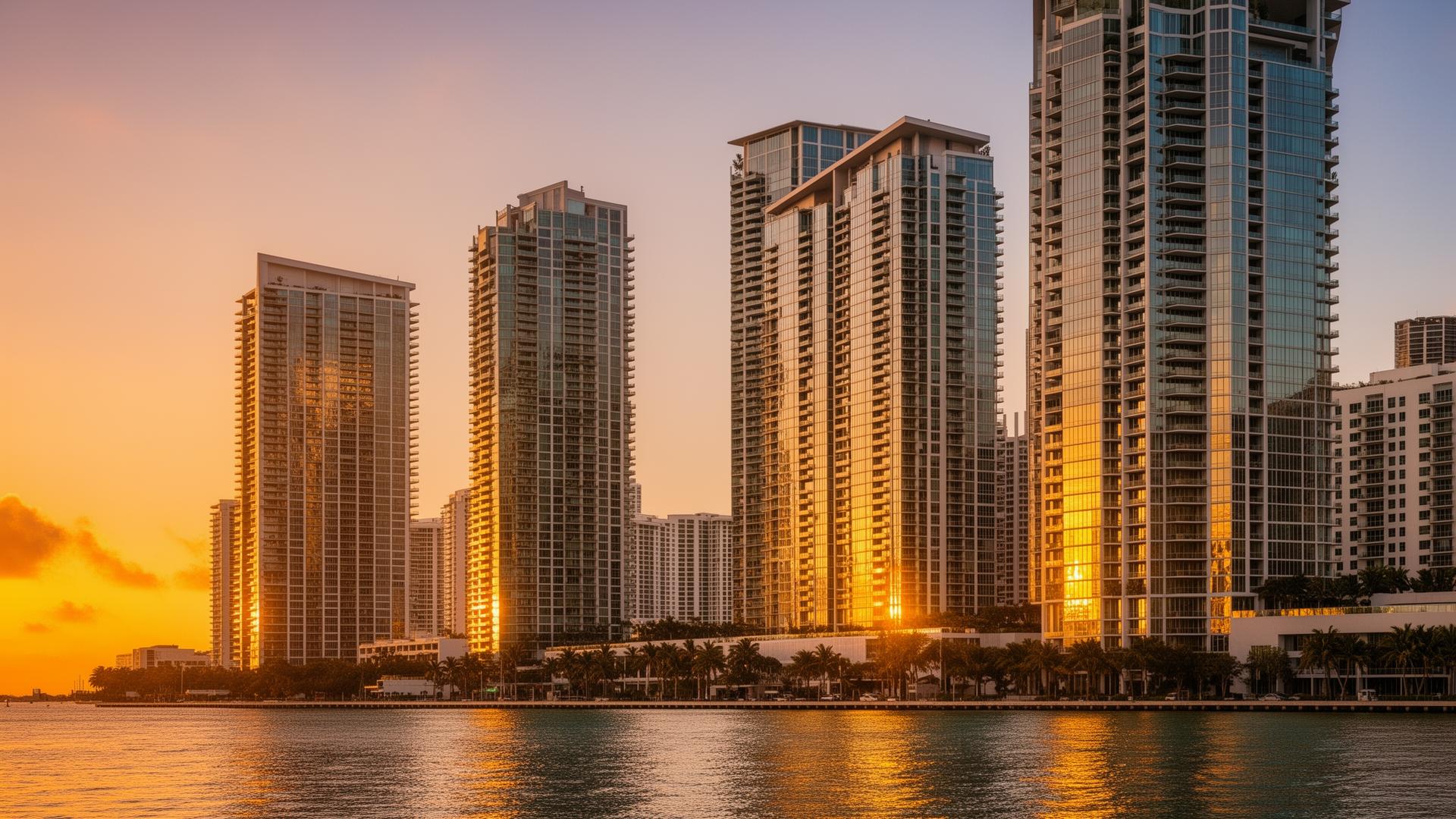
Brickell vs. Downtown Miami: Where to Buy a Condo
Last updated: June 2026
For a condo buyer choosing between Brickell vs. Downtown Miami, the short answer is that the two sit inside the same submarket and trade at similar per-foot pricing, so the decision usually comes down to building age and basis rather than the neighborhood name. As of Q4 2025, the Greater Downtown area (which includes Downtown proper, Brickell, and Edgewater) cleared luxury condos at a median of about $837 per square foot, down 8.3% from a year earlier, with roughly 29 months of inventory and a median of 86 days on market [1]. That is a buyer's market by any standard reading, where 6 to 12 months of supply is considered balanced.
Brickell skews toward newer, amenitized, higher-floor towers, so its per-foot pricing tends to run at or above the Greater Downtown median, while Downtown proper holds more of the older inventory and the more competitively priced units [1]. Neither is categorically the right answer. If you are underwriting the purchase, the more useful split is new construction versus older buildings, because that is what drives carrying costs, financing, and resale risk under Florida's current condo-safety laws. This article walks through pricing, inventory, the financial structure of each, and the questions to ask before you write an offer.
How Brickell and Downtown Miami compare on price
Brickell and Downtown Miami border each other across the Miami River, and most market reports treat them as one Greater Downtown submarket. That matters because headline "Brickell" or "Downtown" numbers you see online often draw from overlapping data sets.
The cleanest current read is the Q4 2025 luxury condo summary, which puts Greater Downtown Miami at a median of about $837 per square foot, down 8.3% year over year [1]. Within that submarket, Downtown proper held the more competitively priced luxury units, while Brickell's newer towers pulled its per-foot pricing toward the higher end of the range [1]. Across the broader Miami luxury condo market, the median sale price was roughly $1.78 million at about $1,011 per square foot in Q4 2025, which tells you the Greater Downtown submarket was trading below the citywide luxury average [1].
A practical takeaway: a dollar of budget buys similar square footage in either neighborhood. What changes is the building. In Brickell you are more often paying for newer construction, structured parking, and amenity packages. In Downtown you more often find older buildings priced to move, which can be an opportunity or a liability depending on the building's reserves and inspection status.
Inventory and negotiating leverage
Both neighborhoods favored buyers as 2025 closed. Greater Downtown Miami carried about 29 months of luxury condo inventory in Q4 2025 with a median 86 days on market, and the broader Miami luxury condo market sat near 23 months of supply [1]. For comparison, a balanced market runs 6 to 12 months. At these levels, sellers have limited leverage and buyers have room to negotiate on price, closing costs, and contingencies.
This is a meaningful shift from the pandemic-era runup, and it changes how you should approach an offer. With months of standing inventory, there is rarely a reason to waive an inspection, skip a reserves review, or stretch on price. If you want to model your own buy in either neighborhood, my buyer consultation page walks through how I underwrite a Miami condo before writing an offer.
The real fork: new construction vs. older buildings
The Brickell vs. Downtown Miami question is usually less important than the new-versus-old question, because Florida's condo-safety laws now drive a real cost difference between the two.
After the 2021 Surfside collapse, Florida enacted milestone-inspection and reserve requirements that apply to condominium buildings three habitable stories or taller. A building must complete its initial milestone structural inspection by the year it turns 30 (or 25 in some coastal locations), performed by a licensed architect or engineer [2][3]. Associations must also complete a Structural Integrity Reserve Study (SIRS), and unit-owner-controlled associations existing on or before July 1, 2022, were required to complete a SIRS by December 31, 2025 [3]. House Bill 913, effective July 1, 2025, refined these rules, including raising the reserve-study cost threshold for covered components from $10,000 to $25,000 and giving boards added funding flexibility [3].
Why this matters to a buyer: associations can no longer waive reserves for structural items like roofs, foundations, and load-bearing walls, and older buildings that deferred maintenance for years are now funding it through higher monthly dues or special assessments. Newer Brickell towers generally carry less of this risk because they are years away from their first milestone inspection. Older Downtown buildings can be priced attractively precisely because the market is discounting that exposure. A low purchase price on an under-reserved building is not a discount if a six-figure special assessment is coming.
Questions to ask in either neighborhood
Before you commit in Brickell or Downtown, request and read these from the association:
- The milestone inspection report, if the building has reached the age that requires one.
- The completed SIRS and the current reserve balances.
- Minutes from recent board meetings, which often reveal pending assessments.
- The current budget and any assessment history from the past three years.
These documents tell you more about your true cost of ownership than the listing price does.
Lifestyle and use case
Setting aside the financials, the two neighborhoods do have different day-to-day characters, and that should factor into a primary-residence purchase.
Brickell functions as Miami's financial corridor, with a dense concentration of offices, restaurants, and retail anchored by Brickell City Centre, plus direct Metromover and Brickell Metrorail access. It tends to suit buyers who want walkability and a live-work setup.
Downtown Miami leans toward arts and culture, with the Adrienne Arsht Center, Bayfront Park, and continued development around the waterfront and the rail corridor. Entry pricing in older Downtown buildings can be lower, which appeals to first-time buyers and to investors watching basis.
For owner-occupants, pick the neighborhood whose daily rhythm fits your life. For investors, the building's financials and rental rules should outweigh the neighborhood label.
Which one is the better buy?
There is no single winner. As of June 2026, both neighborhoods are buyer's markets at similar per-foot pricing within the same Greater Downtown submarket [1]. The better buy is the specific building with sound reserves, a clean or completed milestone inspection, and a price that reflects any deferred maintenance, regardless of whether the address says Brickell or Downtown.
If you are weighing newer Brickell construction against an older, lower-basis Downtown unit, run both through the same underwriting: purchase price, monthly dues, reserve health, inspection status, and likely assessments. The one with the lower all-in cost of ownership, not the lower sticker price, is usually the better buy.
You can browse current inventory on my Miami luxury homes for sale page, and if you already own and are weighing a sale, the listing valuation tool gives you a current read on your unit.
Frequently asked questions
Is Brickell more expensive than Downtown Miami?
On a per-square-foot basis they are close, because both sit in the same Greater Downtown submarket, which traded at a median of about $837 per square foot in Q4 2025 [1]. Brickell skews higher because it holds more newer, amenitized towers, while Downtown proper holds more of the competitively priced older inventory [1].
Is it a good time to buy a condo in Brickell or Downtown Miami?
As of Q4 2025, the Greater Downtown submarket carried about 29 months of inventory with a median 86 days on market, which is a buyer's market [1]. That gives buyers room to negotiate, though the right answer still depends on the specific building's financials and your own timeline.
How do Florida's condo laws affect a Brickell or Downtown purchase?
Buildings three habitable stories or taller must complete a milestone structural inspection by the year they turn 30 (25 in some coastal areas) and a Structural Integrity Reserve Study, with associations no longer able to waive reserves for structural components [2][3]. This raises carrying costs in older buildings, so review the inspection report and reserve study before buying.
Should I buy a newer or older condo in this area?
It depends on basis and risk tolerance. Newer Brickell towers generally carry less near-term inspection and assessment exposure, while older Downtown buildings can be priced lower to reflect that exposure. Read the SIRS and assessment history before deciding, because a low price on an under-reserved building can cost more over time.
What documents should I review before making an offer?
Request the milestone inspection report (if applicable), the completed SIRS, current reserve balances, recent board minutes, the budget, and the three-year assessment history. These reveal your true cost of ownership more accurately than the listing price.
A note before you decide
If you want a building-by-building read on Brickell versus Downtown, including reserve health and likely assessments, reach out and we can underwrite a few specific options together. No pressure and no timeline on my end.
Gabriel
Sources
Gabriel A. Moyers, PA. eXp Realty. Florida License #3407280. Equal Housing Opportunity. This article is general information as of June 2026 and is not legal, tax, or financial advice. Verify current condo figures against the latest Miami market reports and current Florida condominium statutes before acting.
Thinking of selling your luxury property in Miami? Find out what your home is worth.
Get Your Home ValuationLooking for your dream home in Miami? Take our personalized home search quiz.
Start Your Home Search Quiz