
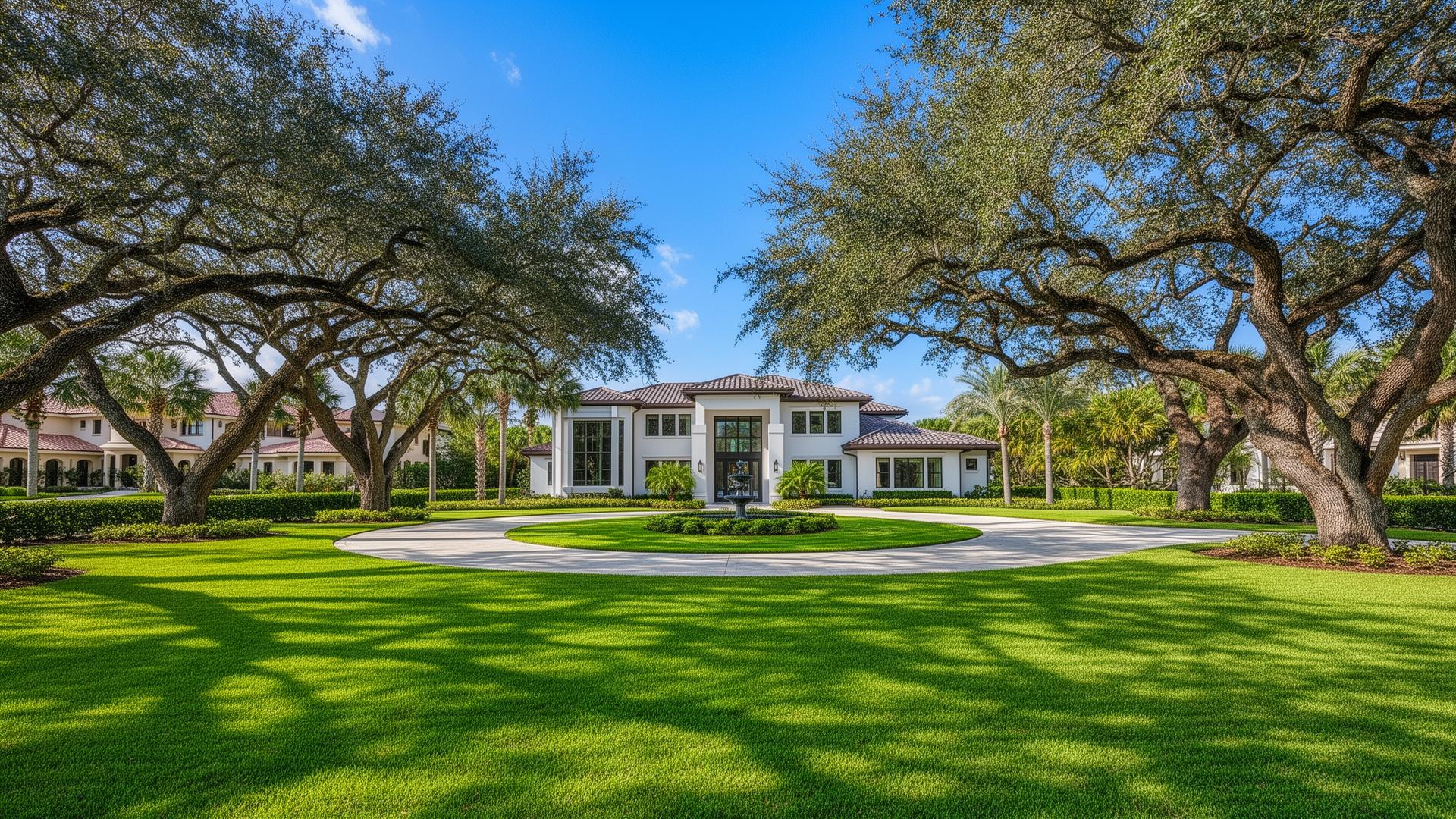
Building a Custom Home in Pinecrest: Zoning, Lot Size, and Design
Last updated: June 2026
Building a custom home in Pinecrest starts with three questions: which zoning district your lot sits in, what that district allows you to build, and how the numbers underwrite. Pinecrest is governed by the Village's own land development code, not generic Miami-Dade rules, and its residential districts range from one-acre estate parcels down to standard single-family lots. The estate districts (EU-1) require a minimum of one acre, roughly 43,560 square feet, per principal dwelling, while the EU-S district requires a minimum of 25,000 gross square feet, and the RU-1 district requires a minimum of 7,500 net square feet [1]. Before you commit to a lot, confirm its exact district and the setbacks, lot coverage, and height limits attached to it, because those constraints set the buildable envelope and, with it, the value you can create.
On the money side, South Florida custom construction commonly runs in the range of roughly $350 to $800 or more per square foot for hurricane-code building, depending on finishes and complexity [2]. Pinecrest's own resale market, where a finished custom home eventually competes, carried a median sale price in the low millions as of early 2026 [3]. Below is how the zoning, the review process, and the underwriting fit together, framed as an investment decision rather than a dream-home checklist.
Step one: confirm the zoning district and buildable envelope
Pinecrest's residential land is split across several districts in Chapter 30 of the Village code. The practical differences come down to minimum lot area and the resulting density [1]:
- EU-1 (one-acre estate): minimum one acre (about 43,560 square feet) per principal dwelling unit.
- EU-S: minimum 25,000 gross square feet per principal unit.
- RU-1: minimum 7,500 net square feet.
Two lots that look similar on a map can sit in different districts, which changes what you can build and how the parcel pencils out. The district determines not just lot area but setbacks, maximum lot coverage, and height, and those together define the buildable envelope. A larger lot in an estate district carries more carrying cost and a higher land basis, but it also supports a larger structure and tends to hold value in a market where land is the scarce input.
The underwriting takeaway: price the land against what the envelope actually allows, not against the square footage you wish you could build. Pull the zoning designation and the dimensional table for the specific parcel before you write an offer. If you want a second read on what a given lot can support relative to comparable finished homes, a buyer consultation is the place to work through it.
Step two: design within the code, then price it
Custom design in Pinecrest is an exercise in working inside the dimensional limits while still building something the market will pay for. The constraints that typically reshape a design are lot coverage caps, front and side setbacks, and height limits, all of which are set by the parcel's district. A licensed Florida architect and a licensed general contractor are the two professionals who translate the code into a permittable set of plans.
Florida's building code matters here in dollars, not just paperwork. Miami-Dade sits in a High-Velocity Hurricane Zone, so impact-rated openings, structural tie-downs, and wind-load engineering are standard, not upgrades. That is a meaningful part of why South Florida custom builds commonly land in the roughly $350 to $800-plus per square foot range [2]. A 5,000-square-foot home at the middle of that band is a multi-million-dollar hard-cost line before land, soft costs, and finishes are layered in. Build the budget from the code requirements up, not from a national cost-per-foot average down.
For an investment lens, compare your projected all-in basis (land plus hard costs plus soft costs plus carry) against finished-home comps in the same district. If the basis runs well above what comparable completed homes trade for, the spread is your risk. If you are weighing build-versus-buy, an existing home on the Miami luxury homes for sale market may clear the same goal with less execution risk.
Step three: plan review and permitting through the Village
Pinecrest runs its own Building and Planning Department, and permit applications are submitted and tracked through the Village's eTRAKiT system. New single-family construction goes through a full plan review covering structural, mechanical, electrical, and plumbing components, plus zoning compliance against the parcel's district [4]. There is no separate architectural review board approval required for a standard single-family home; the gate is plan review and code compliance, handled by the Building and Planning Department.
Treat the review as a process with a complete-submittal dependency. A complete application that meets code can move through initial permit review on the order of a few weeks, while plans that require revisions or corrections extend the timeline accordingly [4]. The way to protect your schedule is to submit a complete, code-compliant set the first time, which is a function of the team you hire more than the Village's queue.
Across the full arc, land acquisition and design, permitting, construction, and final inspections, owners should plan for a horizon measured in many months to a couple of years rather than weeks, with the exact figure driven by design complexity, the contractor's capacity, and how cleanly the permit set moves through review. Treat any single timeline number as an estimate to verify with your builder against current Village review times, not a guarantee.
How the Pinecrest market frames the decision
Pinecrest is a low-volume, high-value market, which has two consequences for anyone building. First, the median sale price is volatile month to month because only a handful of homes close in any given period, so a single headline number can swing widely; as of early 2026 the median sale price sat in the low-millions range [3]. Second, in a thin market, a finished custom home that fits the neighborhood's scale and quality tends to find a buyer, but it can also sit, since average days on market in Pinecrest have run well above a typical metro pace [3]. For statewide context, Florida's median single-family sale price was about $425,000 as of May 2026 [5], which underscores how far above the state baseline Pinecrest land and homes trade.
For a build, the implication is to design for the district's buyer pool rather than for an outlier. A home that is wildly larger or more idiosyncratic than its comparables carries resale risk that a code-compliant, well-scaled custom home does not. If your aim is eventual resale, knowing your likely exit value before you set the budget is the single number worth having early. A current listing valuation on comparable finished homes gives you that anchor.
Frequently asked questions
What is the minimum lot size to build a single-family home in Pinecrest?
It depends on the parcel's zoning district. Pinecrest's EU-1 estate district requires a minimum of one acre (about 43,560 square feet) per principal dwelling, the EU-S district requires a minimum of 25,000 gross square feet, and the RU-1 district requires a minimum of 7,500 net square feet [1]. Confirm the specific district before relying on any single figure.
Do I need architectural review board approval to build in Pinecrest?
No separate architectural review board approval is required for a standard single-family home. New construction goes through plan review and zoning compliance handled by the Village's Building and Planning Department, submitted through its eTRAKiT permitting system [4].
How much does it cost to build a custom home in Pinecrest?
There is no single number, but South Florida custom construction commonly runs in the range of roughly $350 to $800 or more per square foot for hurricane-code building, depending on finishes and complexity [2]. Land, soft costs, and site work are additional. Build a parcel-specific budget with a licensed contractor rather than relying on a per-foot average.
How long does it take to build a custom home in Pinecrest?
Plan for a horizon measured in many months to a couple of years across acquisition, design, permitting, and construction. A complete, code-compliant permit set can move through initial review on the order of a few weeks, while revisions extend it [4]. Verify current timelines with your builder and the Village.
Is it better to build or buy in Pinecrest?
It depends on your basis versus the finished value. If your all-in cost to build runs near or below comparable finished-home prices, building can make sense; if it runs well above, the spread is risk. Comparing a build budget against current Miami luxury homes for sale is the cleanest way to decide.
Working through the numbers
If you are weighing a Pinecrest lot or a build-versus-buy decision, I am happy to help you pressure-test the basis, the comparable finished values, and the district constraints before you commit. Reach out whenever it is useful.
Gabriel
Sources
Gabriel A. Moyers, PA. eXp Realty. Florida License #3407280. Equal Housing Opportunity. This article is general information as of June 2026 and is not legal, tax, or financial advice. Verify current zoning, lot, and permit requirements against the Village of Pinecrest Code of Ordinances and Building and Planning Department before acting.
Thinking of selling your luxury property in Miami? Find out what your home is worth.
Get Your Home ValuationLooking for your dream home in Miami? Take our personalized home search quiz.
Start Your Home Search Quiz