
Investing in Coconut Grove Real Estate: ROI and Long-Term Value
Last updated: June 2026
A Coconut Grove real estate investment underwrites on three things: an entry price that reflects scarce land, carrying costs you can model in advance, and a price-per-square-foot trend that holds through softer markets. As of June 2026, the median sale price in the neighborhood was about $2.6 million over the trailing three months, with a median price per square foot of roughly $909, up 0.2% year over year [1]. Homes took a median of about 87.5 days to sell [1]. That combination, firm per-foot pricing and a measured pace, is what a long-term owner wants to see: appreciation grounded in value per square foot rather than a fast-flipping market.
The honest read for an investor is that the Grove behaves like a supply-constrained, end-user neighborhood, not a speculative one. Land is limited, much of the housing stock is established, and buyers tend to hold. That profile favors patient capital, total-return underwriting, and a clear view of taxes and insurance before you make an offer. Below is how the numbers work and where the value comes from.
What Coconut Grove pricing looks like right now
Coconut Grove is one of Miami's higher-priced neighborhoods. As of June 2026, Redfin reported a median sale price of roughly $2.6 million over the trailing three months and a median price per square foot of about $909 [1]. The median price figure jumped sharply year over year, but most of that move reflects which homes happened to trade, not uniform appreciation. The steadier signal is price per square foot, up only 0.2% year over year [1]. For underwriting, lean on the per-foot number. It strips out the size and mix effects that make a raw median bounce around.
For context, the broader Miami-Dade single-family median was about $680,000 in May 2026, up 0.74% year over year [2]. The Grove trades at a meaningful premium to the county, which is the point: you are paying for location scarcity, tree canopy, and bay proximity that the county-wide number cannot capture.
Why the neighborhood holds value
Three structural factors support long-term value in the Grove.
Limited land and an established stock
The Grove is largely built out. New construction is constrained by lot availability and by a neighborhood character that resists large-scale density. When supply cannot easily expand, pricing power sits with existing owners. That does not guarantee appreciation in any single year, but it reduces the risk of a supply glut undercutting values, which is the failure mode in neighborhoods that overbuild.
An end-user buyer base
Pricing per square foot that holds steady, paired with a measured days-on-market, points to a buyer pool dominated by people who intend to live in the home rather than trade it quickly [1]. End-user demand is less prone to sudden withdrawal than speculative demand, so prices tend to grind rather than gap down when the broader market cools.
Location and access
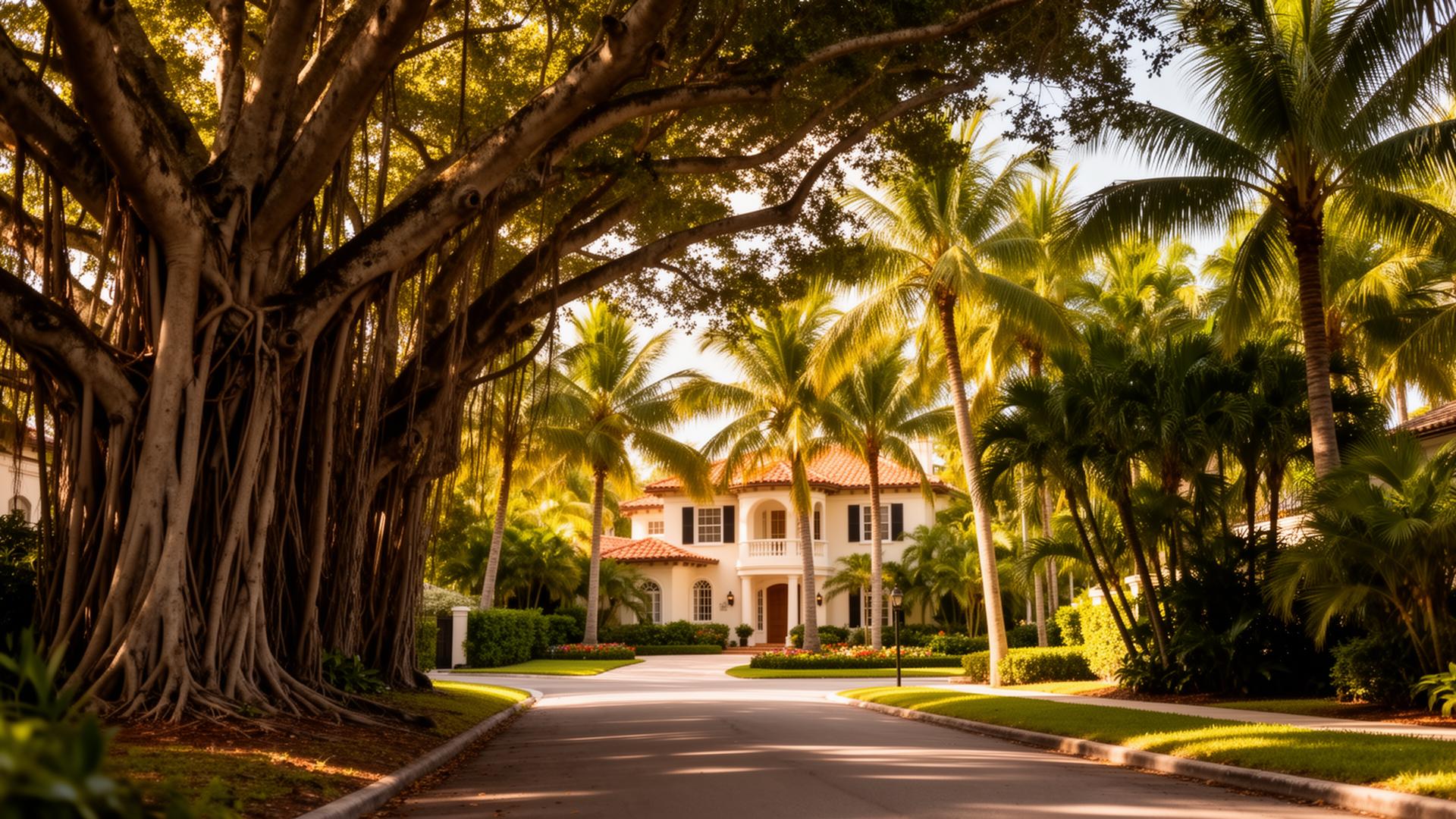
Bay access, walkable village retail, and canopy streets are fixed advantages that cannot be replicated elsewhere in Miami. Fixed advantages are what a long-term hold is built on. They keep the neighborhood on a buyer's short list across market cycles, which supports both resale liquidity and rental demand.
How taxes shape your hold
Florida has no state income tax, but property tax and the homestead rules drive your after-tax return, so model them before you buy.
If you homestead the property as a primary residence, Florida's Save Our Homes provision caps the annual increase in your assessed value at 3%, or the change in the Consumer Price Index, whichever is lower [3]. For 2026, that CPI-based cap is 2.7% [4]. The cap applies to assessed value, not market value, so over a long hold the gap between what the home is worth and what it is taxed on can widen in your favor. That gap is a real, quantifiable part of total return on a primary residence, and Florida's portability rules let you carry a portion of the accrued benefit to your next Florida homestead [3].
For a pure investment property that you do not homestead, you do not get the 3% cap, and assessed value can track market value more closely. That is a different underwriting case, and it is worth running the property-tax line both ways before deciding how to hold title. If you want a current, address-specific picture of value before you model taxes, a listing valuation is the cleanest starting point.
Insurance and carrying costs
Insurance has been the swing variable in Florida underwriting for several years, and the direction has recently turned. For the 2026 cycle, Citizens Property Insurance recommended a statewide average rate decrease of about 2.6% for personal-lines policies, with the recommended rates taking effect June 1, 2026 after regulatory review [5]. Roughly three in five Citizens policyholders were set to see an average reduction of about 11.5% [5].
This matters for a Coconut Grove hold in two ways. First, insurance is a meaningful line in your annual carry, especially for older or waterfront-adjacent homes, so a stabilizing market improves net yield. Second, do not underwrite on a single year. Get a real quote for the specific structure, factor in wind and flood exposure by location within the neighborhood, and stress-test the carry against a higher-premium year. The recent direction is favorable, but coastal South Florida insurance remains property-specific.
How to underwrite a Coconut Grove purchase
A disciplined approach for this neighborhood looks like this:
- Anchor your value on price per square foot for comparable homes, not on a headline median that mixes property sizes [1].
- Model the full carry: property tax (homestead or not), insurance, and any HOA or maintenance, then compare against realistic rent or your own use value.
- Treat days on market as a liquidity signal. A measured pace, around 87.5 days as of June 2026, means you should price offers and exits with patience rather than urgency [1].
- Decide your hold horizon up front. The Grove rewards multi-year ownership through the tax cap and steady per-foot pricing, not short flips.
If you are weighing a purchase, a structured buyer consultation can translate these inputs into an offer range for a specific property. If you already own in the Grove and are deciding whether to hold or sell, the same math runs in reverse when you sell your Miami home.
Frequently asked questions
Is Coconut Grove a good real estate investment in 2026?
It underwrites as a supply-constrained, end-user neighborhood rather than a speculative one. As of June 2026, the median price per square foot was about $909, up 0.2% year over year, with a measured days-on-market near 87.5 days [1]. That profile favors patient, multi-year holds over short-term flips.
What is the median home price in Coconut Grove?
As of June 2026, Redfin reported a median sale price of roughly $2.6 million over the trailing three months [1]. Because that median is sensitive to which homes traded, the steadier figure to underwrite against is price per square foot, about $909 [1].
How does Florida's Save Our Homes cap affect my return?
If you homestead the property, Save Our Homes caps the annual increase in your assessed value at 3%, or CPI, whichever is lower [3]. For 2026 that cap is 2.7% [4]. The cap applies to assessed value, not market value, so over a long hold your tax base can rise more slowly than the home's worth.
Are Florida insurance costs still a concern for Coconut Grove buyers?
Direction has improved. Citizens recommended a statewide average personal-lines rate decrease of about 2.6% for 2026, effective June 1, 2026 [5]. Even so, premiums are property-specific in coastal South Florida, so get a real quote for the exact structure and stress-test the carry.
Should I hold a Coconut Grove property as a homestead or a pure investment?
The two cases underwrite differently. A homestead earns the 3% assessment cap and portability; a non-homesteaded investment property does not, so its assessed value can track the market more closely [3]. Run the property-tax line both ways before deciding how to hold title. You can compare scenarios or read more on the blog.
Working with Gabriel
If you want to pressure-test a Coconut Grove purchase or sale against current numbers, reach out. I am happy to run the carry, pull comparable per-foot pricing, and map a realistic hold for your situation. No pressure, just the math.
Gabriel
Sources
Gabriel A. Moyers, PA. eXp Realty. Florida License #3407280. Equal Housing Opportunity. This article is general information as of June 2026 and is not legal, tax, or financial advice. Verify current figures against Redfin, the Miami-Dade County Property Appraiser, and the Florida Office of Insurance Regulation before acting.
Thinking of selling your luxury property in Miami? Find out what your home is worth.
Get Your Home ValuationLooking for your dream home in Miami? Take our personalized home search quiz.
Start Your Home Search Quiz