
Pinecrest Home Values: What Holds Them Steady in 2026
Last updated: June 2026
Pinecrest home values have stayed firm because the village pairs scarce, large-lot supply with steady demand from buyers who want space and the local school catchment. As of November 2025, the median sale price in Pinecrest was about $3.4 million, with a median of roughly $779 per square foot, according to Redfin [1]. For comparison, the Miami-Dade County median sale price was about $575,000 as of March 2026, with a median near $397 per square foot [2]. Pinecrest trades at a wide premium to the county because the inputs that set its value, lot size and location, are effectively fixed.
If you own in Pinecrest, the practical takeaway is that your basis is supported less by short-term sales velocity and more by the structural scarcity of estate-sized parcels. If you are buying, the underwriting question is not whether Pinecrest is expensive (it is), but whether the lot, the catchment, and the rebuild-or-renovate math justify the per-square-foot number you are paying. This post walks through the value drivers, the data behind them, and the limits of that data, so you can price a decision rather than a narrative.
What sets Pinecrest home values apart
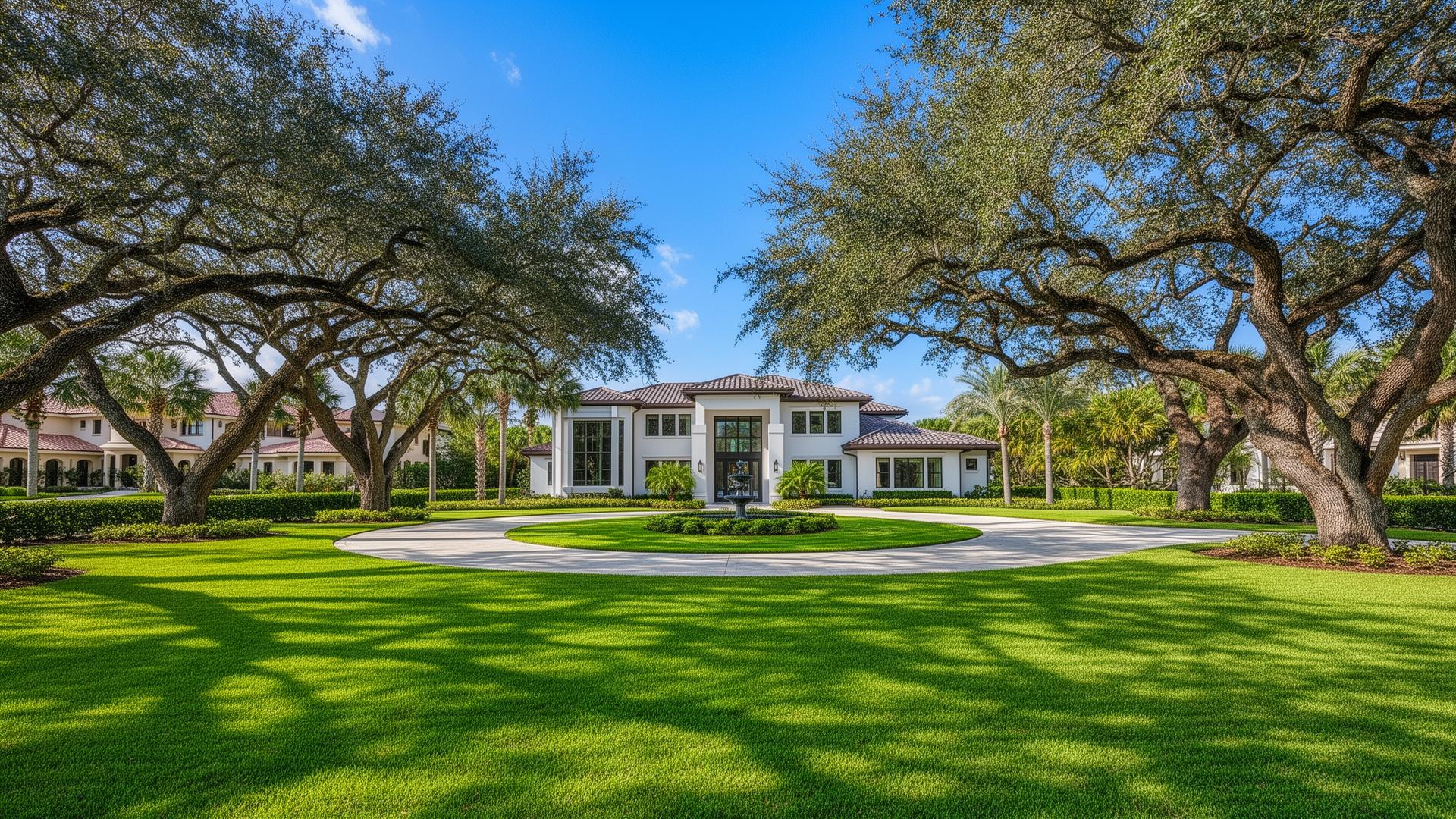
Pinecrest is a low-density residential village in southern Miami-Dade County. Its character comes from large single-family lots rather than condos or townhome density, and that land pattern is reinforced by the Village of Pinecrest land development code, which governs the residential estate zoning districts [3]. Because the buildable land is largely built out, new supply mostly comes from teardowns and rebuilds on existing parcels, not from new subdivisions. Fixed land plus limited turnover is the core reason values hold.
That structure shows up in the price-per-square-foot gap. Pinecrest's roughly $779 per square foot as of November 2025 [1] sits well above the Miami-Dade County figure of about $397 as of March 2026 [2]. Part of that premium is the house, but a large part is the dirt underneath it. When you buy in Pinecrest, you are underwriting land value first and improvements second.
Large lots and the land-value floor
The estate-lot pattern matters for value retention because land does not depreciate the way a structure does. On a large parcel, even a dated house can carry value through its lot, which gives owners a renovate-or-rebuild option that smaller-lot neighborhoods do not offer. For an investor or a long-hold owner, that optionality is part of why a basis here tends to hold its floor through softer cycles.
School catchment as a demand driver
Demand in Pinecrest is supported by its public school catchment within Miami-Dade County Public Schools. Miami Palmetto Senior High School, which serves the area, is rated 6 out of 10 by GreatSchools as of 2026 [4]. Ratings are one input among many and they change over time, so treat them as a directional signal rather than a guarantee. The durable point for value is that a stable, sought-after catchment keeps a recurring buyer pool pointed at the same finite set of homes.
The 2026 data, and what it does and does not say
Here is the part underwriters care about: the headline numbers are real but thin. As of November 2025, Redfin reported the Pinecrest median sale price up about 39 percent year over year, but on only 18 homes sold that month [1]. With that few transactions, a couple of large estate sales can swing the median hard in either direction. The honest read is that the year-over-year percentage is noisy, while the absolute price level, roughly $3.4 million, and the per-square-foot figure are the steadier reference points.
Two more data points round out the picture. Homes in Pinecrest sat on the market a median of about 134 days as of November 2025 [1], longer than the county median of about 96 days as of March 2026 [2]. Longer marketing time is normal for higher-priced, lower-volume segments and is not, by itself, a sign of weakness. It does mean sellers should price to the comparable sales rather than to the most aggressive recent print, and buyers usually have room to negotiate on terms.
How to read a thin comp set
In a low-volume market, the median is a starting point, not an appraisal. The more reliable method is to underwrite a specific home against three to five genuinely comparable closed sales, adjusting for lot size, square footage, condition, and whether the buyer is paying for a livable house or a rebuild lot. If you want a grounded number for a specific property, a listing valuation built from current comparable sales will tell you more than any village-wide median.
Why value retention tends to hold here
Value retention in Pinecrest rests on three structural features rather than on momentum:
- Fixed land. The supply of estate-sized lots is essentially capped by how the village is zoned and already built out [3]. Scarcity that cannot be manufactured tends to support prices through cycles.
- Recurring demand. A stable school catchment and the appeal of low-density living keep a consistent buyer pool oriented toward the same finite housing stock [4].
- Land-heavy value. Because so much of the price is land, a softer market pressures the improvement value more than the lot value, which cushions the downside on the total basis.
None of this makes Pinecrest immune to broader rate moves, insurance costs, or buyer caution. It does mean the value here is anchored to something harder to erode than sentiment. If you are weighing a purchase, a buyer consultation is the place to pressure-test whether a given lot and price clear your own hold-period math.
Frequently asked questions
What is the median home price in Pinecrest right now?
As of November 2025, the median sale price in Pinecrest was about $3.4 million, with a median around $779 per square foot, according to Redfin [1]. Because Pinecrest records only a handful of sales each month, the median can move sharply between months, so treat it as a reference range rather than a fixed figure and verify against current comparable sales before acting.
Why are Pinecrest home values so much higher than the rest of Miami-Dade?
The gap is mostly land. Pinecrest's roughly $779 per square foot as of November 2025 [1] compares with about $397 per square foot for Miami-Dade County as of March 2026 [2]. Pinecrest's large-lot, low-density pattern under the village land development code [3] means buyers are paying for scarce estate-sized parcels, not just the houses on them.
Do Pinecrest home values hold up in a slower market?
They tend to hold better than momentum-driven markets because value is anchored to fixed land supply and a stable buyer pool rather than to transaction velocity. In softer conditions, expect longer marketing times (the Pinecrest median was about 134 days as of November 2025 [1]) and more negotiating room, rather than steep drops in the underlying land value.
How should I value a specific Pinecrest home?
Underwrite the individual property against three to five closely comparable closed sales, adjusting for lot size, square footage, condition, and whether you are buying a livable house or a rebuild lot. A village-wide median is too noisy for a single-home decision. A property-specific listing valuation is the more reliable basis.
Sources
If you want a grounded read on a specific Pinecrest home, whether you are buying or selling, I am happy to walk the comparable sales with you and talk through the land-versus-improvement math. You can start with a listing valuation or just reach out.
Gabriel
Gabriel A. Moyers, PA. eXp Realty. Florida License #3407280. Equal Housing Opportunity. This article is general information as of June 2026 and is not legal, tax, or financial advice. Verify current figures against Redfin and the Village of Pinecrest land development code before acting.
Thinking of selling your luxury property in Miami? Find out what your home is worth.
Get Your Home ValuationLooking for your dream home in Miami? Take our personalized home search quiz.
Start Your Home Search Quiz