
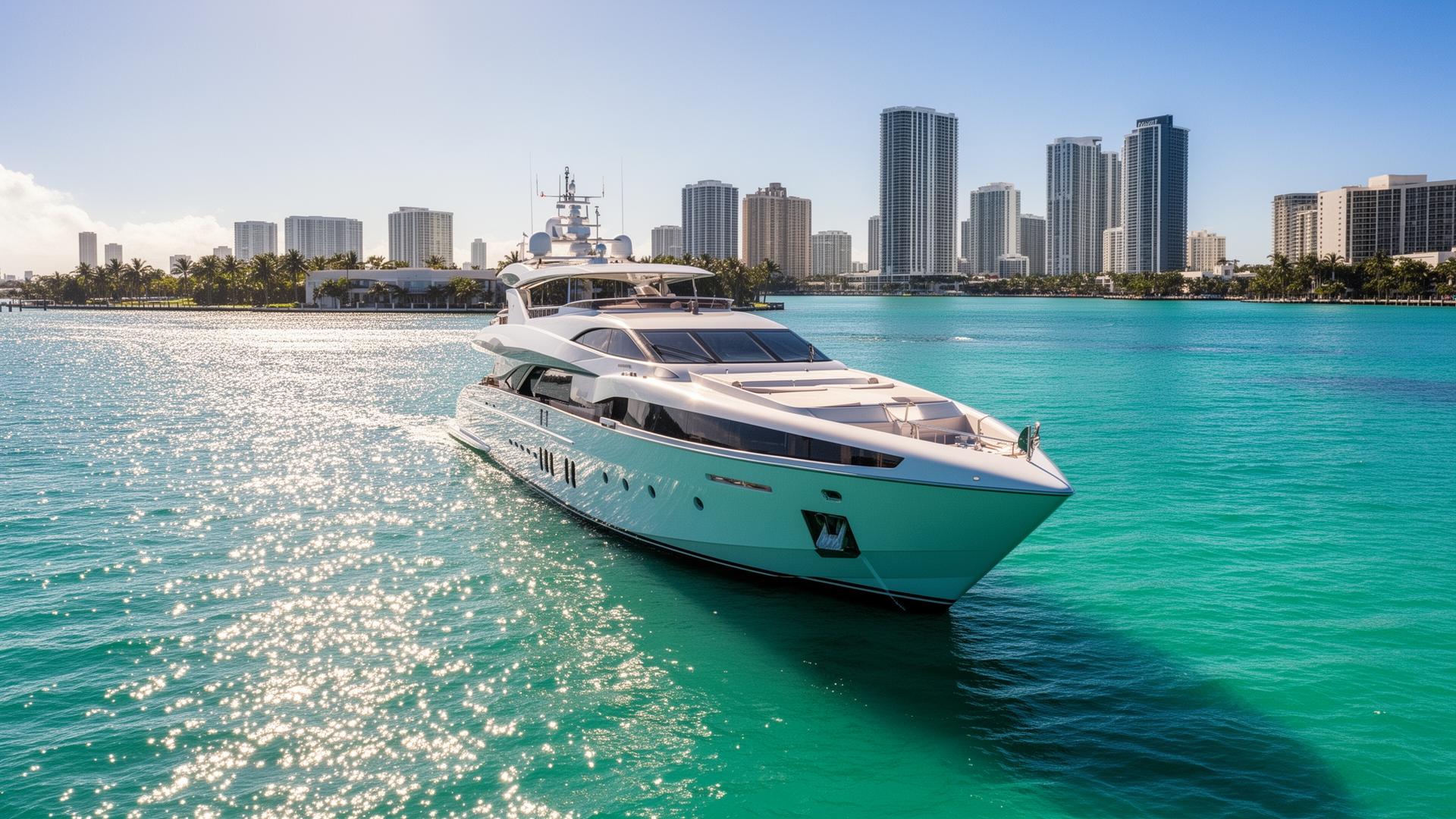
Miami Marina and Yacht Club Neighborhoods: A Buyer's Guide
Last updated: June 2026
If you want a Miami home with boat access, the short answer is that four areas do the heavy lifting: Coconut Grove, Coral Gables (Gables Estates and Cocoplum), the Miami Beach islands, and Key Biscayne. Coconut Grove is the sailing center of the region and sits next to Dinner Key Marina, Florida's largest wet-slip marina, with 582 slips serving boats up to roughly 135 feet [1]. The Grove is also home to two established member yacht clubs, including the Biscayne Bay Yacht Club, founded in 1887 and one of the oldest in Florida [2]. For larger vessels, the Miami Beach side offers deeper-draft options, with Miami Beach Marina handling yachts up to about 249 feet across 400 slips and Island Gardens on Watson Island built for superyachts up to 167 metres [3][4].
Pricing follows the same logic as the access. As of May 2026, the median sale price in Coconut Grove was about 2.6 million dollars, and Coral Gables waterfront listings carried a median asking price near 2.15 million dollars [5][6]. Those are neighborhood-level figures, not dock-specific, so treat them as a starting frame rather than a quote on any single property. This guide covers the Miami marina and yacht club neighborhoods worth shortlisting, the dock and access facts that change a property's value, and the diligence steps that separate a clean waterfront purchase from an expensive surprise.
How to read a Miami waterfront neighborhood
Miami's waterways are a network of protected bays and dredged canals, which means two homes a mile apart can have very different access. The variable that matters most to a boat owner is whether the route from your slip to open water passes under a fixed bridge. A fixed bridge sets a hard ceiling on mast or air-draft clearance, while a bascule bridge (a drawbridge) opens on a schedule. For sailboats and taller motor yachts, no-bridge or "no-fixed-bridge" access is the single feature that most affects which properties actually work.
The second variable is depth. Canal and slip depth at mean low water determines what can sit at your seawall, and depths can change as channels silt in. Verify both bridge clearances and charted depth before you anchor a decision on a listing photo.
Coconut Grove: the sailing center
Coconut Grove is the practical heart of the Miami sailing world. It wraps around the Dinner Key harbor area on the western shore of Biscayne Bay, and it pairs walkable village density with direct bay access.
The infrastructure here is the draw:
- Dinner Key Marina is Florida's largest wet-slip marina, with 582 slips and capacity for boats up to roughly 135 feet [1]. It sits within walking distance of the Grove's dining and waterfront homes.
- Biscayne Bay Yacht Club, founded in 1887 by Commodore Ralph Middleton Munroe, is one of the oldest yacht clubs in Florida and remains a member institution [2].
- Coral Reef Yacht Club sits on the western shore of Biscayne Bay adjacent to Dinner Key, with channel approaches into the bay [7].
Many Grove waterfront homes offer bay access without a fixed bridge between the dock and open water, which is the technical reason the neighborhood holds its value with sailors. As an underwriting note, the Grove's price strength is real but uneven: the May 2026 neighborhood median of about 2.6 million dollars spans everything from interior condos to bayfront estates, so the waterfront subset prices well above that headline number [5].
Coral Gables: Gables Estates and Cocoplum
Coral Gables offers a more private, structured version of waterfront living. Within it, Gables Estates and Cocoplum are the guarded enclaves built around wide canals and large lots, where the dock is part of the estate rather than a shared facility.
The appeal for a boat owner is backyard dockage with, in many cases, no-fixed-bridge routes to the ocean, which suits motor yachts and taller sailing vessels. Coral Gables waterfront inventory carried a median asking price near 2.15 million dollars as of May 2026, though that citywide median masks a wide spread, since entry-tier waterfront and the ultra-prime Gables Estates canals trade at very different price-per-foot levels [6]. If you are weighing a sale in one of these enclaves, a current listing valuation is the right first step before you set an asking price.
Miami Beach islands: depth and scale
While the eastern beachfront is known for nightlife, the bay side of Miami Beach and its connected islands are where larger vessels find a home. This is the part of the market where draft and slip length, not just bridge clearance, drive the decision.
- Miami Beach Marina, at the southern tip of Miami Beach, accommodates yachts up to about 249 feet across 400 slips, making it one of the few area facilities sized for large vessels [3].
- Island Gardens (Deep Harbour) on Watson Island is purpose-built for superyachts, with berthing for vessels up to 167 metres [4].
The residential islands here, including the Venetian Islands and the Sunset Islands, offer canal living with quick access to downtown and the open bay. Some routes pass under bridges and some do not, so on these islands the per-property bridge and depth check is non-negotiable rather than a formality.
Key Biscayne: a self-contained base
Key Biscayne sits across the Rickenbacker Causeway and functions as a quieter, island base. The Key Biscayne Yacht Club anchors the local boating community, and the island's position gives quick access to the southern bay, the sandbars, and the route toward the upper Keys. For a buyer who values a calmer footprint and a short run to open water, it trades some of the Grove's walkable density for seclusion. If you want to map your vessel's specs against specific Key Biscayne or Grove docks, a buyer consultation is the efficient way to filter the list before touring.
Diligence: what changes a waterfront home's value
A waterfront purchase carries diligence items a standard transaction does not. Treat these as underwriting line items, not afterthoughts:
- Riparian rights. In Florida, riparian rights are tied to land bordering navigable water and include ingress, egress, boating, bathing, and fishing, defined under Section 253.141, Florida Statutes [8]. They are qualified rights, since the state owns the submerged land, and a dock over sovereign submerged land is subject to environmental permitting.
- Dock and seawall condition. Check seawall integrity, cap stability, and water depth at mean low water. A specialized marine inspection is worth its cost on any property where the seawall and dock support a meaningful vessel.
- Shore power and slip specs. Confirm amperage (30, 50, or 100 amp), slip length, and beam clearance against the boat you own or plan to buy.
- Bridge clearances. Map the full route from slip to open water and identify every fixed and bascule bridge in the path.
You can browse current waterfront inventory among Miami luxury homes for sale to see how these features show up in real listings.
Frequently asked questions
Which Miami neighborhood is best for sailboats with tall masts? Coconut Grove and parts of Coral Gables such as Gables Estates are common choices because many properties offer no-fixed-bridge routes between the dock and open water, which removes the hard air-draft ceiling that a fixed bridge imposes. Always confirm the specific route for the individual property.
How large a yacht can dock in the Miami area? At a marina, Miami Beach Marina handles vessels up to about 249 feet and Island Gardens on Watson Island berths superyachts up to 167 metres [3][4]. At a private residence, the largest vessels generally need the wide canals and deep frontage found in select enclaves; specs vary by property, so verify depth and slip length directly.
Are there member yacht clubs in Miami that offer dockage? Yes. Clubs such as the Biscayne Bay Yacht Club and Coral Reef Yacht Club in Coconut Grove are member institutions, and dockage at member clubs is typically limited to members, reciprocal visitors, or event guests, often with a waitlist for permanent slips [2][7].
What should I check about the seawall before buying? Look for cracking and cap movement, and confirm water depth at mean low water against your vessel's draft. A specialized marine inspection is recommended to confirm the seawall and dock can support your specific boat.
What are riparian rights in Florida? They are the rights attached to land bordering navigable water, including ingress, egress, boating, bathing, and fishing, defined in Section 253.141, Florida Statutes [8]. Because the state owns the submerged land, these are qualified rights, and adding or extending a dock requires environmental permitting.
Working through the decision
The right neighborhood is the one where the dock, the route to open water, and the budget all line up for the boat you actually run. If you want help matching specific docks to your vessel's draft and clearance, or a read on what a waterfront home should list for, reach out and we can work through it. No pressure and no timeline on my end.
Gabriel
Sources
1. City of Miami / Dinner Key Marina, marina specifications — https://www.miami.gov/Parks-Public-Places/Marinas/Dinner-Key-Marina-Mooring-Facility 2. Wikipedia, Biscayne Bay Yacht Club — https://en.wikipedia.org/wiki/Biscayne_Bay_Yacht_Club 3. Boat International, Best Superyacht Marinas in Miami (Miami Beach Marina) — https://www.boatinternational.com/destinations/americas-yacht-destinations/best-superyacht-marinas-in-miami--2053 4. Island Gardens, Deep Harbour marina capacity — https://www.islandgardens.com/marinas-yacht-haven-grande-miami-island-gardens-marina 5. Redfin, Coconut Grove housing market — https://www.redfin.com/neighborhood/219259/FL/Miami/Coconut-Grove/housing-market 6. Redfin, Coral Gables waterfront homes for sale — https://www.redfin.com/city/3707/FL/Coral-Gables/waterfront 7. Coral Reef Yacht Club, about and approaches — https://www.coralreefyachtclub.org/ 8. Florida Senate, Section 253.141, Florida Statutes (riparian rights) — https://www.flsenate.gov/Laws/Statutes/2011/253.141
Gabriel A. Moyers, PA. eXp Realty. Florida License #3407280. Equal Housing Opportunity. This article is general information as of June 2026 and is not legal, tax, or financial advice. Verify current marina specifications, neighborhood prices, and riparian-rights rules against the City of Miami, Redfin, and Florida Statutes Section 253.141 before acting.
Thinking of selling your luxury property in Miami? Find out what your home is worth.
Get Your Home ValuationLooking for your dream home in Miami? Take our personalized home search quiz.
Start Your Home Search Quiz