
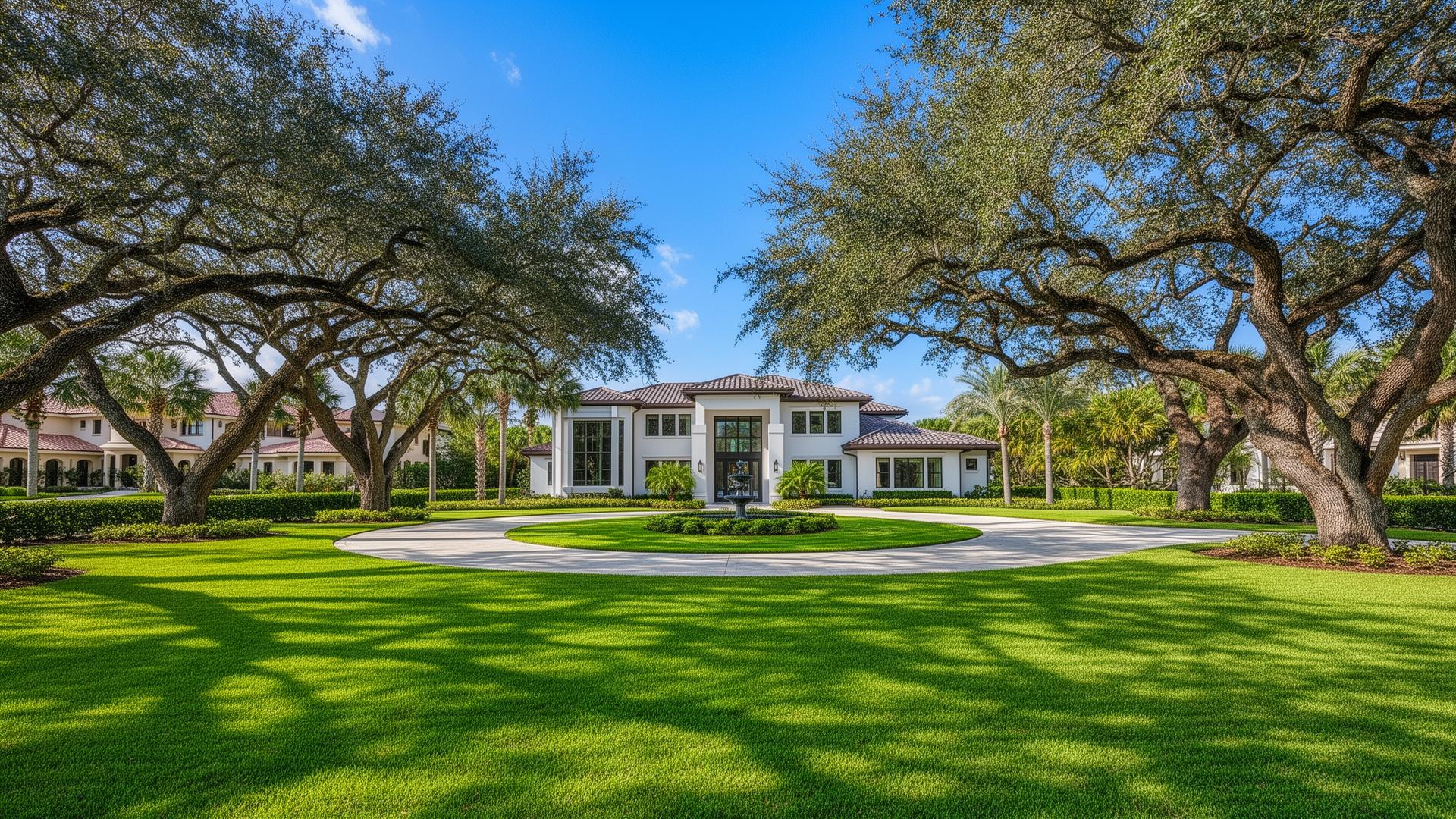
Estate Living in Pinecrest: Acre Lots and Mature Landscapes
Last updated: June 2026
Pinecrest estate homes are defined by large lots, a mature tree canopy, and low-density single-family zoning, which is why the village reads more like a private arboretum than a typical Miami suburb. The community grew up around ranch-style houses built on roughly one-acre lots in the 1950s and 1960s, and that pattern still shapes the streets today [1]. Pinecrest incorporated as a village on March 12, 1996, covers about 7.45 square miles of land, and had a population near 18,388 at the 2020 census, so the supply of estate-scale parcels is fixed and largely built out [1].
For a buyer, the practical translation is this: you are buying land and canopy as much as the house. In zip code 33156, which covers most of Pinecrest, the median sale price was about $1.7 million as of May 2026, with homes sitting around 76 days on the market, a pace that gives qualified buyers room to underwrite carefully rather than bid blind [2]. The rest of this guide covers what an acre-scale lot actually delivers, how Pinecrest zoning protects that density, and the carrying-cost math worth running before you write an offer. If you want to see current inventory, start with Miami luxury homes for sale.
What "estate living" means in Pinecrest
Estate living here is a function of lot size and tree cover, not marketing. Many Pinecrest parcels run from roughly half an acre up to a full acre or more, a holdover from the one-acre ranch lots platted in the mid-20th century [1]. That footprint is what allows the features buyers associate with the area: setbacks deep enough for privacy, room for a pool and a separate outdoor kitchen, and mature oak, banyan, and palm trees that take decades to establish.
The canopy is not incidental. Pinecrest has been named a Tree City USA community by the Arbor Day Foundation and has planted more than 10,000 street trees since 1997 [1]. For a buyer, mature landscaping is a real, hard-to-replicate asset, since a 60-year-old live oak cannot be bought or installed at any price. It is also a maintenance line item, which is worth pricing into your annual budget.
Typical estate features
- Lots commonly in the half-acre to one-acre range, with deep front and rear setbacks
- Mature tropical and native landscaping, including established shade trees
- Single-family homes, frequently custom-built or substantially renovated
- Private pools, summer kitchens, and room for accessory structures
How Pinecrest zoning protects lot size and density
The reason Pinecrest stays low-density is regulatory, not accidental. The village is built out and governed by single-family residential zoning that sets minimum lot areas and limits how much of a lot can be covered by structures. Miami-Dade County's surrounding estate framework, the EU-1 Single-Family One-Acre Estate Use district, allows a single-family residence and customary accessory uses such as pools and private garages, and caps lot coverage at 15 percent of net lot area [3]. Pinecrest administers its own zoning through its municipal code, but the effect is the same: large lots, low coverage, and protected canopy.
Two things follow from that for a buyer. First, you generally cannot subdivide an estate lot into smaller parcels, so the scarcity that supports value is locked in by code. Second, additions, pool houses, and hardscape are governed by coverage and setback limits, so if your plan depends on expanding the structure, confirm the specific district rules and lot-coverage math with the Village of Pinecrest Planning Division before you close. Verify any zoning assumption in writing against the village code rather than a listing description.
What estate-scale property costs to carry
A larger lot changes the carrying math, and it is worth modeling before you fall for the canopy. Three cost drivers matter on a Pinecrest estate: property taxes, insurance, and grounds maintenance.
On taxes, Florida gives owner-occupants a homestead exemption that can reduce taxable value by up to $50,000, and the Save Our Homes provision caps annual increases in assessed value at 3 percent (or the change in the Consumer Price Index, whichever is lower) for as long as you hold the homestead [4]. That cap is meaningful on a long hold: it decouples your assessed value from market appreciation, so a buyer planning to stay for years should underwrite the after-cap trajectory, not just year-one taxes. The catch is that the cap resets to market value when the home sells, so the taxes the prior owner paid are not the taxes you will pay.
Insurance and maintenance scale with the asset. A larger home and lot mean more roof, more structure to insure, and more landscape to maintain, including the mature trees that make the area desirable. None of this is a reason to avoid Pinecrest; it is a reason to build a realistic annual operating number into your offer. If you want help running those figures against a specific listing, a buyer consultation is the right starting point.
How the Pinecrest market is behaving
As of May 2026, the 33156 market was not behaving like a frenzy. The median sale price sat near $1.7 million, and homes were taking roughly 76 days to sell, which points to a market where well-prepared buyers can negotiate and inspect rather than waive contingencies to win [2]. Because Pinecrest spans a wide range from updated mid-century houses to large new-construction estates, a single median hides a lot of variation, so treat the $1.7 million figure as a reference point for the zip code, not a price for any specific lot size.
For sellers, the same data argues for pricing to the comparable lot-and-condition tier rather than to a headline village number. Estate buyers in this segment underwrite land, canopy, and condition separately, and they read days-on-market as a signal. If you are weighing a sale, an accurate, data-backed price is the lever that controls time on market. A home valuation grounded in recent closed comparables is the place to begin.
Frequently asked questions
How big are the lots in Pinecrest?
Many Pinecrest lots run from roughly half an acre to a full acre or more, a pattern that dates to the one-acre ranch-style lots developed in the 1950s and 1960s [1]. Individual lot sizes vary by street and subdivision, so confirm the exact acreage on the county property record for any specific address.
What is the median home price in Pinecrest right now?
In zip code 33156, which covers most of Pinecrest, the median sale price was about $1.7 million as of May 2026, with homes averaging around 76 days on the market [2]. That is a zip-code-wide median; actual prices vary widely with lot size, age, and condition.
Can I subdivide or build large additions on a Pinecrest estate lot?
Generally no on subdivision, and additions are limited by lot-coverage and setback rules. Pinecrest's single-family zoning and the surrounding county estate framework cap how much of a lot can be covered by structures, for example 15 percent of net lot area in the EU-1 one-acre estate district [3]. Confirm the specific rules for your parcel with the Village of Pinecrest Planning Division before planning any expansion.
Will my property taxes match what the seller pays?
Usually not. Florida's Save Our Homes cap limits annual assessed-value increases to 3 percent for a homesteaded owner, but the assessed value resets toward market value when the property changes hands, so a new buyer's tax bill is typically higher than the prior owner's capped amount [4]. Run your own estimate using the current market value, not the seller's historical taxes.
Is the mature tree canopy protected?
Pinecrest is a designated Tree City USA community and has planted more than 10,000 street trees since 1997, and the village regulates tree removal as part of its land-development code [1]. Treat established trees as a protected, value-adding asset and confirm any removal or trimming plans with the village before closing.
Sources
- 1. Wikipedia, "Pinecrest, Florida" — https://en.wikipedia.org/wiki/Pinecrest,_Florida
- 2. Redfin, "33156 Housing Market: House Prices & Trends" — https://www.redfin.com/zipcode/33156/housing-market
- 3. Miami-Dade County, "EU-1 Single-Family One-Acre Estate Use Zoning District" — https://www.miamidade.gov/global/economy/zoning/districts/eu-1-single-family-one-acre-estate.page
- 4. The 2025 Florida Statutes, Section 193.155 (Save Our Homes assessment limitation) — https://www.leg.state.fl.us/Statutes/index.cfm?App_mode=Display_Statute&URL=0100-0199/0193/Sections/0193.155.html
If you want a grounded read on a specific Pinecrest street, lot, or listing, reach out and I will walk you through the numbers.
Gabriel
Gabriel A. Moyers, PA. eXp Realty. Florida License #3407280. Equal Housing Opportunity. This article is general information as of June 2026 and is not legal, tax, or financial advice. Verify current figures against the Village of Pinecrest code, the Miami-Dade County Property Appraiser, and the Florida Statutes before acting.
Thinking of selling your luxury property in Miami? Find out what your home is worth.
Get Your Home ValuationLooking for your dream home in Miami? Take our personalized home search quiz.
Start Your Home Search Quiz