
Pinecrest vs. Palmetto Bay: A Buyer's Comparison of Two Family Neighborhoods
Last updated: June 2026
If you are weighing Pinecrest vs. Palmetto Bay as a family buyer, the short version is this: both are incorporated villages in south Miami-Dade with single-family character and access to the same A-rated public school district, but they sit at different price points. Pinecrest carries a higher entry cost, anchored by one-acre minimum lots in its low-density zoning districts, with a recent median sale price near $3.4 million [1][3]. Palmetto Bay sits below it on price, with a recent median sale price around $980,000 and a higher share of owner-occupied homes [2][6]. Both communities feed into Miami-Dade County Public Schools, which the Florida Department of Education graded "A" for 2024-2025 [4]. Pinecrest tends to attract buyers underwriting for larger land and long-term estate value; Palmetto Bay tends to attract buyers underwriting for a lower basis, parks, and a still-single-family footprint at a more accessible number.
The rest of this comparison breaks down the two on price basis, lot size and zoning, schools, governance, and lifestyle, so you can map each against your own budget and hold period. If you want to model a specific street or property against these benchmarks, a buyer consultation is the fastest way to get there.
Price basis: where the two diverge most
Price is the clearest line between Pinecrest and Palmetto Bay. As of late 2025, Redfin reported a Pinecrest median sale price near $3.4 million [1]. Palmetto Bay's median sale price was roughly $980,000 in December 2025 [2]. That gap reflects land more than finishes. Pinecrest's lots are larger by ordinance, so a buyer there is paying for acreage and the scarcity that comes with low-density zoning.
From an underwriting standpoint, the two basis points lead to different questions. In Pinecrest, much of the value sits in the land, which tends to hold and appreciate independent of the structure, so a dated house on a full acre can still pencil because the dirt carries the deal. In Palmetto Bay, the structure is a larger share of the value, so condition, square footage, and recent updates move the number more. If you are comparing list prices across the two, normalize for lot size and price per square foot before you draw conclusions. You can benchmark any address against current asking prices on the Miami luxury homes for sale page or get a data-backed read through a home valuation.
Lot size and zoning: one acre vs. a tighter footprint
The structural reason Pinecrest commands a premium is its zoning. Pinecrest's low-density residential districts require a one-acre minimum lot area, at a maximum density of one dwelling unit per gross acre, with the EU-1C district requiring 2.5 gross acres [5]. The stated intent of those districts is to protect the estate and single-family character of the village and preserve open space [5]. That ordinance is the engine behind the larger yards, the tree canopy, and the price floor.
Palmetto Bay is also predominantly single-family, but its typical lot footprint is tighter than Pinecrest's one-acre standard, which is part of why its entry price sits lower. For a family buyer, the practical trade is straightforward: Pinecrest buys you land and separation; Palmetto Bay buys you a single-family home and yard at a materially lower basis. Neither is better in the abstract. The right answer depends on how much land you actually need and how that land reads against your budget and your hold period.
Schools: the same district, graded "A"
Both villages are served by Miami-Dade County Public Schools. For the 2024-2025 school year, the Florida Department of Education graded the district "A," with 64 percent of district schools earning an A grade and 99 percent earning an A, B, or C [4]. That district-level grade is the same regardless of which of these two villages you choose, which is worth keeping in mind if school quality is driving your decision.
Where the two differ is in their specific attendance boundaries and the individual schools tied to each address. School assignment in Miami-Dade is set by attendance zone, not by city line, and zones can be redrawn. If a particular school is central to your decision, confirm the current boundary for the exact address with the district before you write an offer, and re-confirm before closing. I do not steer buyers toward or away from any neighborhood on the basis of who lives there. The point here is procedural: verify the zone for the specific property, every time.
Governance: two villages with local control
Both communities are incorporated municipalities, which gives residents a layer of local control over zoning, code enforcement, and services that unincorporated Miami-Dade neighborhoods do not have. Pinecrest was incorporated on March 12, 1996 [3]. Palmetto Bay was incorporated on September 10, 2002 [6]. Each has its own village council, planning function, and police presence.
For a buyer, incorporation matters in a few concrete ways. Local zoning control is what protects Pinecrest's one-acre lot character over time, which supports the land-value thesis behind its prices. Village governance also means decisions on permitting, parks, and traffic are made closer to home. If you are underwriting a long hold, the stability of that local control is part of what you are buying, not just the house itself.
Lifestyle: estate quiet vs. the village of parks
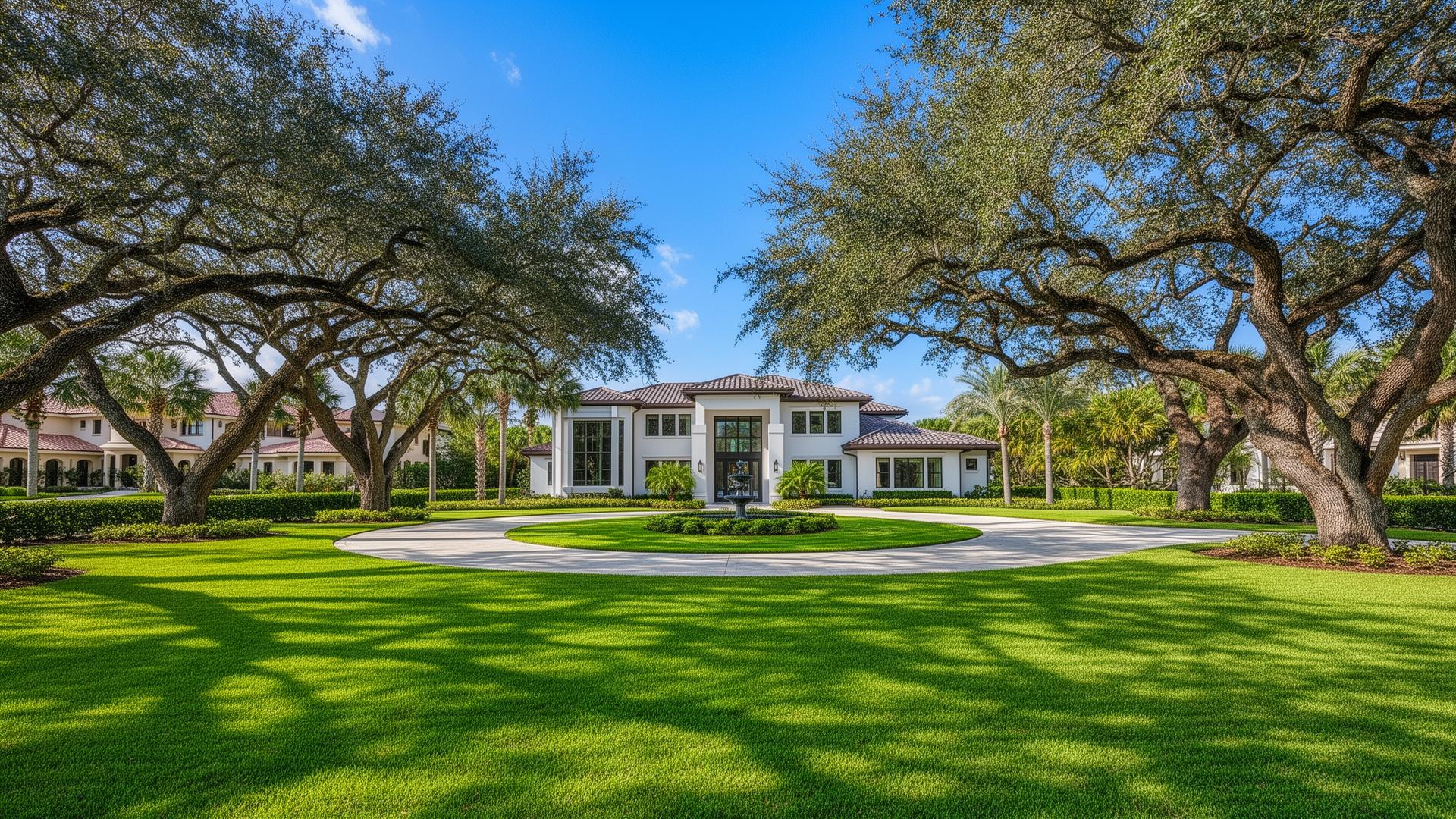
Pinecrest reads as quieter and more spread out, a function of those larger lots and the low-density zoning. The feel is estate-residential, with more separation between homes and a mature tree canopy. That is the lifestyle a Pinecrest premium is paying for.
Palmetto Bay leans into a parks-and-recreation identity. The village is nicknamed the "Village of Parks" and has built its public profile around park facilities and outdoor programming [6]. It also reports a high owner-occupancy rate, around 78 percent, which tends to track with a settled, family-oriented residential base [6], and a median household income of roughly $142,000 [6]. For families who prioritize walkable parks, sports fields, and community programming over raw lot size, Palmetto Bay's profile often fits the brief at a lower number.
How to decide between them
Reduced to an underwriting question, the choice looks like this. If your budget supports a Pinecrest basis and you specifically want land, separation, and an asset where the dirt carries the value, Pinecrest is the more direct fit. If you want a single-family home with yard, strong parks, and a lower entry price, and you are comfortable with a tighter lot, Palmetto Bay is the more efficient use of capital. Both put you in the same A-rated district and both give you the protection of village-level governance.
The figures in this article are benchmarks, not address-level appraisals. Median prices move, and a specific property can sit well above or below its village median depending on lot, condition, and street. Before you act on any number here, pull current comps for the exact home you are considering.
Frequently asked questions
Is Pinecrest or Palmetto Bay more expensive?
Pinecrest is the higher-priced of the two. As of late 2025, Redfin reported a Pinecrest median sale price near $3.4 million [1], compared with roughly $980,000 in Palmetto Bay in December 2025 [2]. The gap is driven largely by Pinecrest's larger, one-acre minimum lots [5].
Do Pinecrest and Palmetto Bay use the same school district?
Yes. Both are served by Miami-Dade County Public Schools, which the Florida Department of Education graded "A" for 2024-2025 [4]. Individual school assignment is set by attendance zone, so confirm the current boundary for a specific address with the district before you buy.
Why are Pinecrest lots so large?
Pinecrest's low-density residential zoning requires a one-acre minimum lot area in its standard districts, with the EU-1C district requiring 2.5 gross acres [5]. The ordinance is designed to preserve the village's estate and single-family character, which also supports its higher land values.
Are both communities incorporated cities?
Both are incorporated villages with their own local governance. Pinecrest was incorporated on March 12, 1996 [3], and Palmetto Bay on September 10, 2002 [6]. Incorporation gives residents local control over zoning and services that unincorporated areas lack.
Which is better for families?
Both put you in the same A-rated school district [4] and both have single-family character. Pinecrest offers more land at a higher price; Palmetto Bay offers a lower entry point, a parks-focused profile, and a high owner-occupancy rate near 78 percent [6]. The right fit depends on your budget, how much land you need, and your hold period.
A note on next steps
If you want to compare a specific Pinecrest or Palmetto Bay property against these benchmarks, I can pull current comps, normalize for lot size, and walk through the basis with you. You can start with a buyer consultation, or if you are weighing a sale in either village, a home valuation will give you a grounded number to work from.
Gabriel
Sources
1. Redfin, Pinecrest Housing Market — https://www.redfin.com/city/14661/FL/Pinecrest/housing-market
3. Wikipedia, Pinecrest, Florida — https://en.wikipedia.org/wiki/Pinecrest,_Florida
Gabriel A. Moyers, PA. eXp Realty. Florida License #3407280. Equal Housing Opportunity. This article is general information as of June 2026 and is not legal, tax, or financial advice. Verify current prices, school grades, and zoning rules against Redfin, the Florida Department of Education, and the Village of Pinecrest and Village of Palmetto Bay before acting.
Thinking of selling your luxury property in Miami? Find out what your home is worth.
Get Your Home ValuationLooking for your dream home in Miami? Take our personalized home search quiz.
Start Your Home Search Quiz