
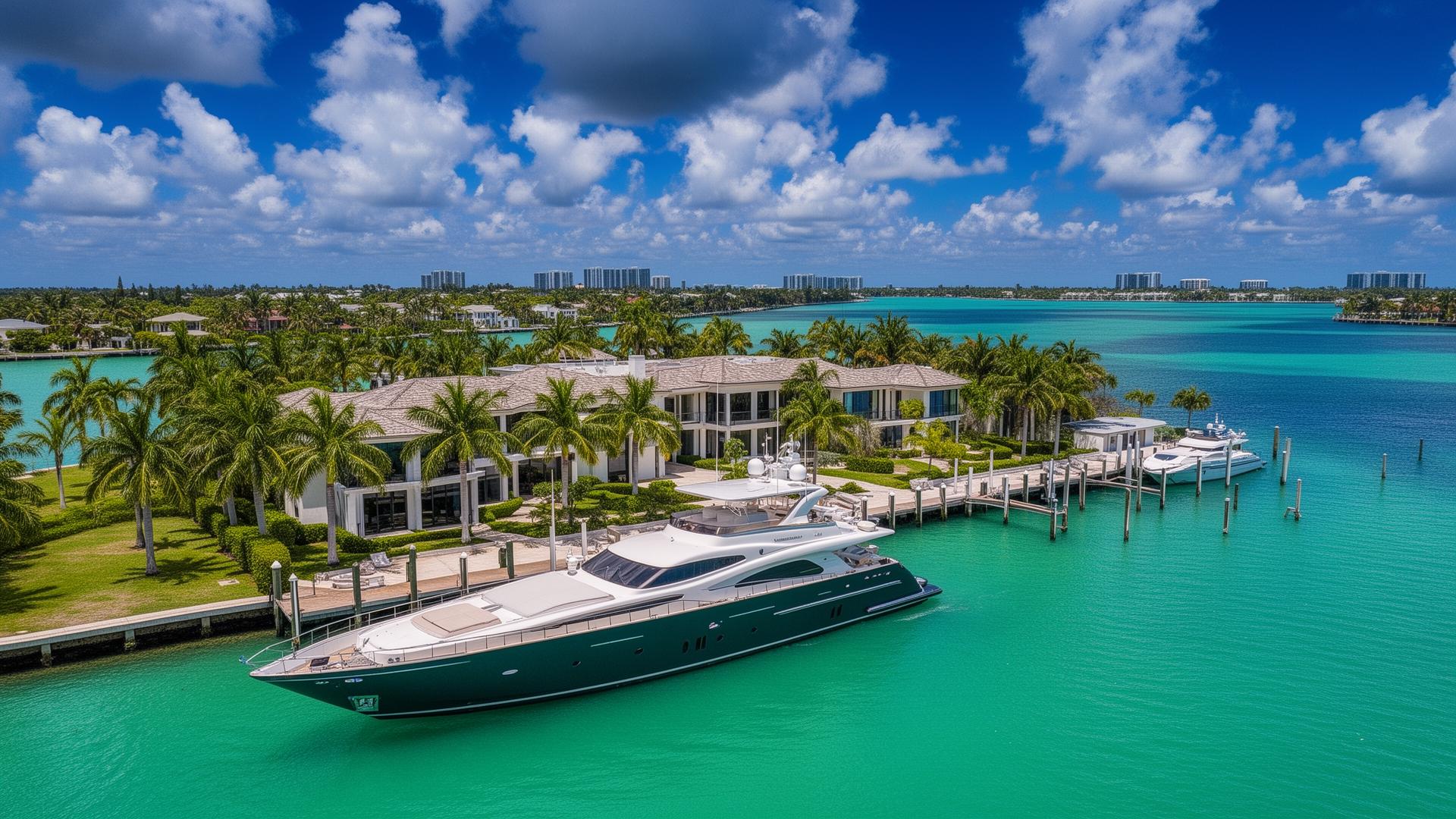
Private Docks in Coconut Grove: What Boaters Should Underwrite Before Buying
Last updated: June 2026
Coconut Grove private dock homes appeal to boaters because the better waterfront pockets offer direct or near-direct access to Biscayne Bay with no fixed bridges between the dock and open water, which removes the air-draft limits that constrain larger vessels elsewhere in Miami. The value of one of these properties is not just the house and the view. It is the dock itself, the depth of water at the slip, the condition of the seawall, and the permit and submerged-lands lease that make the dock legal. Those four items are where money is made or lost, and they are easy to overlook when you are standing on a dock at sunset.
For context on price: the median sale price of a home in Coconut Grove was about $2.6 million over the trailing three months, up roughly 53% year over year, at a median of $909 per square foot, with homes taking around 88 days to sell, as of June 2026 [1]. Waterfront and direct-bay homes sit well above that median. The premium you pay over a comparable dry-lot home is essentially the market's price for the dock and the water access, so it is worth underwriting that premium the same way you would underwrite any other asset.
Why the Grove draws boaters
The draw is navigational. Bayfront and canal-front homes in the Grove's gated waterfront enclaves generally reach Biscayne Bay without passing under a fixed bridge, which matters because a fixed bridge sets a hard ceiling on the height of any vessel that can pass beneath it. A home with unobstructed bay access can accommodate a taller, larger boat than a home of similar price sitting behind a low fixed span. When boaters describe a property as having "ocean access with no bridges," that is the feature carrying the premium.
That said, "no fixed bridges" is a claim to verify, not assume. Confirm the actual route from the slip to open water on a chart, and confirm the controlling depth along that route, before you treat bridge-free access as a given for a specific address.
The dock and the water under it
A dock is only as useful as the water depth at the slip. Draft is the vertical distance from the waterline to the lowest point of a boat's hull, and if the water at mean low tide is shallower than your boat's draft plus a safety margin, you will sit on the bottom at low water. This is a frequent mismatch between buyer expectation and reality in Grove waterfront deals.
Before you fall in love with a dock, get answers to these:
- Controlling depth at mean low water along the full path from the slip to open bay, not just at the slip on a high tide.
- Slip length and beam clearance relative to the specific boat you intend to keep, plus room to maneuver.
- Seawall condition and age. A failing seawall is a capital expense that can run into six figures, and lenders and insurers will care about it.
- Dredging history and rights. Maintenance dredging to keep a slip usable is itself a permitted activity, not something an owner can simply do at will.
These are inspection items. Treat them with the same rigor you would give a roof or a foundation.
Permits and the submerged-lands lease
Here is the part that listing descriptions often skip. The land under the water is generally owned by the State of Florida, and building or keeping a dock over it is regulated. The Florida Department of Environmental Protection oversees dock permitting to protect water quality, seagrass, and the use of state-owned submerged lands [2].
Two questions decide whether a dock is a clean asset or a problem:
- Is the dock permitted, and does the as-built structure match the permit? Docks that were expanded, rebuilt, or extended without authorization can become the buyer's problem after closing.
- Does the dock require a sovereignty submerged-lands lease, and is that lease current? A lease is generally required where a structure preempts state-owned submerged land beyond defined thresholds.
On the lease, Florida law is specific. Under Florida Statute 253.0347, the maximum initial term of a standard lease of sovereignty submerged lands for a private residential single-family dock is 10 years, with renewal terms available [3]. The statute also waives lease fees for a single-family dock designed to moor up to four boats where the preempted area is equal to or less than 10 times the linear feet of riparian shoreline the owner controls [3]. In plain terms, the more shoreline you own, the more dock area you can hold without a fee, and a large dock on a short stretch of shoreline is more likely to trigger a lease obligation. Verify the current lease status and fee position in writing as part of due diligence, because an out-of-compliance dock is a liability that transfers with the property.
If you are weighing a specific address and want the dock, permit, and lease status checked before you write an offer, that is exactly the kind of review worth doing during a buyer consultation.
Insurance, exposure, and the underwriting lens
A waterfront home is also an insurance and resilience question. Direct bay exposure, seawall dependence, and elevation all feed into windstorm and flood coverage, and those carrying costs are part of the true cost of ownership, not a footnote. Build them into your model alongside the mortgage and the dock maintenance, the same way you would model operating expenses on any income-producing asset. A property that pencils on price alone can still be a poor hold if the annual carry is heavier than a comparable home a few streets inland.
The point is not to talk anyone out of waterfront. It is to price the dock, the lease, the seawall, and the insurance honestly, so the premium you pay is a premium for something real.
What this means for sellers
If you own a Grove waterfront home with a dock, the cleanest path to a strong sale is to have the documentation ready before listing: the dock permit, the as-built confirmation, the current submerged-lands lease, and recent seawall and depth information. Buyers in this segment are sophisticated, and a documented, compliant dock removes the discount a buyer would otherwise build in for uncertainty. If you are considering a sale and want to understand what your dock and water access actually add to value, start with a listing valuation or read more on the process for how to sell your Miami home.
Frequently asked questions
Can I dock a large boat at a Coconut Grove home?
Often yes, because many Grove waterfront enclaves reach Biscayne Bay without a fixed bridge, which removes the height limit that fixed bridges impose [1]. The real constraints for a given address are the controlling water depth at mean low water and the slip dimensions, both of which should be verified for your specific vessel before you rely on them.
Do I need a permit or lease for a private dock in Florida?
Dock construction is regulated by the Florida Department of Environmental Protection, and a sovereignty submerged-lands lease is generally required where a structure preempts state-owned submerged land beyond set thresholds [2][3]. The status of both the permit and any required lease should be confirmed in writing during due diligence.
How long is a Florida submerged-lands lease for a private dock?
For a private residential single-family dock, the maximum initial term of a standard sovereignty submerged-lands lease is 10 years, with renewal terms available, under Florida Statute 253.0347 [3].
What does waterfront cost in Coconut Grove right now?
As of June 2026, the overall Coconut Grove median sale price was about $2.6 million at a median of $909 per square foot, up roughly 53% year over year [1]. Direct-bay and waterfront homes trade above that median, and the premium reflects the dock and water access, not just additional square footage.
Why does "no fixed bridges" matter so much to boaters?
A fixed bridge sets a maximum vessel height that can pass beneath it. A home with bridge-free access to the bay can accommodate a taller, larger boat than a similarly priced home sitting behind a low fixed span, which is why bridge-free access carries a measurable premium. Confirm the actual route and any bridges for a specific property rather than assuming.
A note on next steps
If you are buying or selling a dock home in the Grove and want the dock, depth, seawall, permit, and lease reviewed as part of the numbers, I am happy to walk through it with you. You can browse current Miami luxury homes for sale or reach out directly and we will look at a specific address together.
Gabriel
Sources
Gabriel A. Moyers, PA. eXp Realty. Florida License #3407280. Equal Housing Opportunity. This article is general information as of June 2026 and is not legal, tax, or financial advice. Verify current dock-permit and submerged-lands-lease requirements with the Florida Department of Environmental Protection and current market figures with a licensed professional before acting.
Thinking of selling your luxury property in Miami? Find out what your home is worth.
Get Your Home ValuationLooking for your dream home in Miami? Take our personalized home search quiz.
Start Your Home Search Quiz