
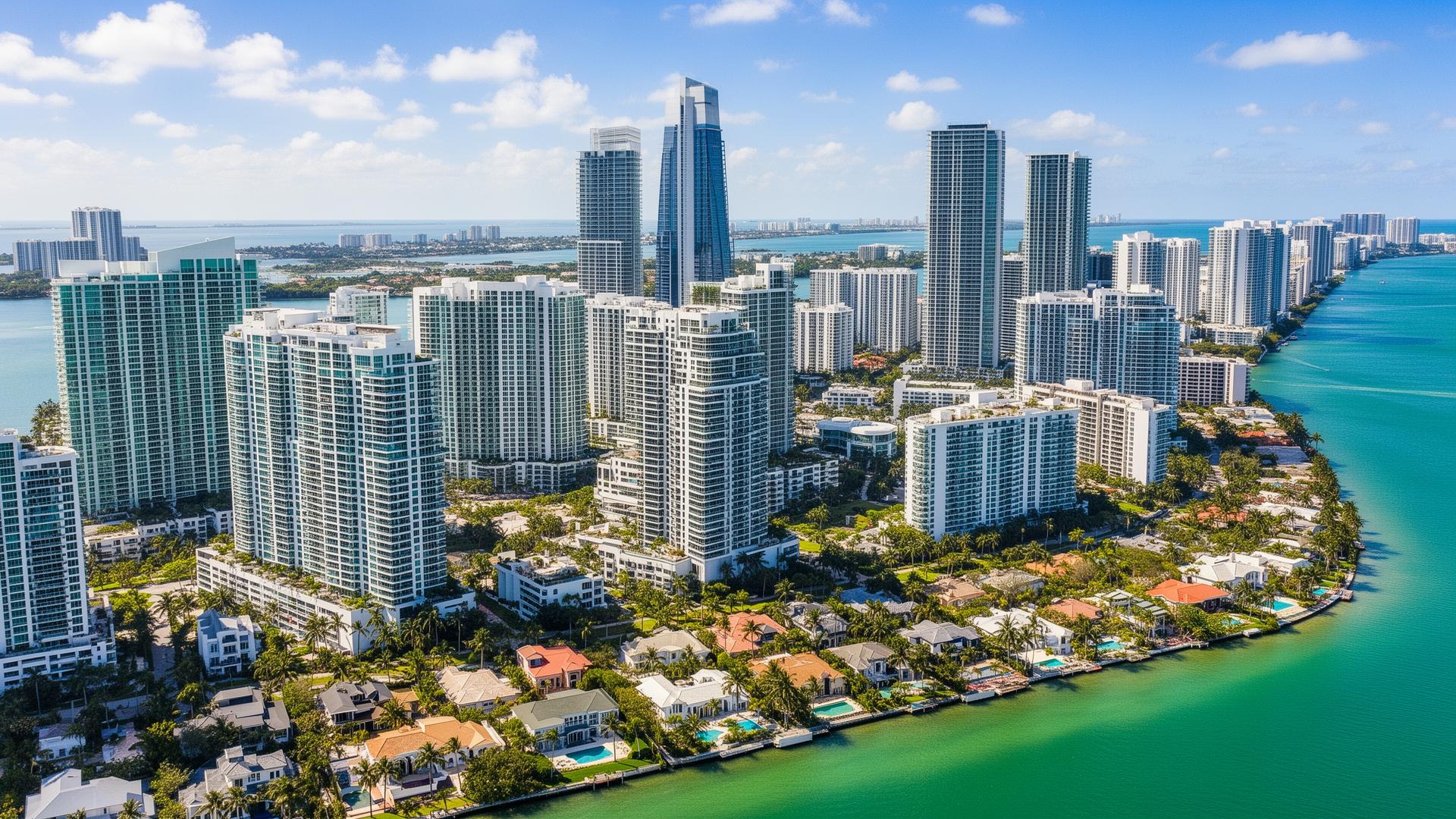
South Florida housing market: 2026 appreciation trends
Is South Florida real estate still appreciating in 2026? Yes, at a moderate and clearly sourced pace. The FHFA House Price Index for the Miami-Miami Beach-Kendall division showed about 4.37% annual appreciation through the first quarter of 2026 [1], down sharply from the double-digit gains of 2021 and 2022. The market has also split by property type: the Miami-Dade single-family median edged up year over year while the condo median declined, according to the MIAMI Association of Realtors [2]. Any specific appreciation figure worth acting on should be tied to a named source and date, which is how this article treats every number below.
Last updated: July 2026
From hyper-growth to a moderate pace
Between 2021 and 2023, South Florida posted some of the fastest home-price appreciation in the country. That pace was not sustainable, and the 2026 data confirms the cool-down. The FHFA index for the Miami metro division showed roughly 4.37% annual appreciation through Q1 2026, with about 77.61% cumulative appreciation over the prior five years [1]. Mid-single-digit annual appreciation on top of a large five-year run is the profile of a maturing market, not a collapsing one.
Prices by property type
The headline appreciation number hides a real divergence:
- Single-family homes held value. The Miami-Dade single-family median sale price was $680,000 in May 2026, up 0.74% year over year [2].
- Condominiums softened. The existing-condo median was $415,000 in May 2026, down 2.35% year over year [2], pressured by higher inventory and rising carrying costs.
Broadly across the city of Miami, Redfin measured a median sale price around $652,000, down about 0.44% year over year, with homes taking roughly 113 days to sell versus about 100 a year earlier [3]. That longer marketing time is the clearest sign buyers have regained leverage.
Why single-family supply is the key variable
The strongest support for house prices is thin supply. Miami-Dade single-family active listings fell about 19% year over year to roughly 4,599 in May 2026 [2]. When fewer houses are for sale, well-priced listings hold value even as buyers slow down. The condo side does not share that dynamic; heavier standing inventory is a large part of why condo pricing declined while houses held.
South Florida's geography reinforces the single-family supply constraint. The buildable land between the Atlantic and the protected Everglades is largely spoken for in the established markets, so new single-family supply in those areas is limited by entitlement and land, not just by construction pace.
What it means for buyers
Waiting for a broad crash has been a poor strategy in this metro, but 2026 is not a market that rewards overpaying either. With appreciation moderate [1] and days on market longer [3], selection and price discipline matter more than speed. Underwrite each property on comparable closings, carrying costs, and hold period. Established single-family submarkets such as Coral Gables and Pinecrest trade differently from condo corridors, so the right strategy is submarket-specific. A buyer consultation is the place to build that plan.
What it means for sellers
In a moderate-appreciation market with longer marketing times, pricing and condition carry the sale. Turn-key, correctly priced houses still transact cleanly. Properties that need work or are priced to last cycle's peak sit longer, especially on the condo side. Start with a grounded listing valuation tied to recent closings rather than to a metro headline.
The rest of 2026
Forward figures should be attributed. Fannie Mae's outlook has projected national home-price growth around 3% for 2026, later revised lower [4], and the FHFA metro reading of about 4.37% [1] is a Q1 snapshot that will update through the year. Insurance costs, condo structural-reserve requirements, and mortgage rates near the mid-6% range remain the variables most likely to move South Florida prices from here. None of those support a forecast of a return to double-digit gains.
Reading appreciation the right way
Appreciation figures are only as good as their construction. A median sale price can rise or fall simply because the mix of homes closing shifts toward higher or lower price points in a given month. The FHFA House Price Index sidesteps that by tracking repeat sales of the same properties, which is why its Q1 2026 reading of about 4.37% for the Miami metro division [1] is a more reliable read on true appreciation than any single median print. When you evaluate your own equity, anchor to the repeat-sales index for the trend and use recent comparable closings for your specific property.
Appreciation versus your actual return
The metro appreciation rate is not your return. Your return depends on how much you put down, what it costs to carry the property, and how long you hold. A 4.37% appreciation rate [1] on a leveraged purchase produces a larger percentage gain on your invested equity before costs, while insurance, taxes, maintenance, and condo assessments subtract from it. This distinction is why the condo segment can lag even where the index is positive: higher carrying costs eat into the net, which shows up in the 2.35% year-over-year decline in the existing-condo median [2] against a positive metro index.
What could move the trajectory
The moderate-appreciation picture rests on tight single-family supply [2] and continued in-migration. The variables most likely to shift it are mortgage rates, near the mid-6% range per Freddie Mac and projected to stay range-bound by major forecasters, insurance costs, and condo structural-reserve requirements. If single-family inventory loosens materially or carrying costs climb, appreciation softens. If supply stays tight and rates hold, the mid-single-digit pace is more likely to persist. Because none of those paths is certain, treat any forward figure as a projection to revisit as data arrives. A useful reference point is the FHFA five-year figure of about 77.61% cumulative appreciation for the Miami metro division through Q1 2026 [1], which shows how far values have already moved and why a return to that pace would be the exception rather than the base case.
Frequently asked questions
What is the South Florida appreciation rate in 2026?
The FHFA House Price Index for the Miami metro division showed about 4.37% annual appreciation through Q1 2026 [1]. At the transaction level, the Miami-Dade single-family median was up 0.74% year over year in May 2026 while the condo median was down 2.35% [2].
Are South Florida home prices going to crash?
The current data shows tight single-family supply and moderate appreciation rather than the leverage-driven fragility of 2008. That is a description of present conditions, not a prediction; verify current figures before acting.
Why are condos underperforming single-family homes?
Condo inventory is heavier and carrying costs, including insurance and structural-reserve assessments, have risen. Single-family supply is tight, down about 19% year over year in May 2026 [2], which supported house prices while condos softened.
Is it a buyer's or seller's market in South Florida?
It varies by property type. Tight supply keeps well-priced single-family homes seller-favorable, while the condo segment, with more inventory and longer days on market [3], has tilted toward buyers.
Gabriel
Sources
- FHFA House Price Index Summary Tables
- MIAMI Association of Realtors, Miami-Dade monthly statistical reports
- Redfin, Miami Housing Market
- Fannie Mae Housing Forecast
Gabriel A. Moyers, PA. eXp Realty. Florida License #3407280. Equal Housing Opportunity. This article is general information as of July 2026 and is not legal, tax, or financial advice. Verify current figures against authoritative sources before acting.
Thinking of selling your luxury property in Miami? Find out what your home is worth.
Get Your Home ValuationLooking for your dream home in Miami? Take our personalized home search quiz.
Start Your Home Search Quiz