
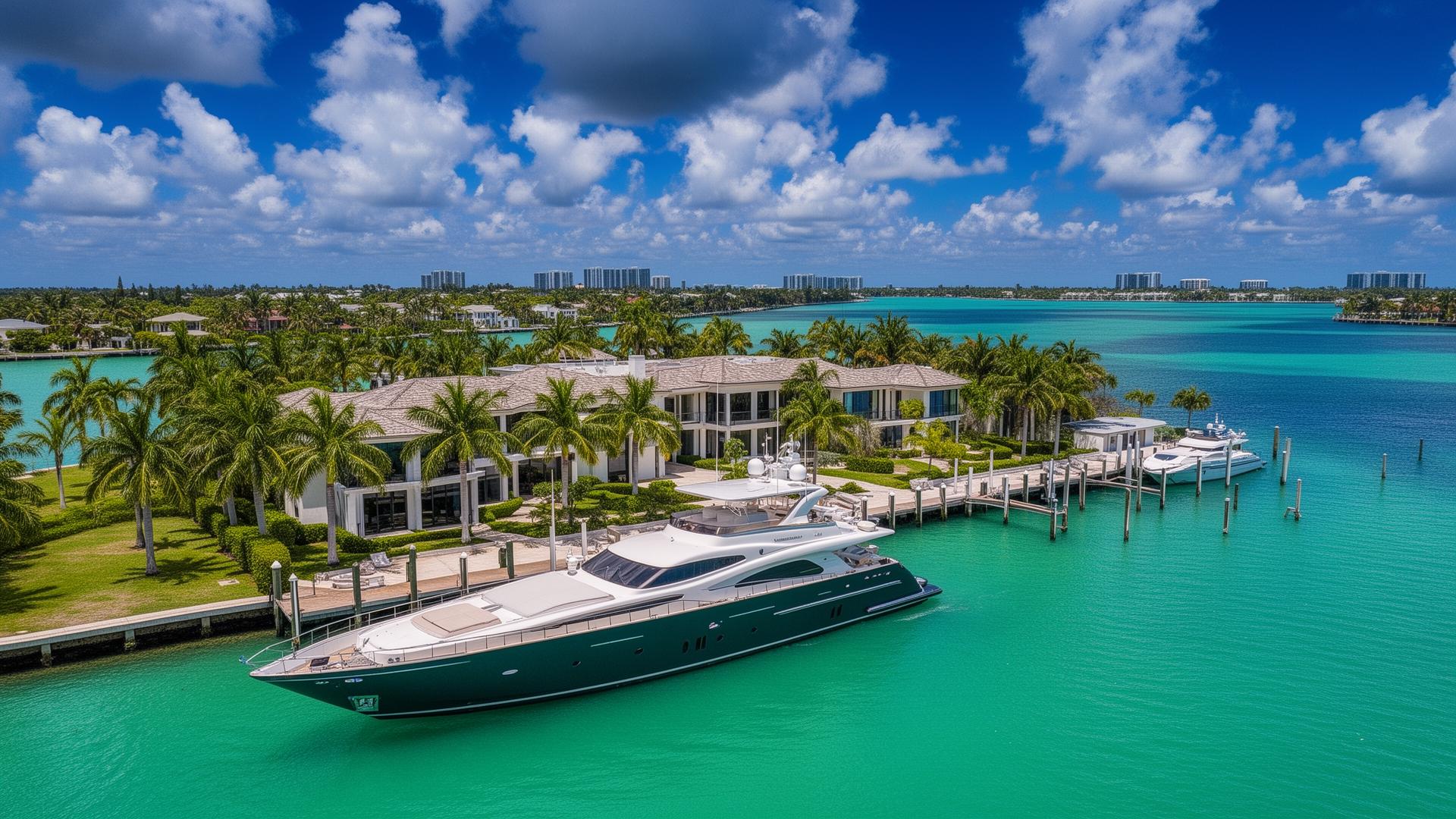
Backup Generators for Miami Waterfront Homes: A Practical Guide
Miami waterfront homes are best served by a permanently installed, automatic standby generator wired to the home through an automatic transfer switch, not a portable unit run with extension cords. For most single-family homes, an air-cooled standby unit in the 10 to 24 kW range covers essential and whole-home loads; Generac, for example, builds its air-cooled home standby line from 7.5 kW up to 26 kW [1]. Larger estates with multiple five-ton air-conditioning compressors, elevators, and pool equipment typically move up to liquid-cooled units of 30 kW and above. The unit should run on natural gas where a line is available, or on an on-site propane tank where it is not, because gasoline storage is impractical for the multi-day outages that follow a major storm.
Sizing comes down to load, not square footage. Add the running watts of everything you need to keep on, add the single largest starting load (usually an AC compressor), and size with headroom. On the coast, two extra requirements drive the spec: a corrosion-resistant enclosure for salt air, and elevation of the equipment above the base flood elevation, which Miami-Dade County enforces through the permit and elevation-certificate process. Get those two right and a generator becomes a durable piece of infrastructure rather than a liability.
Last updated: June 2026
Why standby beats portable on the waterfront
A portable generator is sized to keep a refrigerator and a few circuits alive. A waterfront home in Miami is a different load profile. Continuous air conditioning is the priority here because humidity, not heat, is what damages a closed-up house. Without active climate control, interior moisture climbs quickly and puts finishes, millwork, and stored goods at risk. A permanently installed standby generator with an automatic transfer switch starts on its own within seconds of an outage and carries the loads you select without anyone present, which matters when owners are traveling during hurricane season.
Standby units also handle the surge loads that portables cannot. Multiple large AC compressors, well and pool pumps, and refrigeration all draw a spike of current at startup. A correctly sized standby system, especially a liquid-cooled one, is built to absorb those surges and run for days at a time.
How to size the generator
Size to load, then add margin. The method most installers and manufacturers use is straightforward: total the running watts of the circuits you want covered, add the highest single starting wattage, and build in headroom rather than sizing to the bare minimum.
- Essential-circuit coverage (refrigeration, some lighting, a few outlets, one AC zone) often fits a 10 to 16 kW air-cooled unit.
- Whole-home coverage for a typical single-family house generally lands in the 16 to 24 kW range, which is the band most homes fall into [1].
- Large estates with several AC systems, an elevator, and extensive pool and landscape equipment usually require liquid-cooled units of 30 kW or more.
A licensed electrician should perform a load calculation specific to your panel before you commit to a size. Oversizing wastes fuel and money; undersizing means the unit drops loads or never starts the AC at all.
Fuel: natural gas vs. propane vs. diesel
Fuel choice is mostly dictated by what is available at the address.
- Natural gas is the simplest option where a utility line reaches the property. It removes on-site storage entirely and supplies the generator continuously as long as the line is intact.
- Propane is the common alternative in coastal pockets without gas service. It stores well and burns clean, but you are limited by tank size. A large home running heavy loads can consume a 500 to 1,000-gallon tank over a multi-day outage, so size the tank for the autonomy you actually want.
- Diesel is typically reserved for very large liquid-cooled installations. It is energy-dense but requires on-site fuel management and fuel that does not sit too long.
For most Miami waterfront homes, the practical decision is natural gas if the line exists, propane if it does not.
Building for salt air and storm surge
The coastal environment, not the engine, is what separates a Miami install from an inland one.
Corrosion
Salt air is aggressive. Specify an aluminum or coated-steel enclosure built for marine-adjacent conditions, and budget for annual professional service that includes rinsing salt deposits and inspecting electrical connections. Skipping maintenance is how coastal generators fail right when they are needed.
Elevation and flood compliance
In Special Flood Hazard Areas, mechanical and electrical equipment must sit above the base flood elevation, the level floodwater is expected to reach in a 1% annual-chance flood. Miami-Dade County has required a FEMA Elevation Certificate as part of the building-permit process since 1995, and local generator-installation requirements call for siting the unit above the FEMA flood elevation [2]. In practice that means mounting the generator on a reinforced concrete pad or engineered platform high enough to keep it operational through tidal flooding and storm surge. This is a permitted job with inspections, not a weekend project.
If you are weighing a purchase in a low-lying area, the same flood logic that governs the generator governs the whole house. Buyers evaluating homes in Key Biscayne or Miami Beach should review the property's flood zone and elevation certificate as part of due diligence, since those documents shape both resilience and long-term insurance cost. A buyer consultation is a good place to map those questions before you write an offer.
Permitting in Miami-Dade
A permanent standby generator is a permitted installation in Miami-Dade County and its municipalities. Expect a building or electrical permit, a gas permit where applicable, an elevation certificate in flood zones, setback compliance from property lines, and final inspection. Some municipalities also apply noise standards, which is why most quality installs use an acoustic enclosure. Work with a licensed contractor who pulls the permits; an unpermitted generator can surface as a problem at resale, when inspectors and appraisers look for documentation.
Does it affect resale and timing
For coastal buyers, a properly permitted, elevated, whole-home generator is a tangible plus. It signals that the home's systems were maintained to a high standard and removes a common point of friction during hurricane season, which runs from June 1 to November 30 each year. NOAA's outlook for the 2026 season actually calls for below-normal activity, with 8 to 14 named storms, 3 to 6 hurricanes, and 1 to 3 major hurricanes [3], but a single landfalling storm is enough to justify the infrastructure. Resilience features tend to hold their appeal across market cycles because they address a risk that does not go away.
As for cost, a fully installed whole-home standby system for an average home commonly runs in the range of roughly $10,000 to $15,000 for larger 20 to 22 kW units, with smaller essential-circuit systems coming in lower [4]. Liquid-cooled estate installations with elevation work, long gas runs, and large propane tanks run well above that. Treat the number as a capital improvement underwritten against the value of what it protects, not a line item to minimize.
Frequently asked questions
What size generator does a Miami waterfront home need?
It depends on the loads you want to keep running, not square footage. Essential-circuit coverage often fits a 10 to 16 kW air-cooled unit; whole-home coverage for a typical single-family house generally falls in the 16 to 24 kW range [1]; large estates with multiple AC systems usually need liquid-cooled units of 30 kW or more. Have a licensed electrician run a load calculation on your panel before buying.
Natural gas or propane for a coastal generator?
Use natural gas if a utility line reaches the property, because it removes on-site storage and supplies fuel continuously. Where there is no gas service, propane is the standard choice, sized to a buried tank large enough for the days of autonomy you want.
Do I need a permit to install a standby generator in Miami-Dade?
Yes. A permanent generator requires a permit, and in flood zones Miami-Dade requires a FEMA Elevation Certificate and that the equipment be elevated above the FEMA flood elevation [2]. The job includes setback compliance and a final inspection, so use a licensed contractor who pulls the permits.
How long can a whole-home generator run during an outage?
On natural gas it can run as long as the line stays pressurized. On propane it runs until the tank is depleted; a large home under heavy load can draw down a 500 to 1,000-gallon tank over a multi-day outage, so match tank size to your target runtime.
Is a generator worth it given the 2026 forecast?
NOAA forecasts a below-normal 2026 Atlantic season with 8 to 14 named storms [3], but forecasts describe overall activity, not whether your address is hit. One landfalling storm can cause an extended outage, so the value of a generator is in protecting the home through that single event.
Gabriel
Sources
- Generac - What kW sizes does Generac offer for air-cooled home standby generators
- Miami-Dade County - Checklist for permanent installation of generators
- NOAA - NOAA predicts below-normal 2026 Atlantic hurricane season
- HomeAdvisor - How much does it cost to install a whole-house generator
Gabriel A. Moyers, PA. eXp Realty. Florida License #3407280. Equal Housing Opportunity. This article is general information as of June 2026 and is not legal, tax, or financial advice. Verify current figures against authoritative sources before acting.
Thinking of selling your luxury property in Miami? Find out what your home is worth.
Get Your Home ValuationLooking for your dream home in Miami? Take our personalized home search quiz.
Start Your Home Search Quiz