
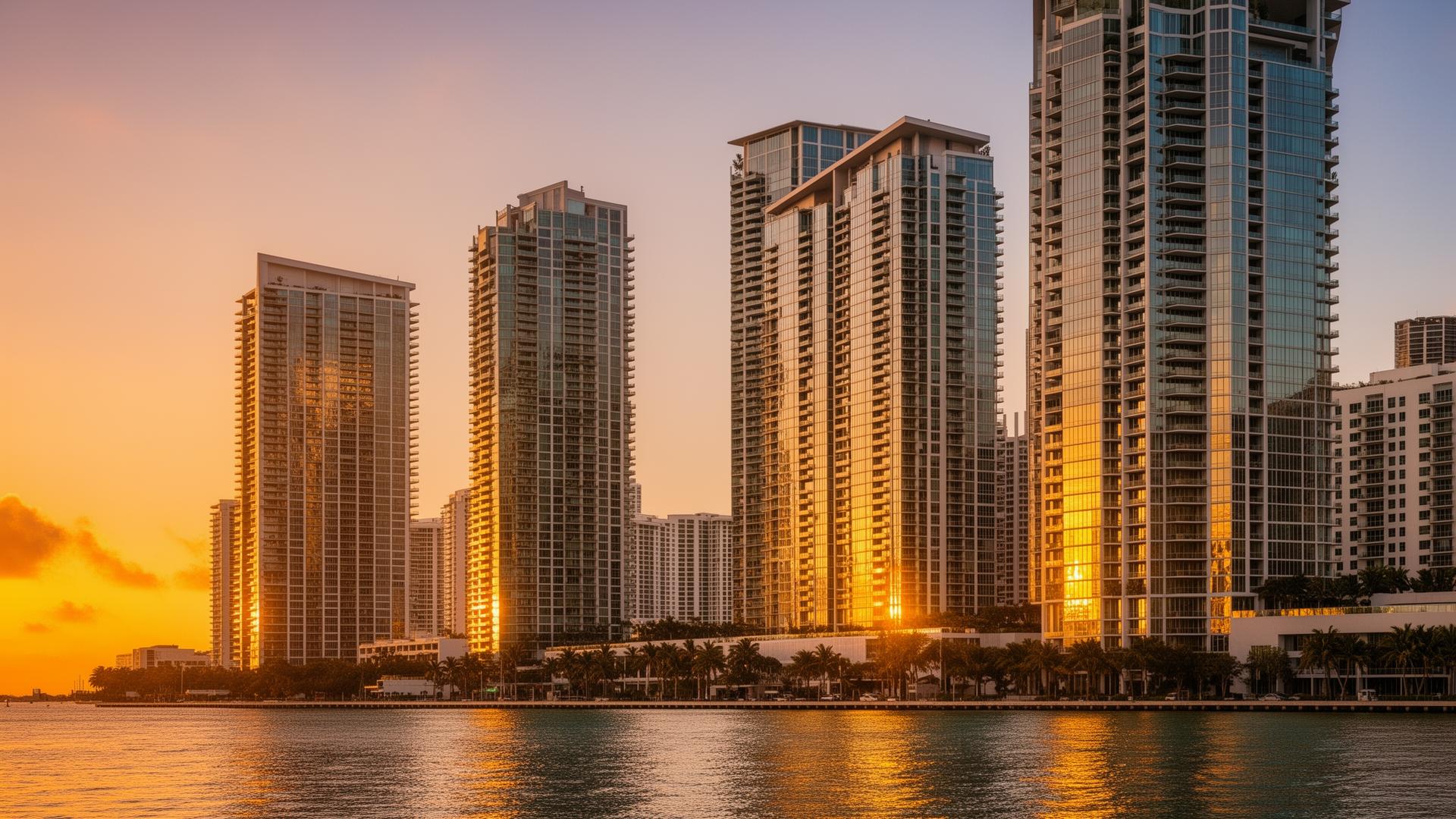
Climate-resilient real estate in South Florida: future-proofing your investment
South Florida remains a viable long-term real estate market, but the underwriting has changed. Elevation, construction standards, and documented resilience now sit alongside location as pricing inputs. The Southeast Florida Regional Climate Compact's unified projection puts regional sea level rise at roughly 14 to 26 inches by 2060 and 31 to 61 inches by 2100 above the 1992 baseline, which is the planning range local governments and engineers now design to [1]. That does not make the market uninvestable. It means resilience features have moved from optional to material, and properties without them carry measurable risk that shows up in insurance cost and, in some segments, in price.
Last updated: July 2026
What climate-resilient design actually means
Resilient design in this market is specific and engineerable, not a slogan. The features that matter to an underwriter are:
- Elevation. Finished-floor height relative to base flood elevation is the single largest driver of both flood risk and flood-insurance cost.
- Structural system. Reinforced concrete and impact-rated glazing hold up to wind loads that frame construction does not.
- Water management. Drainage, backflow prevention, and grading determine how a site handles the nuisance flooding that is already increasing.
These are the same attributes that lower insurance premiums, which is why resilience and carrying cost are tied together. For how construction type specifically affects wind pricing, the wind-mitigation and elevation improvements are where the savings concentrate.
The public-infrastructure backdrop
Individual property resilience sits on top of public investment, and that investment is substantial. In 2017 Miami voters approved the $400 million Miami Forever general obligation bond, of which roughly $192 million was directed to sea-level-rise mitigation and flood prevention such as drainage upgrades, pumps, and sea walls [2]. Miami Beach has committed more than $500 million to a stormwater program built around pumps and road elevation, funded partly through higher stormwater fees [3]. When you evaluate a neighborhood, the presence and progress of this kind of infrastructure is part of the asset's risk profile, not background noise.
How resilience shows up in value
The peer-reviewed evidence is nuanced. A widely cited study in the Journal of Financial Economics found that homes exposed to sea level rise sold for roughly 7 percent less than observably equivalent unexposed homes equidistant from the water, with the discount concentrated among more informed buyers [4]. A separate Miami-Dade-specific study found price discounts across most exposure levels, though patterns differed in the most exposed and highest-priced segments [5]. The practical read: exposure is increasingly priced, the effect is uneven across price tiers and locations, and elevation is becoming its own line item in valuation.
This is why two waterfront homes a block apart can underwrite very differently. One at a higher finished-floor elevation with impact glazing and modern drainage carries lower insurance and lower long-term risk than a lower-lying neighbor with older systems.
Insurance is where climate risk becomes a cash cost
For most owners, climate risk shows up first as an insurance bill, not a flood. Wind and flood premiums are the mechanism that converts abstract exposure into a monthly number, and that number has become a larger share of carrying cost across South Florida. The broader property-insurance market has been repricing for years, though there are signs of stabilization as private carriers re-enter through the state depopulation program. Whatever the market direction, the property-level drivers are what you control: construction type, roof, finished-floor elevation, and documented mitigation features all move the premium.
The underwriting implication is direct. When you model a purchase, do not use last year's insurance figure or a seller's stale quote. Pull current flood and wind quotes for the specific address and treat them as a real line in your cash-flow model. A home that looks like a strong buy on price can underwrite poorly once accurate insurance is loaded in, and a well-hardened home can justify a higher purchase price because its carrying cost is lower and more predictable.
Resilience features ranked by impact
Not every resilience upgrade delivers the same return. In rough order of how much they move risk and cost in this market:
- Finished-floor elevation. The dominant driver of flood risk and flood-insurance cost. It is largely fixed at construction, which is why it should weigh heavily in the buy decision.
- Structural system and glazing. Reinforced concrete and impact-rated windows reduce wind loss and often lower wind premiums.
- Roof. Age, material, and attachment method are major wind-underwriting inputs and are more upgradeable than elevation.
- Site drainage and backflow prevention. These address the nuisance flooding that is already increasing and protect against sewer backup during heavy rain.
Underwriting a purchase for the long hold
If you are buying to hold in Coconut Grove, Coral Gables, or the barrier-island neighborhoods, run the analysis on the specific parcel:
- Pull the flood zone and base flood elevation, and compare it to the home's finished-floor height.
- Get the actual current flood and wind insurance quotes, not a neighborhood average.
- Confirm the construction system and window ratings.
- Check what public drainage or elevation work is planned or complete nearby [2][3].
A property that scores well on all four is defensible for a long hold even under the Compact's higher projection range [1]. One that scores poorly is not un-buyable, but it should price for the risk. To compare candidates cleanly, start with a buyer consultation or pull a listing valuation on the homes you are weighing.
Frequently asked questions
Is South Florida still a sound long-term investment given sea level rise?
It can be, but the underwriting now weights elevation and resilience heavily. Regional projections of 14 to 26 inches by 2060 mean lower-lying, older-construction properties carry risk that better-elevated, hardened homes do not [1]. Price and insure for the specific property's exposure.
Does sea level rise actually reduce home prices?
Research finds exposed homes selling for roughly 7 percent less than equivalent unexposed homes in one national study, with mixed patterns across price tiers in Miami-Dade-specific work [4][5]. The effect is real but uneven, and it is growing as buyers get better information.
What resilience features matter most?
Finished-floor elevation relative to base flood elevation, reinforced construction, impact-rated glazing, and site drainage. These also drive insurance cost, so resilience and carrying cost move together.
How does public infrastructure factor in?
Programs like the $400 million Miami Forever Bond and Miami Beach's $500-million-plus stormwater program reduce area flood risk over time [2][3]. Their presence and progress are part of a neighborhood's risk profile and worth checking before you buy.
Gabriel
Sources
- Southeast Florida Regional Climate Compact: Unified Sea Level Rise Projection
- City of Miami: Miami Forever Bond
- Miami Beach Rising Above: Stormwater program
- Bernstein, Gustafson & Lewis, Disaster on the Horizon: The Price Effect of Sea Level Rise, Journal of Financial Economics
- Sea Level Rise, Homeownership, and Residential Real Estate Markets in South Florida (Taylor & Francis)
Gabriel A. Moyers, PA. eXp Realty. Florida License #3407280. Equal Housing Opportunity. This article is general information as of July 2026 and is not legal, tax, or financial advice. Verify current figures against authoritative sources before acting.
Thinking of selling your luxury property in Miami? Find out what your home is worth.
Get Your Home ValuationLooking for your dream home in Miami? Take our personalized home search quiz.
Start Your Home Search Quiz