
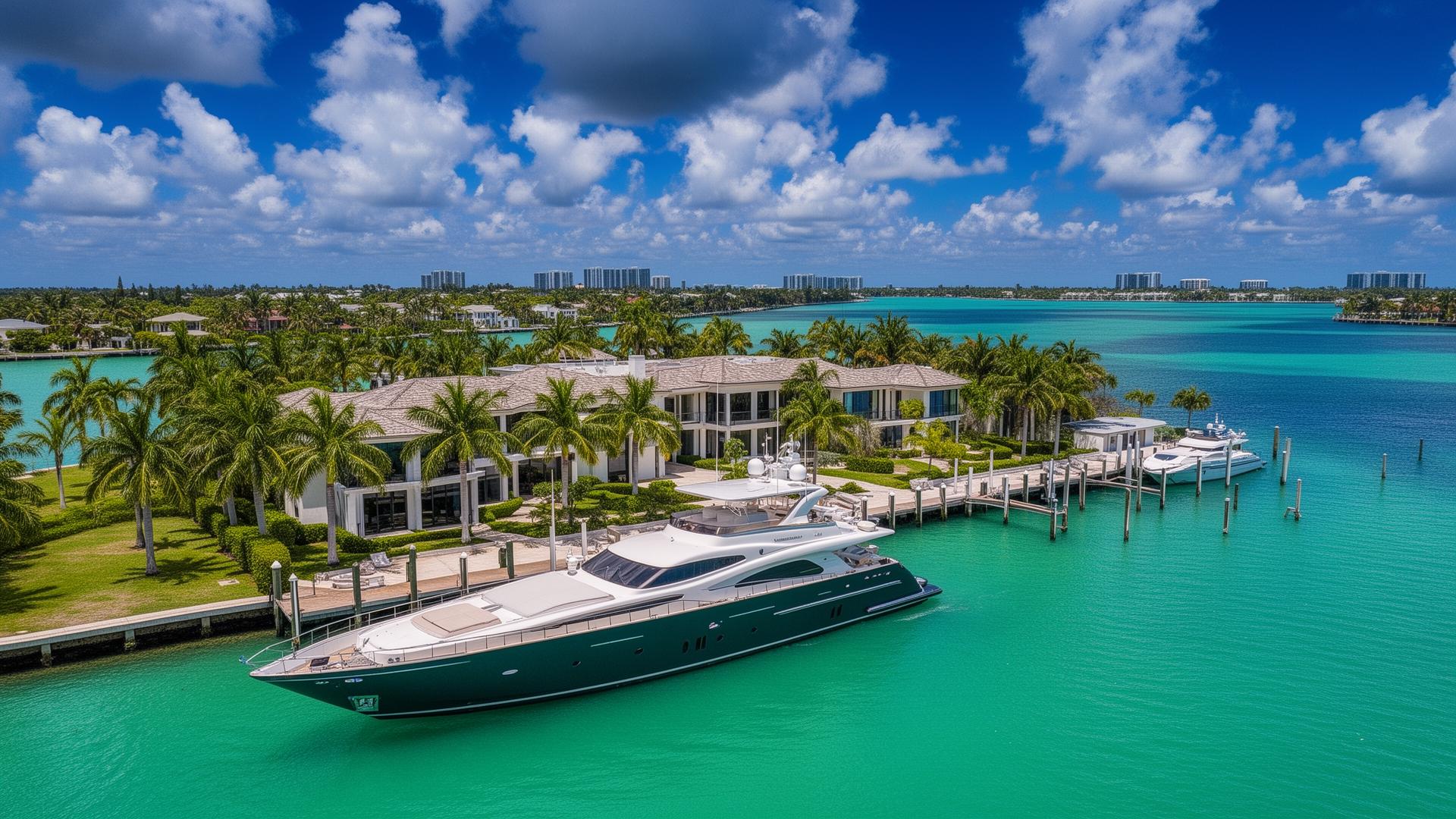
Dock Permitting in Miami-Dade: A Homeowner's Guide to Permits, Agencies, and Timelines
Last updated: June 2026
Building or replacing a private dock in Miami-Dade County usually means clearing three layers of review, not one. At the local level, almost any work in, on, over, or upon tidal waters or coastal wetlands requires a Class I permit from the county's Division of Environmental Resources Management (DERM) [1]. At the state level, the Florida Department of Environmental Protection (DEP) regulates the dock itself, though many single-family docks of 1,000 square feet or less qualify for a statutory exemption from permitting [2]. At the federal level, work in navigable waters is reviewed by the U.S. Army Corps of Engineers, which in Florida is largely handled through a streamlined State Programmatic General Permit that avoids duplicating the state review [3].
For a straightforward residential dock that fits the exemptions, the practical path is: confirm the state exemption, obtain the county Class I authorization, and clear the federal verification. For anything larger, in an Outstanding Florida Water, or near sensitive habitat, expect a full review with longer timelines. This guide walks through dock permitting in Miami-Dade agency by agency, with the thresholds and citations you can verify yourself.
Why dock permitting matters to the underwriting
Dock access is part of what you are buying, and part of what you are pricing. Waterfront homes in Miami-Dade trade at a meaningful premium to the broader market, where the median sale price was $568,295 as of May 2026 [4]. A functioning, permitted dock with adequate water depth supports that premium. A dock that was built or rebuilt without permits is a liability that can surface in title, insurance, and closing, so it belongs on your diligence list before you commit. If you are weighing a waterfront purchase, a buyer consultation is the right place to map the dock's permit history into the offer.
The three agencies and what each reviews
Miami-Dade DERM (county): the Class I permit
DERM's Class I permit is the local gate. It is required before performing any work in, on, over, or upon the tidal waters or coastal wetlands of Miami-Dade County or any of its municipalities, which includes constructing or substantially modifying a dock or pier [1].
Through the Class I process, the county reviews the project for environmental and other impacts and may require modifications to avoid or minimize those impacts, with mitigation required for unavoidable ones [1]. Application and permit fees for coastal construction are based on the cost of construction [1]. Work must be performed by a contractor holding the applicable certificate of competency and licensed in Miami-Dade County or the State of Florida [1].
Some lower-impact activities can qualify for an Expedited Administrative Authorization (EAA), which DERM processes in roughly 10 days when the work meets the criteria in Section 24-48 of the county code and is determined not to cause adverse environmental impacts [1]. A full Class I review for a new dock takes longer, and the county can request additional information during review.
Florida DEP (state): the exemption or the permit
At the state level, many private single-family docks are exempt from DEP permitting under Florida Statute 403.813. A private dock is exempt when it has 1,000 square feet or less of over-water surface area, or 500 square feet or less if it sits in an Outstanding Florida Water [2]. The exemption carries conditions: the structure must be held in place by pilings or be a floating dock built without filling or dredging, it must serve recreational, noncommercial boat mooring or storage, and it is limited to a single dock measured along 65 feet of shoreline (unless the parcel is narrower) [2].
If your dock exceeds those limits, sits in a protected water, or otherwise falls outside the exemption, you move into a DEP environmental resource permit instead of a simple exemption. The state publishes a self-certification path for qualifying exempt work, with verification options for owners who want a written confirmation on file [5].
U.S. Army Corps of Engineers (federal): the SPGP
Because docks sit in navigable waters of the United States, federal review applies. Rather than running a separate federal application for every small dock, the Corps' Jacksonville District uses a State Programmatic General Permit (the current version is SPGP VI) to authorize minor piling-supported structures, including docks and piers, in coordination with Florida DEP [3]. The arrangement is designed to avoid duplicating the state and federal reviews for routine work [3].
The SPGP does not cover everything. Certain coastal counties are excluded from federal self-certification, and work in federal navigational channels or in designated critical habitat (such as American crocodile or certain coral and right-whale habitat) is carved out and requires individual federal review [3]. Miami-Dade waters include sensitive habitat, so confirm your specific location is eligible before assuming the streamlined path applies.
How the layers fit together
For a typical Miami-Dade single-family dock that fits the thresholds, the sequence looks like this:
- State first, conceptually: confirm the dock qualifies for the Florida Statute 403.813 exemption (1,000 square feet, or 500 in an Outstanding Florida Water) [2].
- County: obtain the DERM Class I authorization, which is the local prerequisite for any in-water work [1].
- Federal: clear the Army Corps SPGP verification, confirming the site is not in an excluded county or critical-habitat carve-out [3].
These do not run in strict isolation, and the state and federal reviews are coordinated by design [3], but each agency has its own jurisdiction and you generally need all three boxes checked before construction.
Timelines and what stretches them
There is no single statewide clock for dock permitting. DERM's expedited EAA path is processed in about 10 days for qualifying low-impact work [1], while a full Class I review for a new dock runs longer and can pause when the county requests additional information. State and federal coordination adds time when the work falls outside the exemption or the SPGP. Realistic planning for a new, non-exempt dock in Miami-Dade should assume several months from a complete application to authorization, and longer where habitat, water depth, dredging, or neighbor objections are in play. The single fastest way to shorten the timeline is to submit a complete, accurate application with the required engineer certification the first time.
Buying or selling a home with a dock
If you are buying, treat the dock as a permitted improvement to verify, not a given. Ask for the Class I permit and final inspection records, confirm the dock's over-water square footage against the exemption, and check water depth for the vessel you intend to keep. If you are selling, clean permit records remove a common point of friction at closing. Owners preparing a waterfront listing can start with a listing valuation so the dock and water access are priced into the strategy from the outset. For broader market context, the blog covers related waterfront topics.
Frequently asked questions
Do I need a permit to build a private dock in Miami-Dade?
In nearly all cases, yes at the county level. DERM's Class I permit is required before any work in, on, over, or upon tidal waters or coastal wetlands of Miami-Dade County [1]. Separately, many single-family docks of 1,000 square feet or less are exempt from state DEP permitting under Florida Statute 403.813, but that state exemption does not remove the county requirement [2].
What is the size limit for an exempt single-family dock in Florida?
A private dock is exempt from DEP permitting when it has 1,000 square feet or less of over-water surface area, or 500 square feet or less if it is located in an Outstanding Florida Water [2]. The exemption also requires piling or non-dredging floating construction, recreational noncommercial use, and a single dock along 65 feet of shoreline [2].
Do I also need federal approval from the Army Corps of Engineers?
Usually the federal review is handled through the Corps' State Programmatic General Permit, which covers minor docks and piers in coordination with Florida DEP to avoid a duplicate application [3]. Work in excluded counties, federal navigational channels, or designated critical habitat is carved out and requires individual federal review [3].
How long does dock permitting take in Miami-Dade?
It depends on the path. DERM processes qualifying low-impact work through an Expedited Administrative Authorization in about 10 days [1]. A full Class I review for a new dock takes longer, and state and federal coordination can extend a non-exempt project to several months [1][3].
Does a dock add value to a Miami-Dade waterfront home?
A permitted dock with adequate water depth supports the premium that waterfront homes command over the broader market, where the Miami-Dade median sale price was $568,295 as of May 2026 [4]. An unpermitted or non-conforming dock works the other way and can complicate insurance, title, and closing.
Sources
If you are weighing a waterfront purchase or preparing one to sell, I am glad to walk the dock's permit history through the numbers with you. Reach out anytime.
Gabriel
Gabriel A. Moyers, PA. eXp Realty. Florida License #3407280. Equal Housing Opportunity. This article is general information as of June 2026 and is not legal, tax, or financial advice. Verify current figures against Miami-Dade DERM, the Florida Department of Environmental Protection, and the U.S. Army Corps of Engineers before acting.
Thinking of selling your luxury property in Miami? Find out what your home is worth.
Get Your Home ValuationLooking for your dream home in Miami? Take our personalized home search quiz.
Start Your Home Search Quiz