
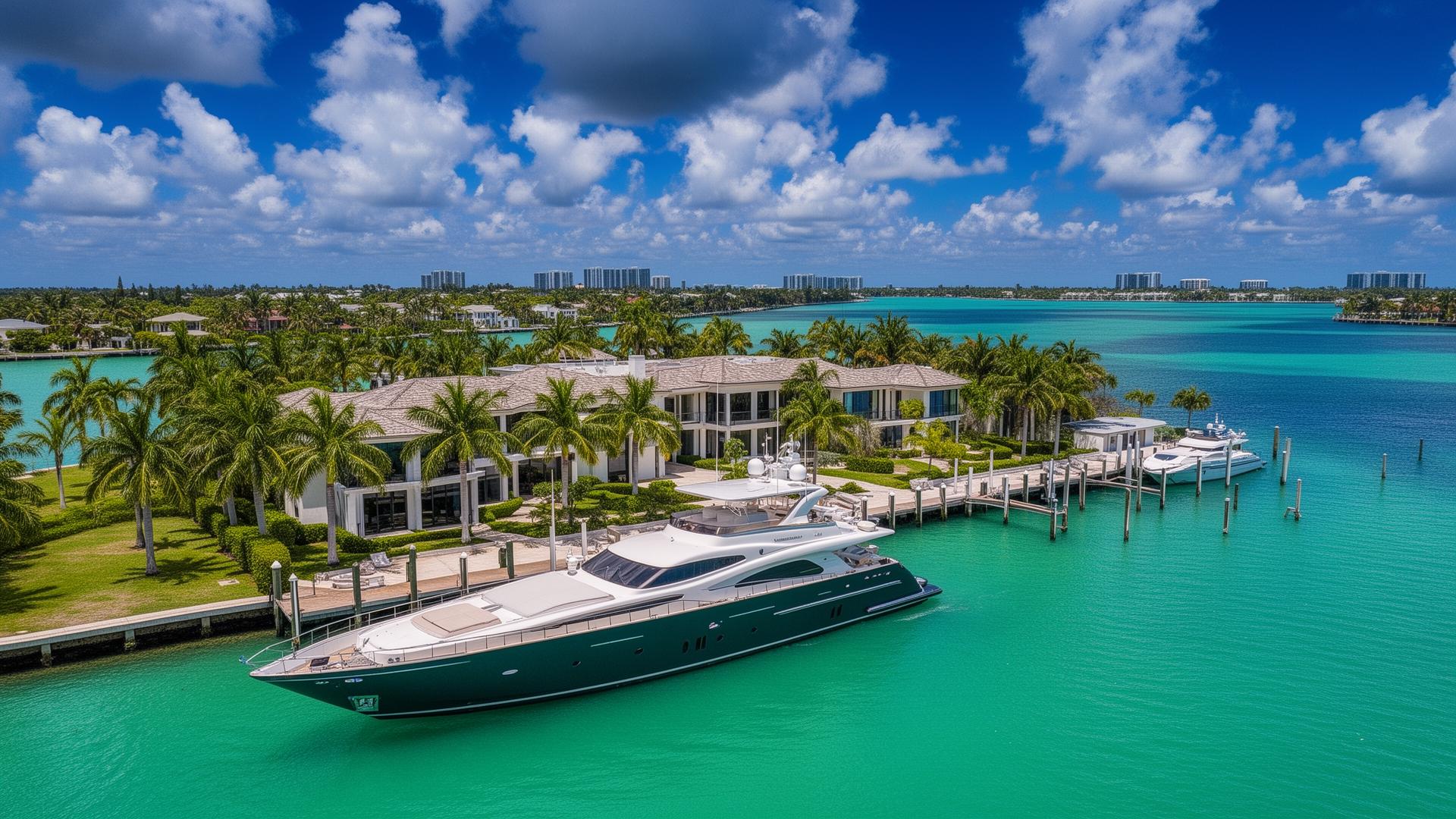
Waterfront Home Maintenance: Protecting Your Investment
Last updated: June 2026
Waterfront home maintenance in Miami comes down to five recurring line items: the seawall, the dock, salt-air corrosion, hurricane readiness, and the insurance underneath all of it. Budget for the seawall first. A South Florida seawall typically lasts 30 to 50 years, and early repairs run roughly $100 to $250 per linear foot, while a full replacement runs $150 to $600 per linear foot depending on material [1]. On a 100-foot lot, that is a five-figure repair versus a six-figure replacement, so the inspection cadence is the cheapest insurance you can buy. Inspect the seawall at least twice a year for cracks, voids, and soil loss behind the cap [1].
The rest of the plan layers on top: dock hardware and pilings checked seasonally, salt-air corrosion managed on metal and HVAC, hurricane protection tested before June, and a flood and wind insurance file kept current. Treat each as a budgeted maintenance reserve, not a surprise. A waterfront property holds its value when the structural envelope (seawall, dock, openings) and the paper envelope (flood policy, wind-mitigation form) are both documented and current. The sections below break each line item down with current costs and the source behind every figure.
Why waterfront home maintenance is an underwriting question, not a chore list
A buyer underwriting a Miami waterfront purchase is pricing two things: the structure and the carrying cost. Deferred seawall work, an aging dock, and a missing wind-mitigation form all show up as either a price cut or a failed deal at inspection. The owner who keeps a maintenance file (inspection reports, the elevation certificate, the wind-mitigation form) controls the negotiation later.
The carrying cost matters just as much. Florida has the highest average homeowners insurance in the country, around $7,136 per year for a $300,000 dwelling policy as of 2026, against a national average well under half that [2]. Coastal Miami-Dade properties typically sit at the high end of the state range. Add flood insurance on top, and the annual envelope is a real number that a serious buyer will model. Maintenance is how you keep that number from drifting higher.
If you are weighing what your waterfront property would bring today, a current listing valuation that accounts for seawall condition and insurance profile is a better starting point than a generic automated estimate.
The seawall: your largest line item
The seawall is the single component that separates a waterfront lot from open water, and it is the one most owners underbudget. South Florida seawalls generally last 30 to 50 years, and neglect can cut that to 20 [1]. The failure mode is rarely sudden. It starts as hairline cracks, weep-hole blockage, and soil washing out behind the cap, then accelerates.
What to watch for
- Cracks or spalling in the cap and panels
- Soil settling, sinkholes, or depressions in the yard near the wall (a sign of fill loss behind the wall)
- Rust stains bleeding through concrete (corroding internal steel)
- Tie-back or anchor movement, leaning panels
The repair-versus-replace math
Catching problems early is the whole game. Targeted repairs (grouting, polyurethane foam injection, panel patching) run about $100 to $250 per linear foot, while full reconstruction runs $150 to $600 per linear foot depending on material, with vinyl at the low end and concrete at the high end [1]. On a 100-foot waterfront lot, that is the difference between a low-five-figure repair and a six-figure replacement. Two inspections a year and prompt small repairs are how owners stay on the cheaper side of that line [1].
Dock, pilings, and hardware
Docks live in the same corrosive environment as the seawall but get loaded and unloaded constantly, so the wear is mechanical as well as chemical. Work a seasonal check into the calendar:
- Pilings: probe for soft spots, marine borer damage, and movement at the waterline and mudline.
- Hardware: cleats, bolts, brackets, and lift cables are the first things to corrode. Stainless and galvanized fasteners still need inspection and periodic replacement.
- Decking and stringers: look for rot, loose boards, and fastener pull-through.
- Lifts and pilings under load: test before storm season, not during.
A boat lift, dock, and davits are often insured assets. Photograph them annually for your claims file so a post-storm adjuster works from documented pre-loss condition.
Salt-air corrosion: the slow, constant tax
Salt air is the maintenance cost that never stops. It attacks anything metal and shortens the service life of mechanical systems that inland homes run for years longer.
- HVAC condensers mounted outdoors corrode faster near salt water. Rinse coils on a regular schedule and budget for a shorter replacement cycle than inland.
- Exterior metal: railings, light fixtures, garage hardware, gates, and outdoor kitchens need rinsing and protective coatings.
- Windows and doors: rollers, tracks, and locking hardware seize from salt and grit; keep them clean and lubricated.
- Roof and fasteners: coastal roofs and their fasteners weather harder; have the roof inspected on a tighter cycle.
None of these are large individual costs. The point is that they are recurring, predictable, and cheaper to handle as routine maintenance than as emergency replacement.
Hurricane readiness and the wind-mitigation discount
Hurricane preparation on the water is both a safety task and an insurance lever. Florida law (Statute 627.711) requires insurers to notify policyholders of available premium discounts for construction features that reduce windstorm loss, verified through a state Uniform Mitigation Verification Inspection Form [3]. Features that can qualify include roof shape, roof-deck attachment, secondary water resistance, and opening protection such as impact glass or rated shutters.
Practical readiness items:
- Have impact-rated openings or tested shutters, and confirm every opening is actually covered.
- Keep a current wind-mitigation inspection on file; the form is what unlocks the discount, and missing it is leaving money on the table.
- Service the generator and secure or stage dock and patio items before each season.
- Keep the seawall and drainage clear so storm surge has somewhere to go.
The wind-mitigation form is a maintenance document with a direct return: it is the paperwork that lowers the premium, and Florida law requires insurers to apply the qualifying discounts [3].
Flood and property insurance: keep the file current
Flood insurance is separate from homeowners insurance and is priced to the individual property under FEMA's Risk Rating 2.0 methodology. For a primary residence, federal law caps annual NFIP premium increases at 18%, so a property priced below its full-risk rate climbs in steps rather than all at once [4]. Average flood premiums in Miami-Dade are moderate for many homes but rise sharply for high-risk coastal parcels, where annual costs can reach several thousand dollars or more depending on elevation and zone [5].
On the homeowners side, there is some relief in 2026. Citizens Property Insurance recommended a statewide average rate decrease of 2.6% for personal lines, with three of five policyholders seeing an average reduction of 11.5%, or about $359, effective June 1, 2026 [6]. That is the first Citizens decrease in years, but coastal waterfront properties still carry the higher end of the range, which is why the wind-mitigation form and a clean claims history matter.
Keep these documents current and accessible: the elevation certificate, the most recent flood and wind policies, the wind-mitigation form, and dated photos of the seawall, dock, and roof. If you are buying, fold all of this into your due diligence; a buyer consultation is the place to pressure-test the carrying cost before you are under contract. If you are selling, the same file shortens negotiations and protects price when you sell your Miami home.
A simple annual cadence
- Twice a year: seawall inspection and any small repairs [1].
- Seasonally: dock pilings, hardware, and lift; rinse exterior metal and HVAC coils.
- Before June 1: test shutters and impact openings, service the generator, confirm the wind-mitigation form is on file [3].
- At each renewal: review flood and wind policies, update photos and the elevation certificate.
Frequently asked questions
How often should a Miami seawall be inspected?
At least twice a year, looking for cracks, spalling, rust staining, and soil loss behind the wall. South Florida seawalls last about 30 to 50 years, and catching problems early keeps you in repair range ($100 to $250 per linear foot) instead of replacement range ($150 to $600 per linear foot) [1].
Is flood insurance required on a waterfront home?
It is not automatically required by law, but a lender will require it if the home sits in a FEMA Special Flood Hazard Area, and it is separate from your homeowners policy. NFIP premiums are set to each property's risk under Risk Rating 2.0, and annual increases for a primary residence are capped at 18% by federal statute [4][5].
Does waterfront maintenance actually lower my insurance?
Some of it does, directly. Under Florida Statute 627.711, insurers must offer premium discounts for documented wind-mitigation features, verified on a state inspection form, so keeping that form current can reduce your wind premium [3]. Maintaining a clean claims history and documented condition also supports better pricing at renewal.
How much is homeowners insurance on a Miami waterfront property?
It varies widely by structure and location. Florida's statewide average is around $7,136 per year for a $300,000 dwelling policy as of 2026, the highest in the nation, and coastal Miami-Dade properties typically sit at the upper end [2]. Flood insurance is an additional, separate cost.
What documents should I keep for resale?
Keep the elevation certificate, current flood and wind policies, the wind-mitigation inspection form, recent seawall and dock inspection reports, and dated photos of the seawall, dock, and roof. This file shortens buyer due diligence and protects your price.
If you want a read on how your waterfront property's condition and insurance profile affect what it would sell for today, I am glad to walk through it with you. Reach out anytime and we can look at the numbers together.
Gabriel
Sources
- Helicon, "Seawall Repair Cost Per Foot: 2026 Price Guide" — https://heliconusa.com/seawall-repair-cost-per-foot/
- Insurance.com, "Average homeowners insurance rates by state in 2026" — https://www.insurance.com/home-and-renters-insurance/home-insurance-basics/average-homeowners-insurance-rates-by-state
- The Florida Senate, "Statutes 627.711 — Notice of premium discounts for hurricane loss mitigation; uniform mitigation verification inspection form" — https://www.flsenate.gov/laws/statutes/2024/627.711
- Congress.gov (Congressional Research Service), "National Flood Insurance Program Risk Rating 2.0: Frequently Asked Questions" — https://www.congress.gov/crs-product/IN11777
- NerdWallet, "Flood Insurance in Florida: 2026 Costs and Coverage" — https://www.nerdwallet.com/insurance/homeowners/learn/flood-insurance-florida
- Citizens Property Insurance Corporation, "Citizens Recommends Rate Cuts for Most Policyholders" (Dec. 10, 2025) — https://www.citizensfla.com/-/20251210-citizens-recommends-rate-cuts-for-most-policyholders
Gabriel A. Moyers, PA. eXp Realty. Florida License #3407280. Equal Housing Opportunity. This article is general information as of June 2026 and is not legal, tax, or financial advice. Verify current figures against Citizens Property Insurance, FEMA's National Flood Insurance Program, and the Florida Statutes before acting.
Thinking of selling your luxury property in Miami? Find out what your home is worth.
Get Your Home ValuationLooking for your dream home in Miami? Take our personalized home search quiz.
Start Your Home Search Quiz