
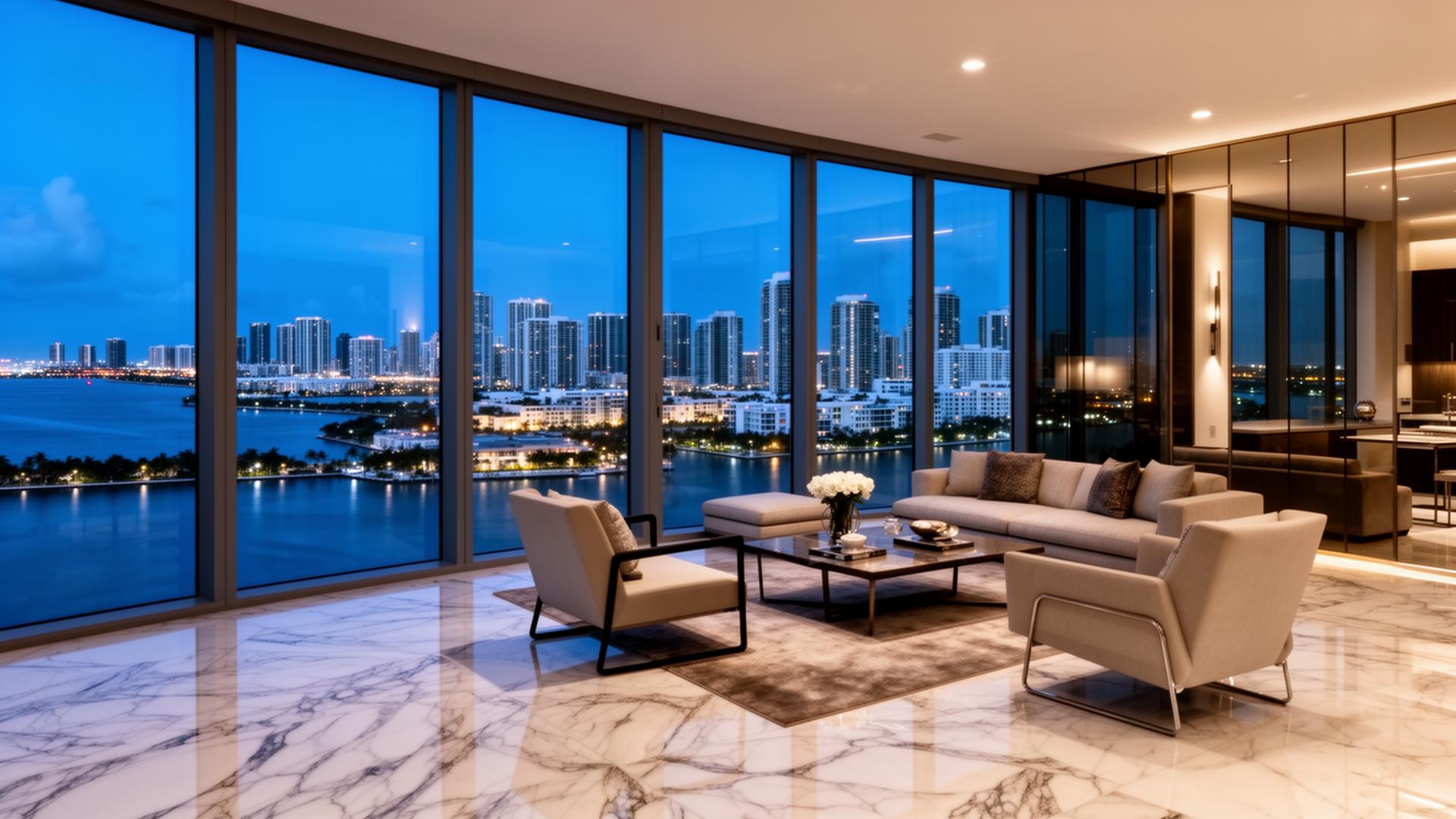
Entertaining at Home: Miami Properties Built for Hosting
Last updated: July 2026
Miami homes for entertaining share a short list of traits: a working chef's kitchen that opens to the main living space, a covered outdoor area that stays usable in heat and rain, a summer kitchen close to the pool, and a floor plan that lets a crowd move between inside and outside without bottlenecks. If you are buying with hosting in mind, weight the layout and the covered square footage first, because those are hard to add later. If you are selling, understand that the features buyers enjoy most and the features that return the most at resale are not always the same line item.
This is the underwriting lens I use with clients. Some upgrades read as broad market value, meaning a wide pool of buyers will pay for them. Others read as personal preference, meaning you build them for your own use and should not expect a dollar-for-dollar return. Knowing which is which changes how much you spend and where.
What makes a Miami home host well
Entertaining is a flow problem before it is a finish problem. The homes that work put the kitchen, the primary gathering room, and the outdoor space on one connected axis so a host can cook, talk, and watch the pool at the same time. When those three zones are split across levels or separated by narrow doorways, even a well-appointed home feels cramped when twenty people arrive.
The features that come up most in Miami hosting requests are consistent. A chef's kitchen with a large island and space for more than one cook. Wide sliding or folding glass walls that erase the line between the great room and the patio. A covered lanai or loggia that provides shade and rain protection so the outdoor space is not weather-dependent. A summer kitchen positioned near the pool so the host is not walking food across the yard. And enough parking or drop-off room that guests are not a problem for neighbors.
Homeowners who invest in outdoor living tend to be very satisfied with the result. The National Association of Realtors gives outdoor projects a typical Joy Score of 9.7 on its scale, and 68 percent of owners reported a greater desire to be in their homes after the work [1]. That satisfaction is real, and it is also a caution: high enjoyment does not automatically mean high resale recovery, which is the distinction the rest of this article works through.
The chef's kitchen and how it opens to the room
In Miami, the interior kitchen is still the anchor. Buyers who host look for a wide island with seating, a second prep zone or sink, a range with real output, and enough refrigeration and pantry storage to stage a party without the counters disappearing. What separates a hosting kitchen from a nice kitchen is the connection to the gathering space. An island that faces the great room and the pool lets the host stay in the conversation. A kitchen closed off behind a wall does the opposite.
On resale, a functional, current kitchen is close to non-negotiable in the price tiers where entertaining matters. It is one of the projects owners rate most highly for satisfaction, with kitchen upgrades earning a top Joy Score in the most recent NAR remodeling data [3]. From an underwriting view, a mid-range kitchen refresh that fixes flow and updates finishes usually supports value across a wide buyer pool. A hyper-custom kitchen built around one cook's specific habits is more personal and harder to recoup.
Brickell and the surrounding condo market shift this calculation. In a tower, the kitchen is fixed and the entertaining happens across the great room, the balcony, and the building's amenity decks. If you are shopping condos, read the Brickell inventory for open-plan units and usable outdoor terraces rather than expecting to rebuild the kitchen.
Summer kitchens, covered lanais, and indoor-outdoor flow
The summer kitchen is the feature most associated with Miami hosting, and for good reason. Our climate lets an outdoor cooking and dining area function most of the year, which is not true in most of the country. A summer kitchen near the pool with a grill, a sink, refrigeration, and counter space turns the yard into a second living room.
Demand data backs this up. In Houzz renovation research, 12 percent of renovating homeowners were adding or upgrading an outdoor kitchen, and the top reasons owners gave for outdoor projects were improving aesthetics at 51 percent, adding entertainment space at 37 percent, and extending the living space of the home at 33 percent [2]. Those three motives describe exactly what a Miami buyer is underwriting when they walk a backyard.
The piece people underestimate is cover. An uncovered patio in Miami is usable in short windows; a covered lanai or loggia is usable through afternoon sun and summer rain. Covered, usable outdoor square footage is one of the strongest indoor-outdoor value drivers here, and it is difficult to add after the fact because it depends on the roofline and setbacks. When you tour, separate the covered area from the total lot and ask how much of the outdoor space actually works in July.
Neighborhoods with larger lots make full summer-kitchen and pool programs realistic. Pinecrest and Coral Gables offer the depth for a covered loggia, a pool, and a real yard, which is why they draw buyers who host at scale.
Wet bars, wine rooms, and the spaces that read as personal
Wet bars, dedicated wine rooms, home theaters, and elaborate pool features land differently on the resale ledger. Owners often love them, and they can help a home show well, but they tend to return less of their cost because they serve a narrower slice of buyers. The most recent NAR remodeling data illustrates the general gap between enjoyment and recovery: the highest cost-recovery projects were a new steel front door at 100 percent, a closet renovation at 83 percent, and a fiberglass front door at 80 percent, while a bathroom renovation recovered about 50 percent [3]. The pattern is that broad, functional improvements recover more than specialized ones.
Apply that to entertaining features. A well-placed wet bar in a great room that already flows is a reasonable, broadly appealing add. A temperature-controlled wine room sized for a serious collection is a personal-use build, and you should price it as something you are buying for yourself, not as a value you will fully recapture. The same is true of oversized outdoor kitchens with commercial-grade equipment. Enjoyable, expensive, and only partly reflected in the next sale price.
If you are weighing a specific upgrade before listing, a current comparative analysis of what recently sold in your pocket of the market is more useful than any national average. A listing valuation will show which entertaining features are actually moving price in your area right now, which is the number that matters.
Reading a floor plan for hosting before you buy
When I walk a home with a buyer who entertains, I look at the path a guest takes from the front door to a drink to the pool. If that path runs through the kitchen work zone, through a narrow hall, or up a flight of stairs, the home will feel harder to host in than the square footage suggests. Sightlines matter too: a host wants to see the main room, the bar, and the pool from the kitchen.
Waterfront and view properties in Coconut Grove and along the beach corridors add another layer, because the view becomes part of the entertaining experience and the outdoor space is doing double duty. In those homes, prioritize the covered outdoor area and the glass line to the view over interior square footage you will rarely use.
If you want help matching your hosting priorities to specific inventory and price tiers, a buyer consultation is where we map must-haves against what the market is actually delivering.
Frequently asked questions
Which entertaining feature adds the most resale value in Miami?
Covered, usable outdoor living space and a functional kitchen that opens to it tend to support value across the widest buyer pool, because most buyers in the entertaining tiers want both. Specialized features like wine rooms and high-end summer kitchens are enjoyable but recover less of their cost. National remodeling data consistently shows broad, functional projects recovering more than niche ones [3].
Do outdoor kitchens pay for themselves at resale?
Not reliably as a dollar-for-dollar return. Owners report high satisfaction with outdoor projects [1], and they help a home show well, but recovery depends on scope, location, and buyer pool. Treat a modest summer kitchen as a broadly appealing add and an oversized one with commercial equipment as a personal-use investment. Get a local listing valuation before spending, since Miami micro-markets vary.
What is the difference between a chef's kitchen and a regular kitchen for hosting?
For hosting, the difference is flow and capacity: a large island, a second prep zone, real range output, ample refrigeration, and an open connection to the gathering space and the pool. A closed-off kitchen, however nice, works against entertaining because the host is separated from guests.
Can I add a covered outdoor area to a Miami home later?
Sometimes, but it is one of the harder features to add because it depends on the roofline, lot setbacks, and permitting. That is why I tell buyers to weight existing covered, usable outdoor square footage heavily when they tour, rather than assuming they can build it after closing.
Which Miami neighborhoods work best for entertaining at home?
It depends on scale. Larger-lot areas like Pinecrest and Coral Gables support full pool, loggia, and summer-kitchen programs, while condo markets like Brickell shift entertaining toward open-plan units, terraces, and building amenity decks. Match the neighborhood to how you host.
Gabriel
Sources
- National Association of Realtors, Remodeling Impact Report: Outdoor Features
- Houzz, outdoor living and renovation trends research
- National Association of Realtors, 2025 Remodeling Impact Report
Gabriel A. Moyers, PA. eXp Realty. Florida License #3407280. Equal Housing Opportunity. This article is general information as of July 2026 and is not legal, tax, or financial advice. Verify current figures against authoritative sources before acting.
Thinking of selling your luxury property in Miami? Find out what your home is worth.
Get Your Home ValuationLooking for your dream home in Miami? Take our personalized home search quiz.
Start Your Home Search Quiz