
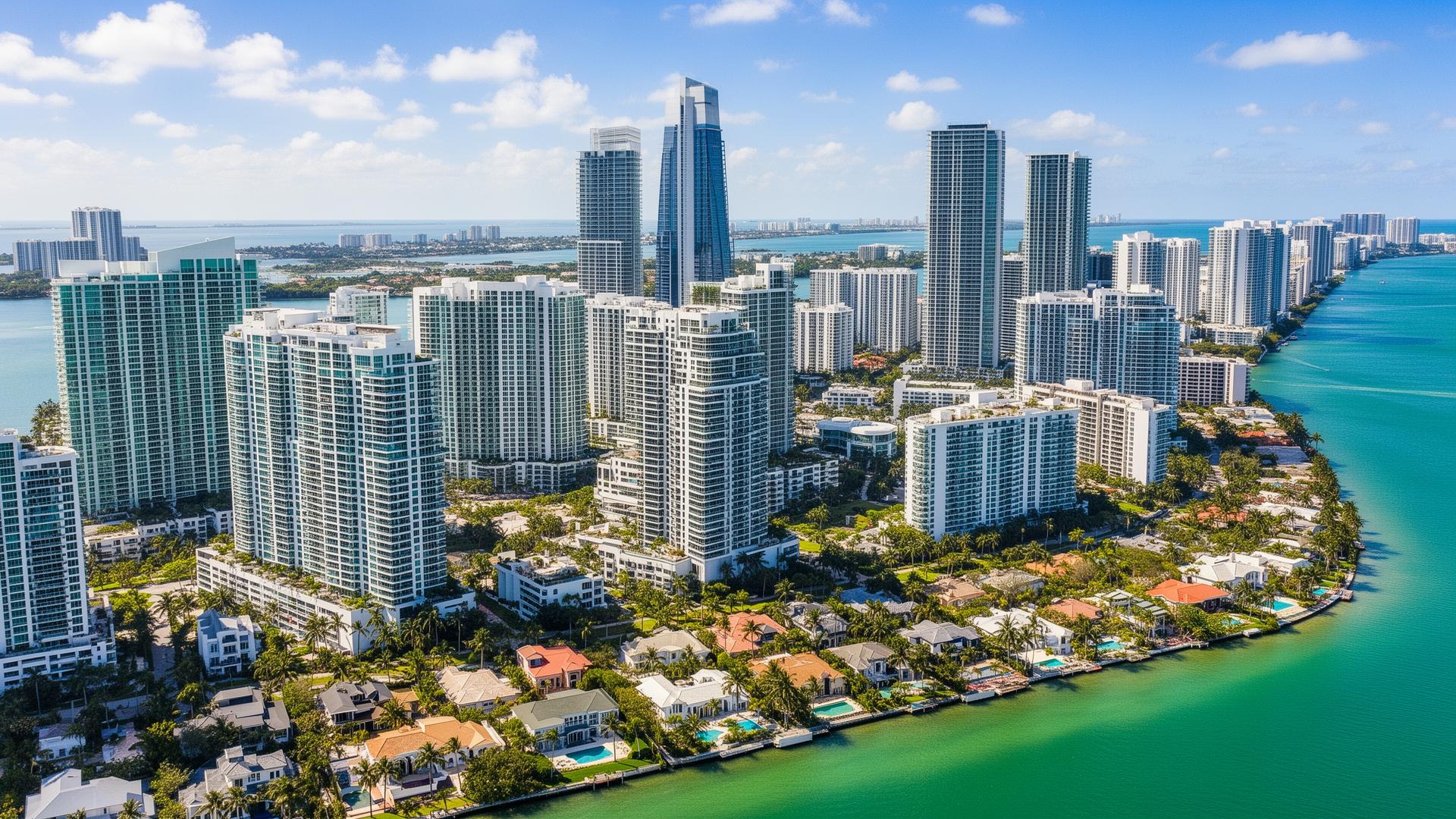
Florida homestead exemption 2026: deadlines and guide
To claim the Florida homestead exemption for the 2026 tax year, you must apply with your county property appraiser by March 1, and you must have owned and occupied the home as your permanent residence as of January 1, 2026 [1]. The exemption reduces your home's assessed value by up to $50,000 under Florida Statute 196.031, and, more importantly for long-term owners, it activates the Save Our Homes cap that limits annual assessment increases to 3% or the change in the Consumer Price Index, whichever is lower, under Florida Statute 193.155 [2][3]. For 2026, the Miami-Dade County Property Appraiser lists a total homestead exemption of $51,411 because the second portion is indexed for inflation [1]. This guide covers the deadline, how much the exemption is worth, and the portability benefit that many Florida owners overlook.
Last updated: July 2026
The March 1 deadline
The homestead application deadline is March 1 of the tax year. This applies to anyone who bought a Florida primary residence during the prior year and to anyone who owns an eligible home but has not yet filed [1]. You must have occupied the property as your permanent residence as of January 1, 2026 to qualify for the 2026 exemption [1]. The exemption is not granted automatically when you close on a home; you have to apply with the county property appraiser.
If you miss March 1, Florida allows late filing through the deadline printed on your August TRIM (Truth in Millage) notice, which is generally on or before mid-September. Treat that as a backstop, not a plan, because a missed year is a year of lost savings.
How much the exemption is worth
The homestead exemption is structured in two parts, and they apply to different portions of your tax bill.
- The first $25,000 of assessed value is exempt from all property taxes, including school district taxes [2].
- A second $25,000 applies to assessed value between $50,000 and $75,000 and exempts that band from non-school taxes [2].
That is the source of the up-to-$50,000 figure. Because the second portion is indexed for inflation, the Miami-Dade Property Appraiser lists a 2026 total of $51,411 [1]. The exemption gives a homesteaded owner in Coral Gables or anywhere in the state a modest annual reduction, but its bigger role is unlocking the assessment cap described next.
The Save Our Homes cap: the bigger benefit
For a long-term owner, the assessment cap usually outweighs the dollar exemption. Once a property is homesteaded, Save Our Homes limits any annual increase in its assessed value to 3% or the change in the Consumer Price Index, whichever is lower, under Florida Statute 193.155 [3]. When market prices rise faster than 3% a year, the gap between your capped assessed value and market value grows, and that gap is what protects you from tax increases in a rising market. Over a decade of ownership, that compounding cap can be worth far more than the initial exemption.
Portability: carrying your cap to a new home
If you sell a Florida homestead and buy another Florida homestead, portability lets you transfer some or all of your accumulated Save Our Homes assessment difference to the new property, subject to statutory limits and a separate application. This is the piece many owners miss when they move within Florida. A longtime owner with a large assessment gap can carry a substantial benefit forward, which can meaningfully lower the tax basis on the next home. If you are planning a move, factor portability into the decision, and a property valuation can help you model the tax picture on both sides of the transaction.
Additional exemptions that stack on homestead
Once you have the base homestead, Florida law offers further exemptions that can layer on top, each with its own eligibility test.
- Limited-income senior exemption (Fla. Stat. 196.075): homesteaded residents age 65 or older who meet the income test may receive an additional exemption of up to $50,000 on county and municipal taxes. The adjusted income limitation for the 2026 exemptions is $38,686 [4].
- Veteran disability exemption: a $5,000 exemption is available to an honorably discharged veteran with a service-connected disability of 10% or greater [4].
- Total and permanent disability exemption: homestead property owned by a quadriplegic, or by another totally and permanently disabled resident who is legally blind or requires a wheelchair, can be fully exempt from ad valorem taxes, subject to the statute's conditions [4].
These are not automatic. Each requires its own application and supporting documentation filed with the county property appraiser, generally by the same March 1 deadline.
The TRIM notice and the appeal window
Filing for homestead sets your exemption; the TRIM notice is where you check the assessment behind it. Each August the property appraiser mails a TRIM (Truth in Millage) notice with your proposed assessed value and taxes. If you disagree, you have 25 days from the notice mailing to file a petition with the county Value Adjustment Board using Florida Department of Revenue Form DR-486, with a $15 filing fee in most counties [5]. The board must receive the petition by the 25th day, and a postmark is not sufficient [5]. Treat the TRIM notice as an action item, not junk mail.
A note on the 2026 ballot measure
Florida voters are scheduled to decide a measure in November 2026 that, if ratified, would increase the homestead exemption for non-school taxes in future years. Because it is not law yet, do not plan around it. Underwrite with the current $50,000 base and the 2026 indexed figure. For related tax topics, see the blog, and if you are preparing to sell, a seller consultation is the place to align the timing with your exemption and portability window.
Frequently asked questions
What is the deadline to file for the Florida homestead exemption?
You must apply with your county property appraiser by March 1 of the tax year, and you must have occupied the home as your permanent residence as of January 1 [1].
How much does the homestead exemption reduce my taxes?
It reduces assessed value by up to $50,000 under Florida Statute 196.031, with the first $25,000 exempt from all taxes and the second $25,000 (on value between $50,000 and $75,000) exempt from non-school taxes [2]. Miami-Dade lists a 2026 total of $51,411 because the second portion is indexed [1].
What is portability and how long do I have to use it?
Portability lets you transfer your accumulated Save Our Homes assessment benefit from a prior Florida homestead to a new one, subject to statutory limits and a separate application. Confirm the current transfer window and caps with your county property appraiser before relying on it.
What happens if I miss the March 1 deadline?
Florida allows late filing through the deadline on your August TRIM notice, generally on or before mid-September. Missing that too means forgoing the exemption for the year.
Can I stack a senior exemption on top of homestead?
Yes, if you qualify. Under Florida Statute 196.075, homesteaded residents age 65 or older who meet the income test can add an exemption of up to $50,000 on county and municipal taxes. The adjusted income limitation for the 2026 exemptions is $38,686 [4]. It requires a separate application.
Gabriel
Sources
- Miami-Dade County Property Appraiser, Homestead Exemption
- Florida Statutes 196.031, Exemption of homesteads (official)
- Florida Statutes 193.155, Homestead assessments (Save Our Homes, official)
- Florida Department of Revenue, Property Tax Benefits and Exemptions (PT-110 / Fla. Stat. 196.075)
- Florida Department of Revenue, Petitions to the Value Adjustment Board (PT-101)
Gabriel A. Moyers, PA. eXp Realty. Florida License #3407280. Equal Housing Opportunity. This article is general information as of July 2026 and is not legal, tax, or financial advice. Verify current figures against authoritative sources before acting.
Thinking of selling your luxury property in Miami? Find out what your home is worth.
Get Your Home ValuationLooking for your dream home in Miami? Take our personalized home search quiz.
Start Your Home Search Quiz