
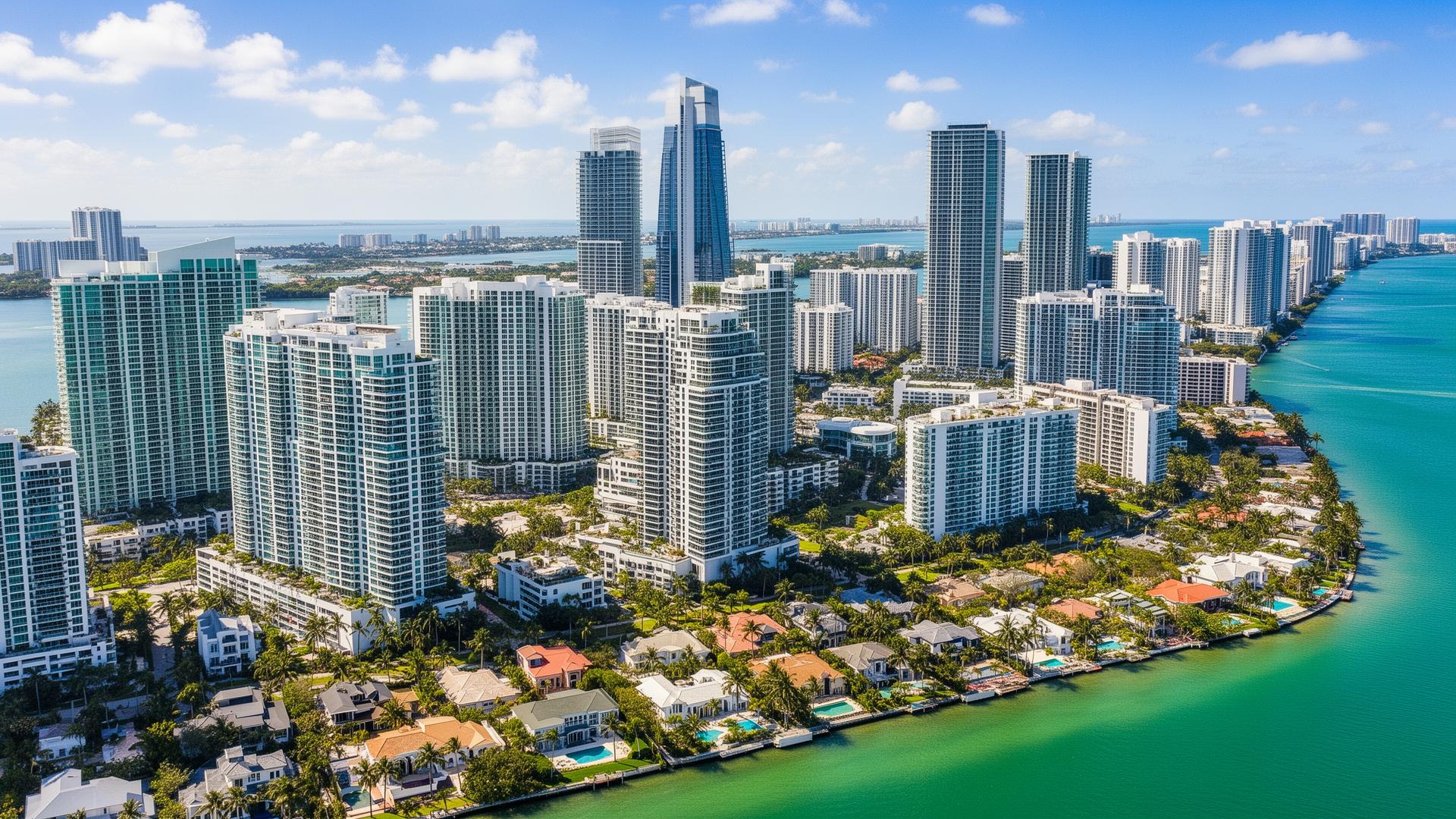
South Florida real estate forecast for 2026
What is the 2026 outlook for South Florida real estate? The market has moved from the rapid pace of prior years to a moderate, data-driven phase. Mortgage rates have stabilized near the mid-6% range, with the Freddie Mac 30-year fixed averaging 6.43% for the week of July 2, 2026 [1]. Prices have split by property type: the Miami-Dade single-family median rose modestly while the condo median slipped, per the MIAMI Association of Realtors [2], and the FHFA index put metro appreciation at about 4.37% through the first quarter [3]. This is a forecast built on sourced figures and attributed projections, not on predictions stated as fact.
Last updated: July 2026
Will South Florida home prices drop in 2026?
The data points to a plateau with divergence by property type, not a broad drop. In May 2026, the Miami-Dade single-family median sale price was $680,000, up 0.74% year over year, while the existing-condo median was $415,000, down 2.35% [2]. Across the city of Miami, Redfin measured a median around $652,000, roughly 0.44% lower year over year, with homes averaging about 113 days on market versus about 100 a year earlier [4]. So condos and overall marketing times softened, while single-family prices held. The main support for houses is thin supply: Miami-Dade single-family active listings fell about 19% year over year to roughly 4,599 [2].
Rates and buyer sentiment
Stable financing has shifted the buyer's question from "when to buy" to "what to buy." The Freddie Mac 30-year average was 6.43% for the week of July 2, 2026 [1], and forecasters expect a similar range through the year: the MBA projects roughly 6.5% for 2026 [5], while Fannie Mae has projected rates easing toward the high-5% area by year-end [6]. Treat both as sourced projections. Cash remains a significant share of the market, particularly in condos, where cash accounted for nearly half of existing-condo sales in May 2026 [2].
Where activity is concentrated
Activity is strongest where single-family supply is tightest. Established markets such as Coconut Grove, Coral Gables, and Pinecrest trade on land scarcity, so well-priced houses continue to move. I avoid publishing specific appreciation or price figures for individual neighborhoods unless a named source supports the exact number, because unsourced neighborhood claims are how buyers get misled. For a specific property, a listing valuation built from recent nearby closings is more reliable than any neighborhood generalization.
Is now a good time to sell?
For sellers, liquidity depends on condition and price. Turn-key houses priced to the current comparable set still transact cleanly, while properties needing renovation or priced to last cycle's peak sit longer, especially in the condo segment where inventory is heavier. With buyers underwriting near 6.43% [1] and taking more time [4], pricing discipline matters more than it did in 2021. Start with a grounded listing valuation.
2026 forecast factors to watch
- Mortgage rates. Range-bound near the mid-6% level per Freddie Mac [1], with MBA (~6.5%) [5] and Fannie Mae (high-5%) [6] projecting a similar band. Rate moves remain the largest swing factor for transaction volume.
- Condo carrying costs. Insurance and structural-reserve requirements have pressured condo pricing, contributing to the 2.35% year-over-year decline in the existing-condo median [2]. This is the segment most exposed to further softening.
- Single-family supply. Down about 19% year over year [2], which is the main reason house prices held. Watch whether supply loosens as the lock-in effect thaws.
- National price backdrop. Fannie Mae has projected national home-price growth around 3% for 2026, later revised lower [7], and NAR has projected the national median up about 4% [8]. Both are projections, not guarantees.
Underwriting a purchase in this market
In a moderate market, the discipline that protects you is underwriting, not timing. Start with comparable closings for the specific property and property type, because the single-family and condo segments are diverging: houses held value on tight supply while the existing-condo median fell 2.35% year over year [2]. Layer in carrying costs, which for condos now include elevated insurance and structural-reserve assessments that materially affect the net. Then stress-test the payment at the rate you can actually lock, currently near 6.43% per Freddie Mac [1], rather than a hoped-for future rate. A purchase that pencils out on those inputs is far more durable than one that relies on rapid appreciation to work.
How the FHFA index frames the trend
When clients ask how much South Florida has actually appreciated, I point them to the FHFA House Price Index rather than a monthly median, because the index tracks repeat sales of the same properties and is less distorted by shifts in the mix of homes selling. Its Q1 2026 reading of about 4.37% for the Miami metro division [3], on top of roughly 77.61% cumulative appreciation over the prior five years, frames a market that has cooled to a moderate annual pace after a large multi-year run. That framing matters because it sets a realistic expectation: equity growth from here is more likely to come from holding through the cycle than from another double-digit year.
The variables that will decide 2026
Three inputs will drive the rest of the year, and each is worth tracking against a named source. Mortgage rates are range-bound near the mid-6% level per Freddie Mac [1], with the MBA projecting roughly 6.5% [5] and Fannie Mae projecting easing toward the high-5% range [6]. Single-family supply remains tight, down about 19% year over year in May 2026 [2], which is the main support for house prices. Condo carrying costs continue to pressure that segment [2]. Read those three together and you have a grounded forecast rather than a headline.
Frequently asked questions
Will the South Florida market crash in 2026?
The current data shows tight single-family supply, moderate metro appreciation of about 4.37% through Q1 2026 [3], and a large cash-buyer share [2], which are stabilizing rather than crash-like conditions. That describes present conditions, not a prediction.
What are mortgage rates expected to do in 2026?
The Freddie Mac 30-year average was 6.43% for the week of July 2, 2026 [1]. The MBA projects roughly 6.5% for 2026 [5] and Fannie Mae has projected easing toward the high-5% range by year-end [6]. These are projections that get revised.
Are single-family homes or condos the better buy in 2026?
It depends on your goals. Single-family homes held value on tight supply [2], while condos softened, with the existing-condo median down 2.35% year over year [2], which can create negotiating room if you underwrite insurance and reserve costs carefully.
How long are Miami homes taking to sell?
Redfin measured about 113 days on market for the city of Miami in 2026, up from roughly 100 a year earlier [4], which indicates buyers have more time and leverage than during the 2021 rush.
Gabriel
Sources
- Freddie Mac Primary Mortgage Market Survey
- MIAMI Association of Realtors, Miami-Dade monthly statistical reports
- FHFA House Price Index Summary Tables
- Redfin, Miami Housing Market
- Mortgage Bankers Association, Forecasts and Commentary
- Fannie Mae, Mortgage Rates Expected to Move Below 6 Percent by End of 2026
- Fannie Mae Housing Forecast
- National Association of Realtors, 2026 housing forecast
Gabriel A. Moyers, PA. eXp Realty. Florida License #3407280. Equal Housing Opportunity. This article is general information as of July 2026 and is not legal, tax, or financial advice. Verify current figures against authoritative sources before acting.
Thinking of selling your luxury property in Miami? Find out what your home is worth.
Get Your Home ValuationLooking for your dream home in Miami? Take our personalized home search quiz.
Start Your Home Search Quiz