
Miami Beach vs. South Beach: Which Is Right for You?
Last updated: July 2026
Miami Beach vs South Beach is a comparison that trips up even experienced buyers, because it is not actually a choice between two cities. South Beach is the southern district of the City of Miami Beach, roughly everything south of Dade Boulevard and 23rd Street [1]. The city continues north through Mid-Beach (roughly 23rd to 63rd Street) and North Beach (63rd Street to the town line at 87th Terrace) [2]. So the real question a buyer is asking is: within Miami Beach, do I want the dense, walkable, nightlife-forward southern district, or the quieter mid and northern stretches, or one of the residential islands that also sit inside the city limits? The price data frames the decision. Redfin's spring 2026 figures put the citywide median sale price around $630,000, down 1.2% year over year, at roughly $681 per square foot [3], with the citywide condo median listing near $549,000 [4]. Within those averages, South Beach, Mid-Beach, North Beach, and the islands behave like different markets. Here is how to tell them apart.
The geography, plainly
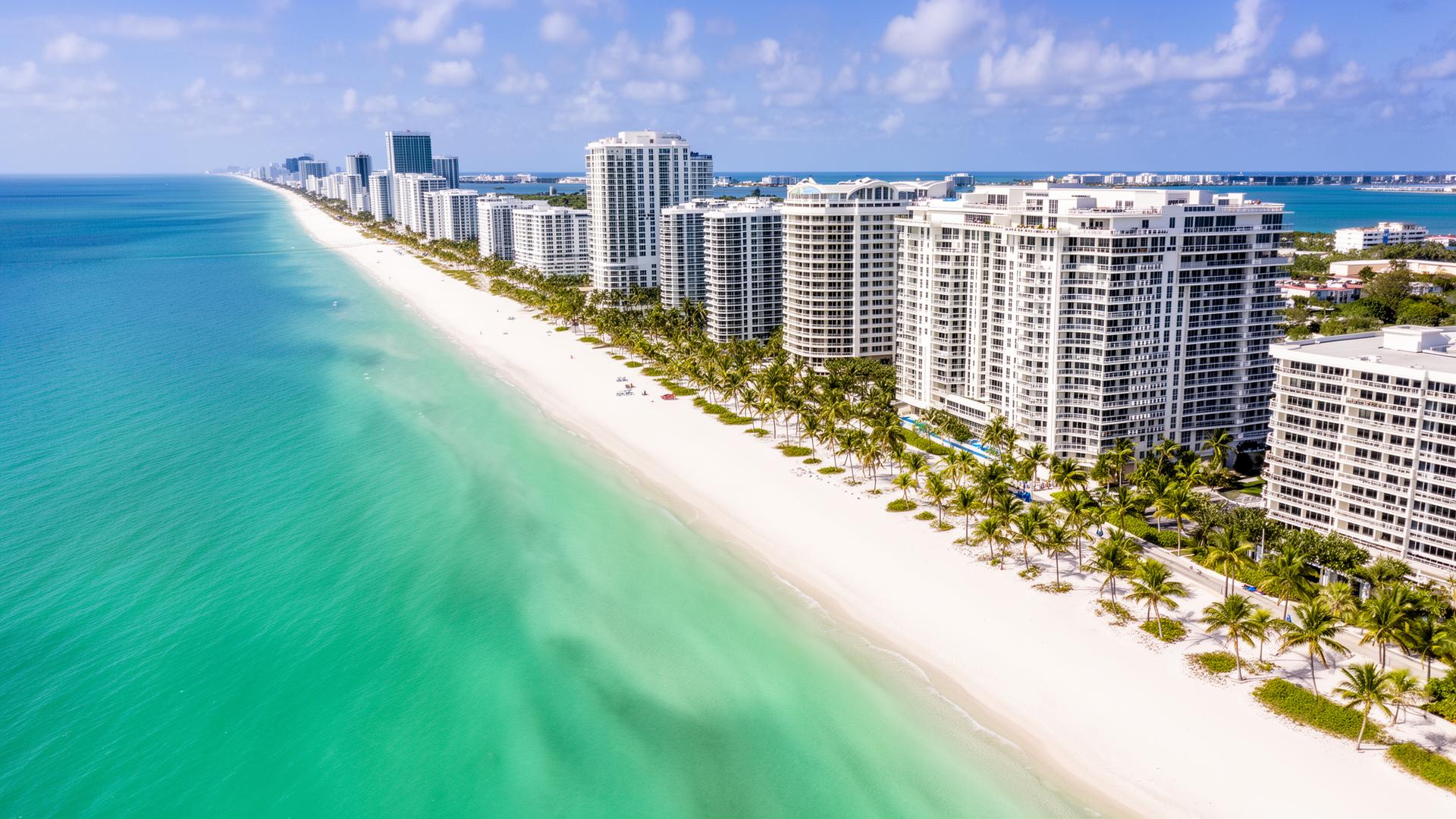
The City of Miami Beach occupies a barrier island (plus several man-made islands in Biscayne Bay) across the water from mainland Miami. South Beach is its southern tip: the Art Deco district, Ocean Drive, Lincoln Road, and the South of Fifth neighborhood at the very bottom [1]. Mid-Beach carries the storied resort corridor along Collins Avenue plus quieter residential streets. North Beach is the most low-key district, with mid-century buildings and a neighborhood pace. The Venetian Islands chain runs between the beach and the mainland, and several of those islands, along with the Sunset Islands, Palm and Hibiscus Islands, and others, fall inside Miami Beach city limits and hold much of the city's single-family stock [2].
One practical consequence: everything shares one city government, one police department, and one set of coastal-resilience policies. You are choosing a district and a housing type, not a different municipality.
Housing stock: what each area actually offers
South Beach is overwhelmingly condominium territory: preserved Art Deco low-rises, mid-century buildings on West Avenue, and modern towers concentrated in South of Fifth. Single-family homes are scarce. Unit sizes skew smaller in the historic stock, and many buildings are boutique, with small associations.
Mid-Beach and North Beach mix oceanfront condo towers (including newer luxury product on the Mid-Beach oceanfront) with garden-style buildings and, on the side streets and islands, single-family neighborhoods. Price per square foot in the newest oceanfront buildings rivals anything in South Beach, while older non-oceanfront stock in North Beach remains among the most affordable entry points in the city.
The islands (Venetian, Sunset, Palm, Hibiscus, and the gated islands nearby) are where Miami Beach's single-family and estate market lives, with waterfront lots commanding the top of the market. Buyers comparing "Miami Beach vs South Beach" for a house are usually, whether they know it or not, comparing the islands and North Beach side streets against not buying in the city at all.
What prices look like in 2026
The citywide medians, roughly $630,000 median sale price and $681 per square foot [3], are blended numbers that average $300,000 studios and eight-figure waterfront homes. Directionally, the market in 2026 favors buyers: prices are flat to slightly down year over year, inventory is ample, and homes are taking months, not days, to sell [3]. The condo side is the softer half, consistent with the broader county picture, where the Miami-Dade condo median held around $420,000 in early 2026 while sales volumes fell [5].
Within the city, the pattern to understand is that district matters less than building and block. A renovated unit in a well-run South of Fifth tower and a similar-sized unit in an aging West Avenue building can differ in price by multiples. The same is true in North Beach between oceanfront and interior blocks. Use the medians for direction, then underwrite the specific building: reserves, milestone inspection status, insurance, and assessment history now drive condo pricing as much as location does.
Noise, walkability, and daily rhythm
South Beach is the most walkable district and among the most walkable neighborhoods in Florida: groceries, restaurants, the beach, and Lincoln Road are on foot for most addresses. The trade is activity. Entertainment districts draw crowds and noise, especially around Ocean Drive and Washington Avenue, and weekends are busy year-round. South of Fifth is the calmer pocket within the district, which its pricing reflects.
Mid-Beach is quieter block by block, with resort activity concentrated on the oceanfront. North Beach runs at a genuine neighborhood pace, with a growing but low-key restaurant scene. The islands are residential and quiet, with the trade-off that daily errands generally involve a car ride.
Condo vs single-family, and who should buy where
If you want lock-and-leave ownership, walkability, and rental flexibility (building rules permitting), South Beach's condo stock is the natural fit, and 2026's soft condo pricing gives patient buyers leverage. If you want new-construction luxury with hotel-style amenities, the Mid-Beach oceanfront and South of Fifth are the two poles to compare. If you want a house with a yard inside the city, you are shopping the islands and select North Beach and Mid-Beach side streets, where inventory is thin and pricing has held up better than condos, consistent with the countywide split between single-family and condo performance [5].
A short version by buyer profile: the walkability-first buyer or pied-a-terre owner belongs in South Beach; the family or privacy-first buyer belongs on the islands or the northern districts; the investor should follow building quality and rental rules rather than district reputation. For a deeper dive into the city's neighborhoods, see our Miami Beach neighborhood guide. If you want the comparison run against your actual budget and short list, book a buyer consultation, and for common questions about how we work, the FAQ covers the basics.
Frequently asked questions
Is South Beach part of Miami Beach?
Yes. South Beach is the southern district of the City of Miami Beach, generally defined as the area south of Dade Boulevard and 23rd Street [1]. It is not a separate city, and it is also not part of the City of Miami, which sits across Biscayne Bay on the mainland.
Which is more expensive, Miami Beach or South Beach?
Neither is uniformly more expensive, because South Beach is inside Miami Beach and both contain wide ranges. South of Fifth towers and island homes anchor the top of the market, while older condo stock in both South Beach and North Beach sits well below the citywide $630,000 median [3]. Compare buildings and blocks, not district labels.
Is 2026 a good time to buy in Miami Beach?
Conditions favor prepared buyers: citywide prices were down about 1.2% year over year in spring 2026 [3], condo inventory is elevated, and days on market are long. The discipline that matters is building-level diligence, especially reserve funding and milestone inspection status in older condos, because that is where the real bargains and the real traps both live.
Where are the single-family homes in Miami Beach?
Primarily on the islands (the Miami Beach portions of the Venetian Islands, plus the Sunset Islands, Palm and Hibiscus Islands, and others) and in pockets of Mid-Beach and North Beach off the oceanfront corridor [2]. South Beach has very few single-family homes; it is a condo district.
Gabriel
Sources
- South Beach, Wikipedia
- Miami Beach, Florida, Wikipedia
- Miami Beach housing market: house prices and trends, Redfin
- Miami Beach, FL condos for sale, Redfin
- South Florida's condo market gets off to a mixed start in 2026, WLRN, February 2026
Gabriel A. Moyers, PA. eXp Realty. Florida License #3407280. Equal Housing Opportunity. This article is general information as of July 2026 and is not legal, tax, or financial advice. Verify current figures against authoritative sources before acting.
Thinking of selling your luxury property in Miami? Find out what your home is worth.
Get Your Home ValuationLooking for your dream home in Miami? Take our personalized home search quiz.
Start Your Home Search Quiz