
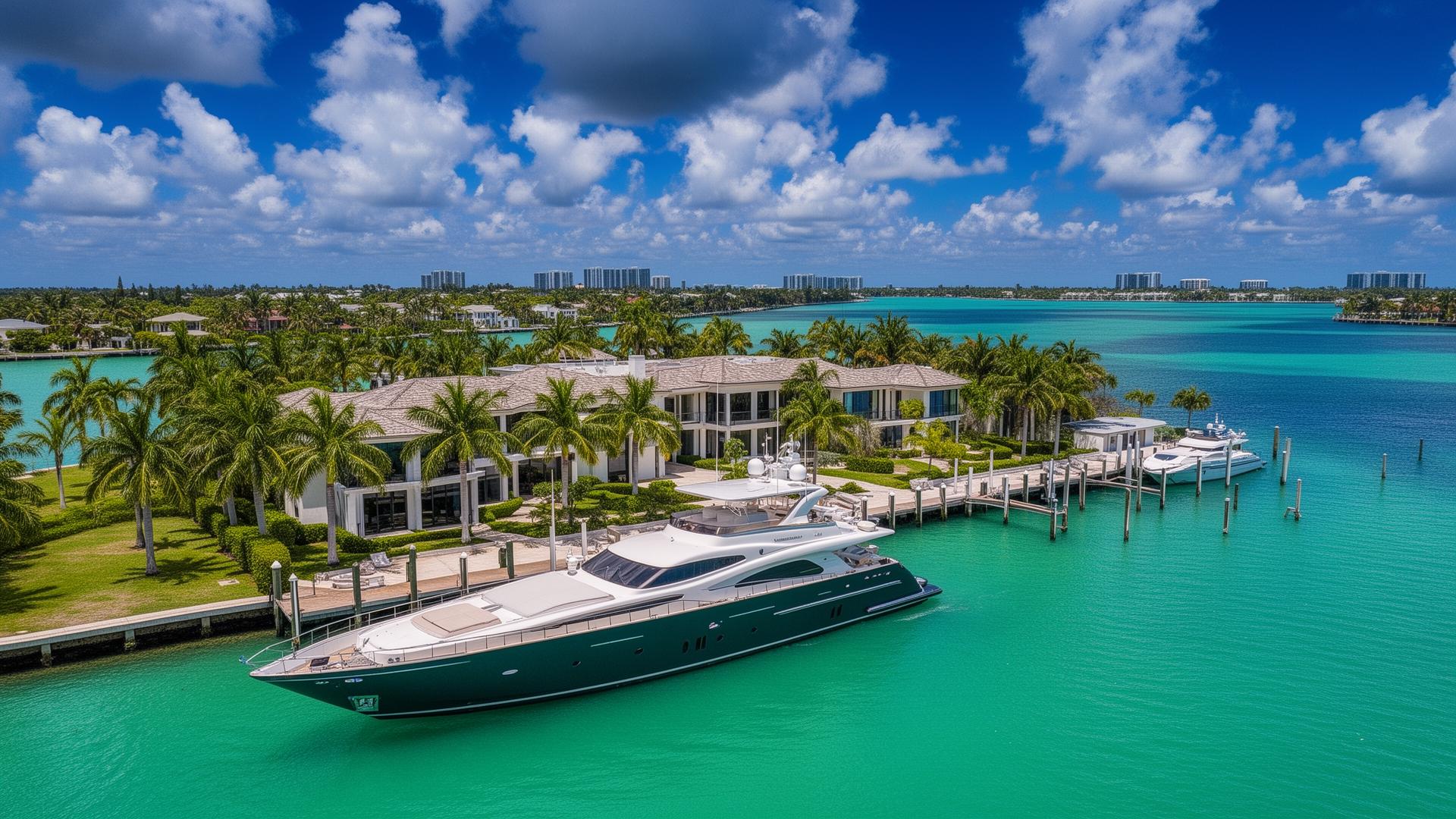
Miami Beach Waterfront Homes With Private Docks: A Buyer's Underwriting Guide
Last updated: June 2026
Miami Beach waterfront homes with private docks cluster in a handful of bayfront enclaves: Indian Creek, the Sunset Islands, Di Lido and the other Venetian Islands, La Gorce, and the Sunset Harbour and Normandy Isle pockets. A private dock here is not a backyard add-on you decide on later. It is a permitted structure over state-owned submerged land, governed by Miami-Dade County and, because most of this water sits inside the Biscayne Bay Aquatic Preserve, by some of the strictest dock rules in Florida. Single-family docks in an aquatic preserve are capped at a four-foot-wide main access walkway and can extend only to a maximum water depth of minus four feet at mean low water [1].
That regulatory ceiling is the whole game. The dock you can legally build, and the depth of water under it, decides what size vessel you can actually keep at the house. So when you shop these homes, you are underwriting two assets at once: the real estate and the dockage. This guide covers where these homes are, what the permitting reality is, and how to price the dock premium before you write an offer. For broader context, see the current Miami luxury homes for sale and the route to a buyer consultation.
Where private-dock homes concentrate on Miami Beach
Miami Beach is a barrier island, and its dock-eligible single-family inventory sits on the interior, bay-facing waterways rather than the Atlantic side. A few enclaves account for most of it.
Indian Creek
Indian Creek Village is a man-made island in Biscayne Bay just north of Miami Beach, connected to the mainland by a single guarded bridge, with its own police force patrolling by land and sea. The island holds roughly 41 waterfront lots wrapped around a private golf course [2]. It trades rarely and at the top of the market. In March 2026, a single Indian Creek property sold for a reported $170 million, a Miami-Dade County record [3]. For nearly all buyers this is reference inventory, not a realistic target, but it anchors the ceiling for the rest of the bay.
The Sunset Islands and Venetian Islands
The Sunset Islands (four connected islands off the western edge of Miami Beach) and the Venetian Islands chain, which includes Di Lido, San Marco, and others, are where most working waterfront-with-dock transactions happen. These are guarded or semi-private residential islands with deep-water and bay-frontage lots. They offer genuine private dockage with bay access, at price points below Indian Creek but still firmly in the luxury tier.
La Gorce and the Mid-Beach pockets
La Gorce Island and the surrounding Mid-Beach waterfront streets give you gated-island living with private docks and proximity to the La Gorce Country Club. Inventory is thin and turns slowly, which is typical of every dock-eligible street on the island.
The permitting reality before you buy
The most expensive mistake on a waterfront purchase is assuming the dock conveys exactly as you see it, or that you can rebuild or extend it freely. You cannot. Treat the dock as a regulated structure with its own paperwork.
You are building over state-owned, protected water
Most submerged land beneath Biscayne Bay is owned by the State of Florida, so any dock work requires consent to use those submerged lands in addition to county approval [4]. On the county side, Miami-Dade requires a Class I permit "prior to performing any work in, on, over or upon tidal waters or coastal wetlands" [5]. That language is broad. New construction, replacement, extension, and many repairs all trigger it.
Aquatic-preserve rules are stricter than ordinary sovereign land
Because this water lies inside the Biscayne Bay Aquatic Preserve, the dock standards are tighter than they would be elsewhere in Florida. Under the Florida Administrative Code, a single-family main access dock in an aquatic preserve is limited to a maximum width of four feet and may extend out only to a maximum depth of minus four feet at mean low water [1]. The practical effect: you do not get to widen a dock or push it out to deeper water just because you bought a larger boat. The structure, the depth at the slip, and any seagrass clearance requirements are fixed constraints you inherit at closing.
What this means for due diligence
Before you remove an inspection contingency on a dock home, confirm three things in writing: the dock has a valid, current permit and matches what was actually built; the water depth at the slip at mean low water supports the vessel you intend to keep there; and there is no open code or environmental violation tied to the structure. A dock that is non-conforming or unpermitted can become your problem and your cost to correct.
Pricing the dock premium
A private dock adds value, but it also narrows your buyer pool on resale to people who specifically want dockage, so you want to pay for it deliberately rather than emotionally.
Anchor to the broader Miami Beach market first
As of March 2026, the median Miami Beach home sale price was about $630,000, down roughly 1.2% year over year, with homes taking around 130 days to sell on average [6]. That figure spans condos and the entire city, so it sits far below single-family dock homes on the islands, but it tells you the direction of the broader market: flat to slightly soft, with longer marketing times. In a market like that, dock-equipped homes still command a premium, but you have negotiating room and time to do diligence rather than waive it.
Underwrite the dock as a separate line item
When you compare two otherwise similar homes, isolate what the dockage is worth to you: the slip's usable depth, the size of vessel it supports, protection from wind and wake, and the cost and feasibility of any improvements the aquatic-preserve rules will actually permit. A deeper, well-protected, fully permitted slip is worth materially more than a shallow one that caps you at a small boat, even if the houses list at the same number.
Build a reserve for the dock itself
Docks are exposed marine structures in a hurricane zone. Pilings, decking, and lifts degrade and periodically need permitted replacement, and that work runs through the same Class I and submerged-lands process described above. Carry a maintenance and eventual-replacement reserve in your numbers so the carrying cost of the waterfront is honest.
If you are weighing one of these homes, a structured buyer consultation is the place to map your target enclave, vessel needs, and budget against what is actually permittable. If you already own waterfront and want to understand today's value, request a listing valuation.
Frequently asked questions
Which Miami Beach areas have private-dock homes?
The main concentrations are Indian Creek, the Sunset Islands, the Venetian Islands (including Di Lido), and La Gorce, plus scattered bay-facing streets in Mid-Beach. These are interior, bay-side lots rather than oceanfront, because dockage requires sheltered bay frontage over submerged land.
Do I need a permit to build or rebuild a private dock?
Yes. Miami-Dade County requires a Class I permit before any work in, on, over, or upon tidal waters or coastal wetlands [5], and because most of Biscayne Bay's submerged land is state-owned, you also need consent to use those submerged lands [4]. This applies to new docks and to many replacements and repairs.
How big a dock can I build on Biscayne Bay?
Inside the Biscayne Bay Aquatic Preserve, a single-family main access dock is capped at four feet wide and may extend only to a maximum depth of minus four feet at mean low water under the Florida Administrative Code [1]. These limits, plus the water depth at your specific slip, determine the vessel size you can realistically keep.
What is the Miami Beach market doing right now?
As of March 2026, the median Miami Beach sale price was about $630,000, down roughly 1.2% year over year, with around 130 days on market [6]. That citywide figure includes condos and sits below island single-family dock homes, but it signals a flat-to-soft market that gives buyers time for proper dock diligence.
Is a private dock worth the premium?
It depends on usable slip depth, protection, and what the aquatic-preserve rules let you improve. A fully permitted, deep, protected slip carries a real premium and resells to a defined buyer pool. A shallow or non-conforming dock can cost you on both purchase and resale, which is why you underwrite the dock as its own line item.
Sources
If you want to walk a specific enclave, vet a dock's permits, or pressure-test the premium before you offer, reach out and we can work through it together.
Gabriel
Gabriel A. Moyers, PA. eXp Realty. Florida License #3407280. Equal Housing Opportunity. This article is general information as of June 2026 and is not legal, tax, or financial advice. Verify current dock permitting and aquatic-preserve rules with Miami-Dade County and the Florida Department of Environmental Protection before acting.
Thinking of selling your luxury property in Miami? Find out what your home is worth.
Get Your Home ValuationLooking for your dream home in Miami? Take our personalized home search quiz.
Start Your Home Search Quiz