
Pinecrest Real Estate: A Guide to Estate Homes and Acre-Lot Living
Last updated: July 2026
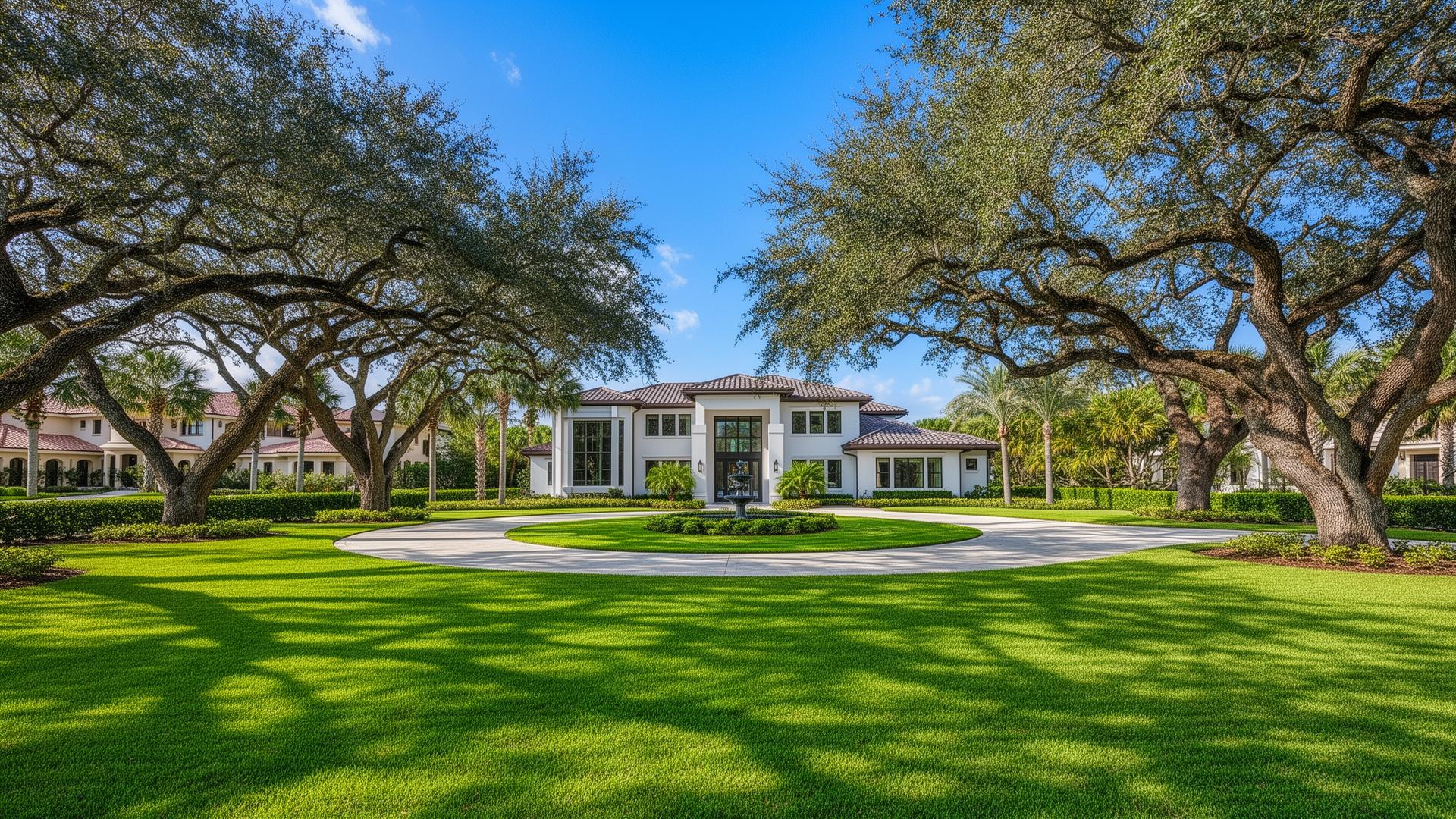
Pinecrest real estate is built on one scarce input: land. The Village of Pinecrest, in south Miami-Dade along the US-1 corridor south of Coral Gables, is Miami's core estate-lot suburb, where much of the housing sits on lots of an acre or close to it under estate zoning that caps density at one home per acre in the EU-1 district [3]. That land pattern, paired with a long-standing public school reputation and a walkable civic anchor in Pinecrest Gardens, is why the market trades where it does: homes sold for a median of $3,624,500 in June 2026 [1], while Zillow's broader home value index for the village sits near $1.81 million, up 9.2 percent over the past year [2]. The gap between those two numbers tells you most of what you need to know about how this market works, and this guide walks through it from a buyer's and seller's underwriting perspective.
What Pinecrest real estate costs in 2026
Start with the two headline figures. Movoto reports a median sold price of $3,624,500 for June 2026, with typical homes going under contract after about 89 days on market, an improvement from roughly 100 days a year earlier [1]. Zillow's home value index, which estimates the value of the full housing stock rather than just what sold, sits around $1,814,430, up 9.2 percent year over year [2].
Why the spread? Sales mix. What actually trades in Pinecrest skews toward the top of the stock: new construction and recently renovated estates on full lots, which sell for multiples of the village's older ranch homes. The value index averages across everything, including original-condition houses from the 1950s through 1980s that rarely change hands. Practical translation: if you are pricing a renovated or new estate, the sold-comp data is your benchmark; if you own an original-condition house on a good lot, your value is driven less by the house and more by the land under it.
Estate zoning is the asset
Pinecrest incorporated as a village in 1996, in significant part to keep local control over land use, and had a population of about 18,388 at the 2020 census [4]. The zoning framework it preserved is the market's foundation. The EU-1 single-family estate district allows a maximum density of one principal dwelling per gross acre [3], and large sections of the village carry estate-scale lot minimums.
For an investor or an end buyer, that does three things. First, it puts a hard ceiling on supply; nobody is subdividing an acre into four townhome lots. Second, it makes the land itself the durable store of value, which is why teardown and rebuild activity is a permanent feature of this market. Third, it means the sold-comp set will keep skewing toward large new homes, because that is the highest and best use of an acre here.
The housing stock, from ranch to new build
The inventory spans roughly seven decades. The original stock is one-story ranch homes from the 1950s through the 1970s, many still on full lots. The 1990s and 2000s added waves of larger two-story homes, and the current cycle is defined by new construction estates, frequently in modern styles, built on lots where an original home was removed.
Condition and vintage create a wide trading band on otherwise similar lots. When you underwrite an older home here, run the numbers both ways: as a renovation and as a land purchase with a rebuild. On the widest lots, the land-value floor often does most of the work, and the improvement contributes less than owners expect. That is also why a professional read of the comp set matters before listing; a listing valuation that separates land value from improvement value will price an original-condition property far more accurately than a per-square-foot average.
Schools and civic infrastructure
Pinecrest's public schools are a durable demand driver, and that shows up in land values. The village is served by several Miami-Dade County public schools, listed on the village's official schools page [7]. Pinecrest Elementary, founded in 1954, states that it has earned an A grade every year since Florida began issuing school grades [6]. School boundaries and grades change over time, so verify current assignments and ratings directly with Miami-Dade County Public Schools and the Florida Department of Education for any specific address before you buy.
The village's civic anchor is Pinecrest Gardens, the 14-acre former Parrot Jungle site. The attraction operated there from 1936 until its relocation, the village purchased the property in 2002, and the site was later listed on the National Register of Historic Places [5]. Today it functions as a botanical garden and cultural venue with a 500-seat amphitheater, a weekly farmers market, and a year-round events calendar [5]. It is the kind of municipal asset that most suburbs do not have, and it anchors the village's identity in a way that supports long-term demand.
Location and trade-offs
Pinecrest offers proximity without density. The village sits along the US-1 corridor with a straightforward commute north toward Coral Gables, Brickell, and downtown, yet it has no high-rise development and essentially no commercial sprawl inside its residential core. The trade-offs are the ones that come with any estate suburb: you are car-dependent, carrying costs on large properties are meaningful, and insurance on older homes depends heavily on roof age and wind mitigation features, so collect the wind mitigation report and insurance quotes early in diligence rather than after you are under contract.
For a deeper look at the neighborhood itself, see the Pinecrest neighborhood guide. If you are comparing Pinecrest against other estate-lot options in south Miami-Dade, a buyer consultation is the fastest way to map budget against lot size, vintage, and school assignment.
Diligence checklist for a Pinecrest purchase
A few items belong at the top of the file for any Pinecrest contract:
- Zoning and lot verification. Confirm the property's zoning district and platted lot dimensions with the village before you underwrite a rebuild or an addition; the density and setback rules differ between estate districts [3].
- Roof and wind mitigation. On pre-2000 homes, the roof's age and the wind mitigation inspection drive the insurance quote. Get both before the inspection period ends.
- Tree canopy and site work. Pinecrest's mature canopy is part of the value, and municipalities in Miami-Dade regulate tree removal. Factor permitting into any site plan that touches significant trees, and verify current village requirements.
- True carry. Model taxes at your purchase price rather than the seller's assessed value, plus insurance and grounds maintenance on an acre-scale property. The carrying cost gap between an acre estate and a standard suburban lot is larger than most first-time estate buyers expect.
Frequently asked questions
What is the median home price in Pinecrest? Homes sold for a median of $3,624,500 in June 2026 [1]. Note that sold medians skew toward the new and renovated estates that dominate transactions; Zillow's index of the full housing stock is closer to $1.81 million [2].
Are all Pinecrest lots one acre? No. The EU-1 estate district allows one dwelling per gross acre [3], and much of the village carries estate-scale lots, but lot sizes vary by section. Verify the zoning district and platted lot size for any specific property with the village's planning division.
Why do Pinecrest homes on similar lots sell at such different prices? Vintage and condition. A new construction estate and an original 1960s ranch can sit on comparable land yet trade millions apart. On wide lots, land value sets the floor and the improvement sets the spread.
Is Pinecrest a good market for a teardown or rebuild? It is one of Miami-Dade's most established teardown markets because one-acre zoning makes large new homes the highest and best use of the land [3]. Underwrite acquisition, demolition, construction, and carry against the new construction comp set before committing.
What is Pinecrest Gardens? A 14-acre village-owned botanical garden and cultural venue on the historic former Parrot Jungle site, purchased by the village in 2002 and listed on the National Register of Historic Places [5].
Gabriel
Sources
- Pinecrest, FL Market Trends, Movoto
- Pinecrest, FL Housing Market: Home Prices & Trends, Zillow
- EU-1 Single-Family One-Acre Estate Use Zoning District, Miami-Dade County
- Pinecrest, Florida, Wikipedia
- History, Pinecrest Gardens
- About Us, Pinecrest Elementary
- Pinecrest Schools, Village of Pinecrest
Gabriel A. Moyers, PA. eXp Realty. Florida License #3407280. Equal Housing Opportunity. This article is general information as of July 2026 and is not legal, tax, or financial advice. Verify current figures against authoritative sources before acting.
Thinking of selling your luxury property in Miami? Find out what your home is worth.
Get Your Home ValuationLooking for your dream home in Miami? Take our personalized home search quiz.
Start Your Home Search Quiz