
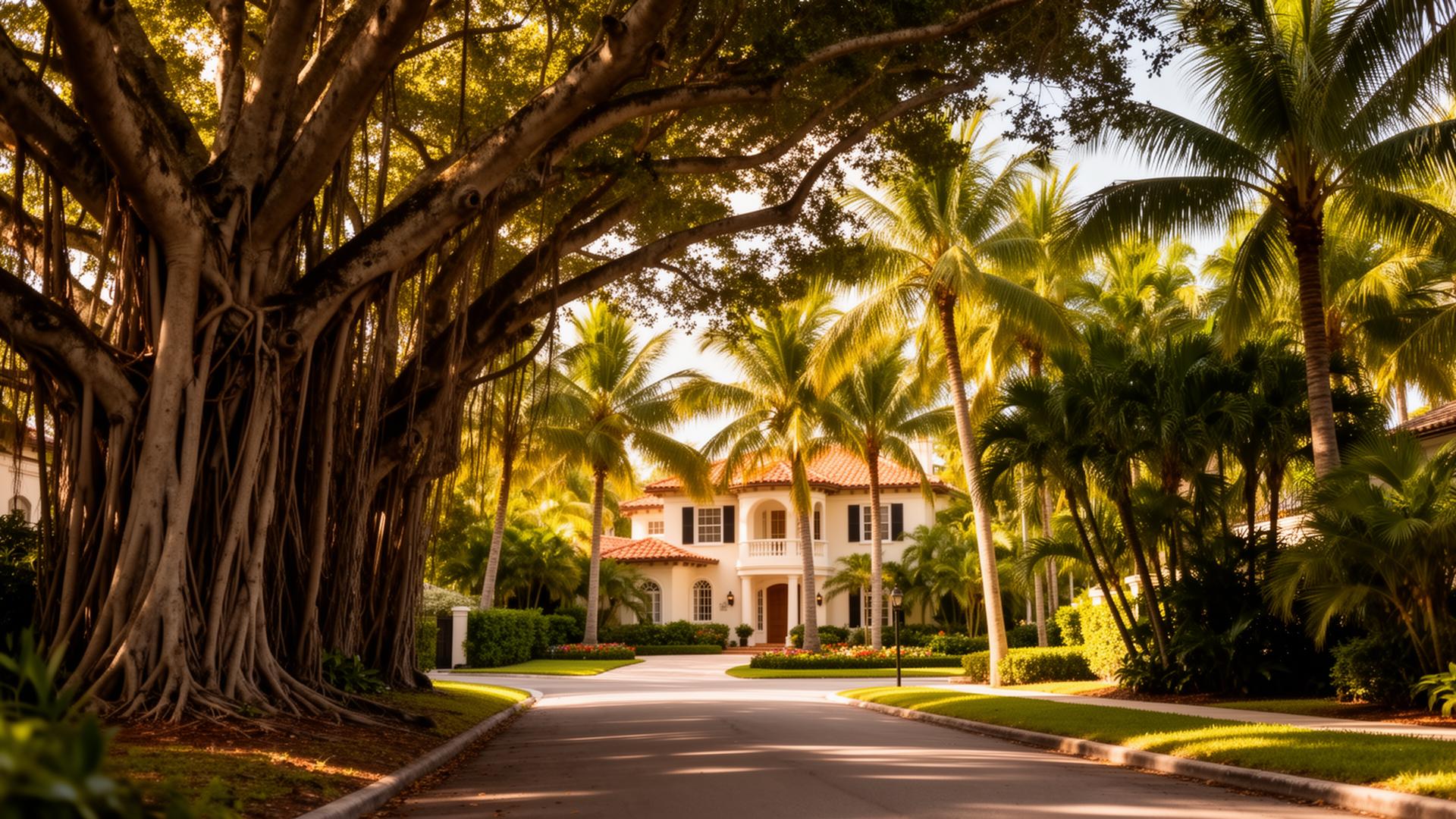
Underrated Miami Neighborhoods: Seven Areas That Trade Below Their Comps
Last updated: July 2026
The strongest value cases in Miami-Dade right now are mostly in neighborhoods that sit next to heavily marketed markets and absorb their spillover without their pricing. Miami-Dade's single-family median hit $699,990 in January 2026, up 3.7% year over year [1], yet several established areas still trade near or below that county median, and others trade at a visible discount to the better-known neighborhood one street over. This is a value analysis of seven underrated Miami neighborhoods: El Portal, Miami Shores, Belle Meade and the Upper Eastside, Biscayne Park, North Bay Village, Westchester, and Palmetto Bay. For each, the focus is the same three questions an underwriter would ask: what is the housing stock, what does it trade for, and what is the structural reason it prices below its comps. None of this is a prediction. Discounts exist for reasons, some of which may never close, and the work is deciding which reasons are temporary and which are permanent.
El Portal
A village of well under a square mile between Little River and Miami Shores, El Portal is mostly 1920s to 1940s single-family stock on tree-heavy streets, with a small government and no commercial strip of its own. Redfin recorded a median sale price around $650,000 in March 2026 [2], though with a village this small, monthly medians swing hard on a handful of closings, so treat any single month as context rather than gospel. The value logic: it borders Miami Shores, which trades roughly twice as high, and it sits minutes from the Little River corridor where commercial investment has been heavy. The discount reflects smaller lots, a thinner municipal service layer than the Shores, and simple obscurity.
Miami Shores
Miami Shores is not unknown, but it is under-marketed relative to what it is: a full-service village with its own police, a golf course, and a deep inventory of 1920s to 1950s architecture. Redfin puts the median sale price at about $1.2 million for the three months ending May 2026, up 6.0% year over year, with homes averaging 121 days on market [3]. That last number is the opportunity: appreciation is positive, but marketing times have stretched, which gives buyers negotiating room mid-transaction. The comp logic is that the Shores delivers a Coral Gables-style village product at a meaningful discount to Coral Gables pricing, with the trade-offs being distance from the Gables' employment and retail core and, east of Biscayne Boulevard, flood insurance considerations that belong in any offer model.
Belle Meade and the Upper Eastside
The Upper Eastside runs along the east side of Biscayne Boulevard roughly from the 50s through the 80s, and Belle Meade is its best-known enclave, a gated pocket of mid-century homes, some on canals with bay access. The corridor's commercial spine is the MiMo Biscayne Boulevard Historic District, whose 1950s motels and storefronts have been steadily converted to restaurants and offices. The value case is locational: these are waterfront-adjacent single-family streets ten minutes from the Design District, trading below what comparable water-access product costs across the bay. The discount has two honest drivers: Biscayne Boulevard itself, which is still uneven block to block, and coastal flood exposure, which makes insurance quotes a first-week diligence item rather than a closing formality.
Biscayne Park
Just north of Miami Shores, Biscayne Park is a small village known for its median parkways and a housing stock dominated by one-story mid-century homes on generous lots. It has almost no commercial district, which is precisely why it stays off most buyers' maps: there is nothing to walk to, and nothing marketing itself. For a buyer whose priorities are lot size, quiet, and proximity to the Shores and North Miami at a lower entry point, the absence of retail is the discount. Inventory is thin in a village this size, so sale data is lumpy; comp individual streets against southern Miami Shores rather than leaning on village-wide medians.
North Bay Village
North Bay Village occupies three islands on the 79th Street Causeway between the Upper Eastside and North Beach. The stock is condo-heavy, from 1960s bayfront buildings to new development now in the pipeline. Redfin's blended median sale price was about $520,000 for the three months ending May 2026 [4], which buys direct bay views that would price far higher in Edgewater or Miami Beach. The reasons for the discount are concrete: older buildings face Florida's milestone inspection and structural reserve requirements, so association budgets, reserve studies, and pending assessments are the diligence that matters most here, and the causeway is the only road link. Buyers who underwrite the building rather than the view are the ones who do well in this market.
Westchester
Westchester, in central unincorporated Miami-Dade near Florida International University, is the volume value play on this list. The stock is largely 1950s to 1970s single-family ranches on suburban lots. Zillow's typical home value is about $520,000 [5], roughly a quarter below the county's single-family median sale price [1]. Nothing about Westchester is hidden; it is simply never marketed, because it has no waterfront and no hospitality narrative. What it has is central location, the Coral Way and Bird Road commercial corridors, and a price point where a conventional budget still buys a house with a yard inside the urban core. The main underwriting notes are the age of major systems, roofs, electrical, plumbing, in the older stock, which drives both inspection findings and insurance pricing.
Palmetto Bay
Palmetto Bay is an incorporated village south of Pinecrest with larger lots, canopy streets, and a suburban single-family profile. Listings there carried a median asking price of about $1.29 million in June 2026 [6]. The relevant comp is Pinecrest directly to the north, which trades meaningfully higher for a similar large-lot product. The gap reflects the extra distance from the urban core and Pinecrest's longer-established brand. Buyers comparing the two are usually paying Pinecrest's premium for the name and shaving commute minutes; the houses themselves argue for cross-shopping.
Why these neighborhoods trade below their comps
Across all seven, the discounts come from a short list of causes: marketing gravity (money follows the neighborhoods that advertise), commercial frontage that is still maturing, condo regulatory costs in the island markets, flood exposure east of Biscayne Boulevard, and aging building systems in the mid-century stock. The pattern has played out before. Coconut Grove spent years as the under-marketed neighbor before repricing sharply; the Coconut Grove market page shows where that trajectory ends up. The discipline is the same in every case: get the flood zone and an insurance quote early, read association documents in any building, and comp against the adjacent premium market on a price-per-square-foot basis so you can see exactly what discount you are being paid to accept.
For a specific address or a shortlist across these areas, a buyer consultation is the practical next step. More Miami market analysis is on the blog.
Frequently asked questions
Are lesser-known Miami neighborhoods riskier purchases? Different, not automatically riskier. Thin sales volume makes pricing noisier, so comps take more work, and resale marketing times can run longer. The offset is a lower entry basis relative to nearby premium markets.
What should I check before buying in these areas? The FEMA flood zone and a real insurance quote during the inspection period, the age of roof, electrical, and plumbing in mid-century homes, and in any condo, the association's budget, reserve study, milestone inspection status, and assessment history.
Which of these fit condo buyers versus house buyers? North Bay Village is primarily a condo market; El Portal, Biscayne Park, Westchester, and Palmetto Bay are essentially single-family markets; Miami Shores and the Upper Eastside carry both.
Do underrated neighborhoods actually close the gap with their comps? Sometimes, and slowly. Miami-Dade's county-level single-family prices have risen in 168 of the last 170 months [1], but neighborhood-level convergence depends on the specific discount driver resolving, so underwrite the property on current numbers, not on a convergence story.
Gabriel
Sources
- MIAMI REALTORS, Miami-Dade Total Home Sales, Single-Family Transactions Climb Again (February 2026)
- Redfin, El Portal Housing Market
- Redfin, Miami Shores Housing Market
- Redfin, North Bay Village Housing Market
- Zillow, Westchester Miami FL Home Values
- Movoto, Palmetto Bay FL Real Estate Market (June 2026)
Gabriel A. Moyers, PA. eXp Realty. Florida License #3407280. Equal Housing Opportunity. This article is general information as of July 2026 and is not legal, tax, or financial advice. Verify current figures against authoritative sources before acting.
Thinking of selling your luxury property in Miami? Find out what your home is worth.
Get Your Home ValuationLooking for your dream home in Miami? Take our personalized home search quiz.
Start Your Home Search Quiz