
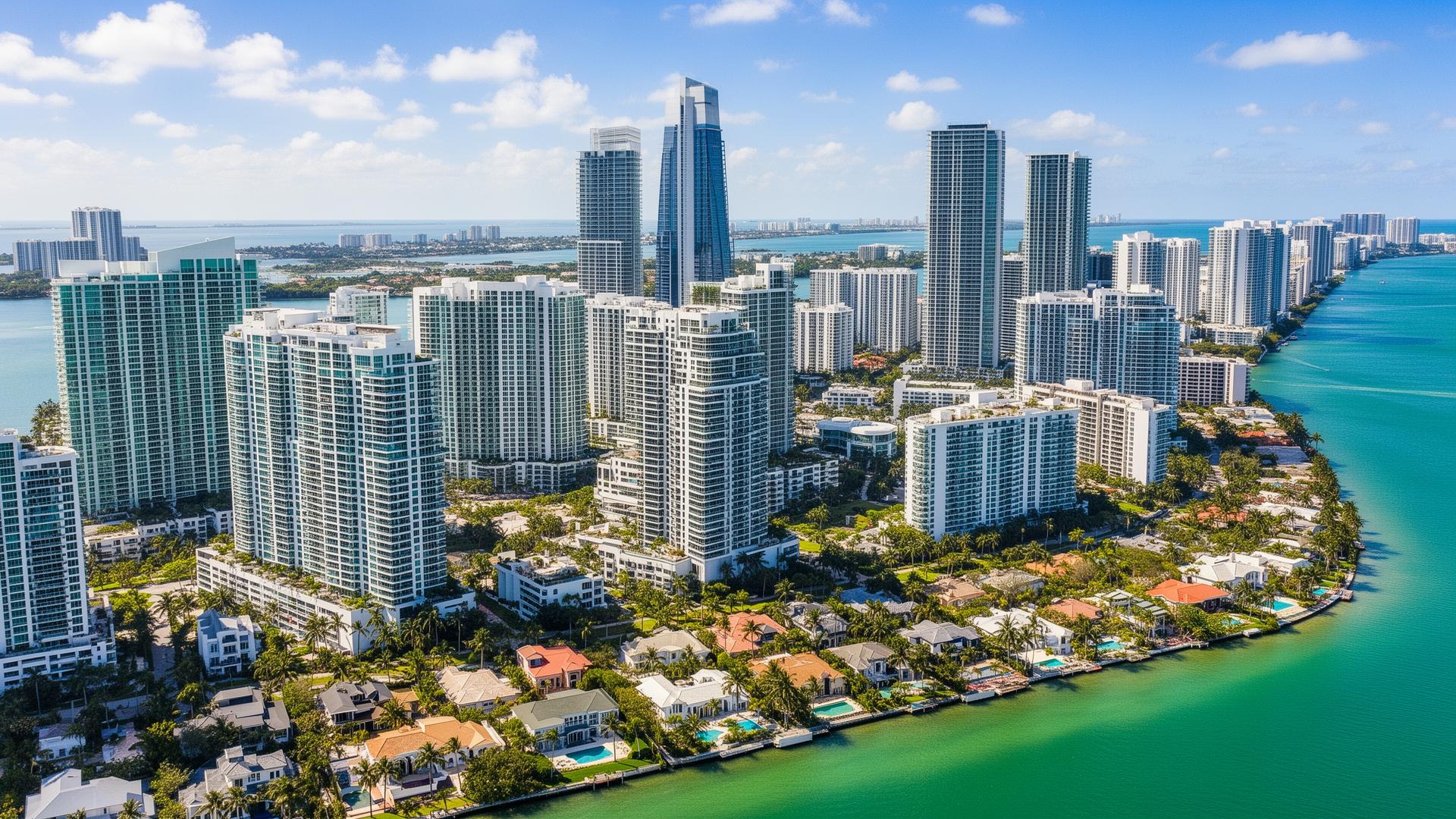
Miami multifamily investment guide for 2026
Miami multifamily is a viable 2026 investment market, but the strategy has shifted from appreciation-led buying to cash-flow discipline. The supporting fundamentals are occupancy and slowing new supply rather than rapid rent growth. Miami metro multifamily vacancy held at 6.6% in March 2026, the lowest among major Southern markets and below the national rate of 7.3% [1]. On the supply side, Marcus & Millichap projects Miami multifamily inventory growth of about 1.6% in 2026, the slowest pace in a decade, which relieves the lease-up pressure that weighed on rents during the recent construction wave [2]. This guide covers what to underwrite: occupancy, supply, financing, and the rate backdrop.
Last updated: July 2026
Where the market stands
The Miami multifamily sector has matured out of its early-2020s rent-surge phase. The two figures that define 2026 are occupancy and supply. Metro vacancy of 6.6% in March 2026 sits below the 7.3% national rate, and Miami was noted as the only major Southern metro to record positive asking-rent growth, at about 0.7% year over year [1]. Modest positive rent growth on tight occupancy is the profile of a stabilizing, not surging, market.
I have removed the prior version's specific cap-rate ranges (the 4.8% to 5.5% and 6% to 7% figures) because I could not source them to a named report. Cap rates on a given Miami asset depend on class, submarket, and in-place income, and you should underwrite them from current comparable sales and a broker's opinion rather than a blanket range. For a property-specific pro forma, a buyer consultation is the place to run the numbers together.
Why slowing supply matters
The heavy 2023 to 2025 construction wave pushed a large volume of units into lease-up, which held rent growth down. Marcus & Millichap's projection of roughly 1.6% inventory growth in 2026, the slowest in a decade, means fewer competing new units and less concessionary pressure on existing owners [2]. For a cash-flow investor, slowing supply into stable demand is the setup that protects occupancy and, over time, supports rent.
That said, slowing is not zero. Downtown Miami still carried the largest share of the pipeline in early 2026, so submarket-level supply matters. Underwrite the units delivering within a mile of your asset, not just the metro figure.
Choosing a submarket
Rather than describe who lives where, underwrite each submarket on vacancy, rent trend, and pipeline:
- Urban core (Brickell, Edgewater): Higher entry basis, historically low vacancy, most of the new pipeline. Underwrite lease-up risk from nearby deliveries.
- Redevelopment corridors: Lower entry basis with renovation upside, but confirm actual achievable rents against recent leases, not projections.
- Established suburbs: Lower-volatility demand and limited new land. If you want a lower-risk profile, established residential areas such as Coral Gables tend to show steadier occupancy.
In every case, the underwriting inputs are the same: current vacancy, achievable rent, operating expenses (insurance included), and the debt cost.
Financing and the rate backdrop
The lending environment in 2026 is conservative but functional. Local and regional banks remain active in the small-balance multifamily space, often with more flexible terms than national lenders for experienced borrowers. The macro anchor is the Federal Reserve, which held its target range at 3.50% to 3.75% in June 2026 [3]. Stable but elevated rates mean lenders scrutinize the debt-service coverage ratio (DSCR) and buyers underwrite to today's cost of debt.
If you are consolidating a single-family portfolio into multifamily, a 1031 exchange can defer federal capital gains tax when you follow the IRS timelines. Start with a current listing valuation so you know your equity position before identifying a replacement.
What renters are looking for
Rental demand in Miami has shifted with the durable move toward remote and hybrid work. Buildings with in-unit or on-site workspace, reliable high-speed connectivity, and modern amenities tend to hold occupancy better than older, non-retrofitted stock. This matters for underwriting because it separates two kinds of value-add: cosmetic renovation that lifts rent modestly, and functional upgrades (connectivity, workspace, EV charging) that can widen the tenant pool. Rather than assume a fixed amenity premium, confirm the actual rent lift against recent leases in comparable buildings, since achievable rent, not a marketing figure, is what your pro forma should use.
Demand has also broadened geographically. Tenants priced out of the urban core have supported rents in redevelopment corridors and established suburbs, which is part of why metro occupancy held at 6.6% even as new supply delivered [1]. For an investor, that geographic spread means a submarket outside the core can still show durable occupancy, provided you underwrite its specific pipeline and achievable rents.
Operating discipline in a stabilized market
In a stabilizing market, the return comes from operations more than from appreciation. That puts a premium on controlling the two largest swing costs in a South Florida multifamily budget: insurance and turnover. Insurance is a material and sometimes volatile line item that sits directly in your NOI, so it must be quoted on the actual property, not estimated from a rule of thumb. Turnover is the other lever: with rent growth modest, retaining a good tenant is often worth more than pushing rent aggressively and absorbing vacancy and make-ready costs. Underwrite a realistic turnover assumption and a realistic renewal rent, and the deal will hold up better than one built on peak-cycle rent growth.
Underwriting discipline for 2026
- Use realistic vacancy. With metro vacancy at 6.6%, underwriting a 5% assumption overstates income; use a figure consistent with your submarket [1].
- Budget insurance honestly. Florida property insurance is a material operating cost that must be verified during due diligence, not estimated.
- Stress-test the debt. Model the deal at current rates, not at a hoped-for refinance.
Taken together, these inputs describe a market that rewards operators over speculators. With occupancy tight, supply slowing, and rates stable but elevated, the durable return in 2026 comes from buying at a price that works on in-place income, running the asset well, and holding through the cycle. The investor who underwrites conservative rent, honest insurance, and current debt cost, then executes on retention and expense control, is positioned better than one betting on a return of rapid rent growth that the current data does not support [1][2].
Frequently asked questions
Is Miami multifamily a good investment in 2026?
It remains viable, supported by tight occupancy (metro vacancy 6.6% in March 2026, below the 7.3% national rate) and slowing new supply, though the strategy is now cash-flow-led rather than appreciation-led [1].
How much new multifamily supply is coming in 2026?
Marcus & Millichap projects Miami multifamily inventory growth of about 1.6% in 2026, the slowest pace in a decade, which eases lease-up pressure [2].
What cap rate should I use for a Miami multifamily deal?
Underwrite it from current comparable sales and a broker's opinion for the specific class and submarket rather than a blanket range, since cap rates vary widely by asset.
How does the interest-rate environment affect multifamily buyers?
The Federal Reserve held rates at 3.50% to 3.75% in June 2026 [3], so financing is stable but elevated. Lenders focus on DSCR and buyers underwrite to current debt costs.
Gabriel
Sources
- MIAMI REALTORS, Miami Metro Multifamily Occupancy and Rent Growth, April 2026
- Marcus & Millichap / South Florida Agent Magazine, Miami multifamily inventory growth to slow in 2026, January 2026
- Federal Reserve, FOMC statement, June 17, 2026
Gabriel A. Moyers, PA. eXp Realty. Florida License #3407280. Equal Housing Opportunity. This article is general information as of July 2026 and is not legal, tax, or financial advice. Verify current figures against authoritative sources before acting.
Thinking of selling your luxury property in Miami? Find out what your home is worth.
Get Your Home ValuationLooking for your dream home in Miami? Take our personalized home search quiz.
Start Your Home Search Quiz