
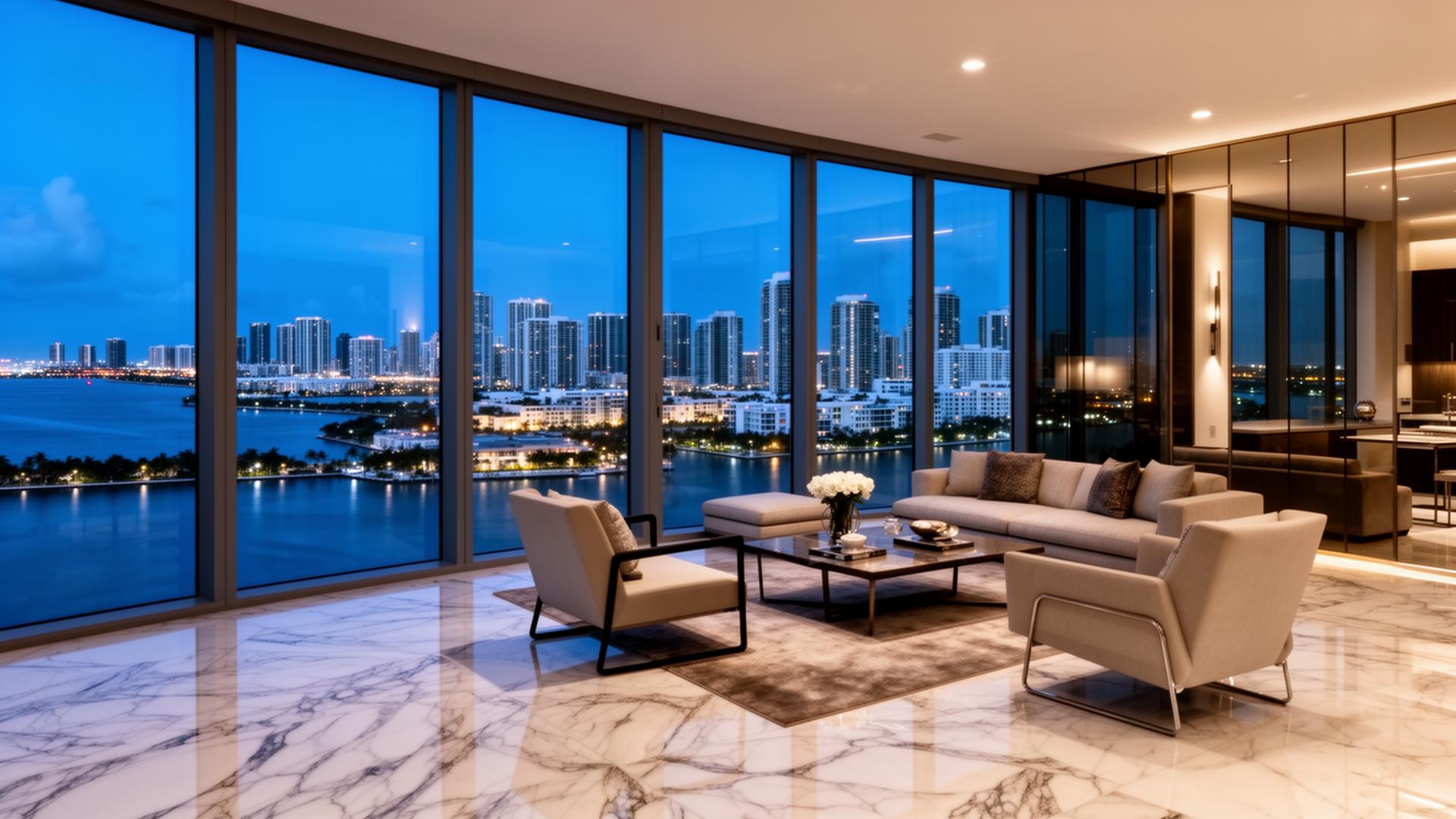
Miami Luxury Amenities: What Today's Buyers Expect
Last updated: July 2026
In 2026, Miami luxury buyers are prioritizing amenities that support daily well-being and lifestyle over status alone. The features drawing the most attention are wellness and recovery spaces (spas, saunas, and cold plunge pools), racquet sports like pickleball and padel, resort-style pool and dining amenities, and practical infrastructure such as EV charging and smart-home systems. Developers are responding: at PALMA Miami Beach, a wellness-focused project, more than 75% of residences were sold with construction underway, and the building features a cold plunge held at 39 degrees Fahrenheit alongside contrast-therapy and fitness spaces [1]. Racquet courts have moved from novelty to near-standard, with pickleball and padel now appearing across many new Miami developments [2].
For a buyer or an owner thinking about resale, the useful question is not which amenity is fashionable but which ones hold value. Amenities that are hard to replicate in a unit, expensive to add later, or tied to ongoing demand tend to matter most. Below is how the main categories break down and what to weigh when underwriting a purchase.
Wellness and recovery: the leading category
Wellness has become a central design driver rather than an add-on. Buyers increasingly weigh how a home makes them feel, and developers are building dedicated recovery amenities to match. PALMA Miami Beach illustrates the format: an Arctic cold plunge maintained at 39 degrees Fahrenheit, a dedicated hot tub for contrast therapy, and a Technogym-equipped fitness center overlooking a resort pool deck [1].
What makes wellness amenities matter for value is that they are difficult to reproduce inside an individual unit. A private cold plunge, spa suite, or full recovery circuit requires space and building infrastructure most residences cannot add after the fact. That scarcity is part of why wellness-forward buildings have sold quickly, as the PALMA absorption figure suggests [1].
What to look for
- Dedicated spa and recovery space, not just a gym
- Contrast therapy features (cold plunge plus hot tub or sauna)
- Programming and staffing, which affect ongoing HOA cost as well as usability
Racquet sports: pickleball and padel
Pickleball and padel courts have become close to expected in new Miami luxury projects. Pickleball has ranked among the fastest-growing sports in the United States for several years running, and courts require less space than tennis, which makes them practical to include [2]. Developments across the market now feature one or both, from Bal Harbour to Coconut Grove to Wynwood and Brickell [2]. Some projects have pushed the amenity further, including an indoor residential padel court at 888 Brickell [2].
From a value standpoint, court amenities pull in ongoing demand from an active buyer pool and are effectively impossible to add to an existing building without land. The caution is durability: an amenity that is standard today competes on execution and maintenance, so quality of the courts and the surrounding programming matters more than mere presence.
Resort-style pools, dining, and social space
Resort-style pool decks, cabanas, private dining rooms, and chef's kitchens remain core to the Miami luxury format. These spaces extend the livable footprint of a residence and support the indoor-outdoor lifestyle the climate favors. In Miami Beach and the barrier-island submarkets, expansive pool decks and outdoor kitchens are common features in new towers [1].
For underwriting, the relevant test is whether the amenity is genuinely usable and well-run. A large but poorly maintained amenity deck can become a cost line rather than a value driver, so review HOA budgets and reserve funding alongside the amenity list.
Practical infrastructure: EV charging and smart-home systems
As electric-vehicle adoption grows, buyers increasingly expect built-in EV charging or at least the electrical capacity to add it. In-place charging removes the need to plan permits and upgrades after closing, and it can tilt a decision between comparable homes [3]. Broader energy-efficiency features carry a measurable resale signal as well: studies have found energy-efficient homes can sell for roughly 3% to 5% more than comparable properties [3].
Smart-home systems, integrated lighting and climate control, and connected security are now standard expectations in the luxury tier rather than differentiators. The value question is integration quality. A cohesive, serviceable system adds convenience, while a patchwork of aging devices can become a liability a buyer discounts. When you review a unit, ask whether the systems are on current, supported platforms and whether service is available locally, since orphaned proprietary systems are costly to maintain and often get ripped out by the next owner.
The same discipline applies to EV infrastructure at the building level. A dedicated charger deeded to a specific parking space is more valuable than shared chargers on a first-come basis, and both are more valuable than a building that merely has the panel capacity to add charging later. Confirm what is actually installed and assigned before you price the convenience in.
How amenities translate to value
A few principles help separate amenities that hold value from those that simply market well:
- Hard to replicate wins. Building-level wellness, racquet courts, and marina or dining infrastructure cannot be added to a unit later, which supports their durability in resale.
- Ongoing cost is part of the value. Rich amenities raise HOA dues and reserve needs. Review the budget, not just the brochure.
- Standard features compete on execution. Once an amenity is common, condition, programming, and maintenance drive whether it helps or hurts value.
If you are weighing a specific building and want a grounded read on how its amenity package affects pricing and resale, a buyer consultation is a good place to start. If you already own and want to understand what your amenities contribute to value, a listing valuation can put numbers to it.
Frequently asked questions
Which amenities matter most to Miami luxury buyers in 2026?
Wellness and recovery spaces, racquet sports like pickleball and padel, resort-style pool and dining amenities, and practical infrastructure such as EV charging and smart-home systems are drawing the most demand [1][2][3].
Do amenities like a cold plunge or pickleball court add resale value?
Amenities that are hard to replicate inside a unit, such as building-level wellness suites and racquet courts, tend to support value because they cannot be added later. Their effect depends on quality, maintenance, and the HOA cost to run them [1][2].
Does EV charging increase a home's value?
Built-in EV charging removes a post-closing hurdle and can influence a buyer's choice between comparable homes. More broadly, energy-efficient homes have been found to sell for about 3% to 5% more than comparable properties [3].
Are pickleball and padel courts common in new Miami condos?
Yes. Courts have become close to standard in new luxury developments across Miami, with many projects offering one or both, and some adding features like an indoor residential padel court [2].
Gabriel
Sources
- Haute Living: PALMA Miami Beach Residences Redefines Wellness-Focused Luxury Living (May 2026)
- CondoBlackBook: Best New Miami Condos With Pickleball and Padel Courts
- Mortgage Research Center: The Home Features Buyers Will Demand in 2026: From ADUs to EV Chargers
Gabriel A. Moyers, PA. eXp Realty. Florida License #3407280. Equal Housing Opportunity. This article is general information as of July 2026 and is not legal, tax, or financial advice. Verify current figures against authoritative sources before acting.
Thinking of selling your luxury property in Miami? Find out what your home is worth.
Get Your Home ValuationLooking for your dream home in Miami? Take our personalized home search quiz.
Start Your Home Search Quiz