
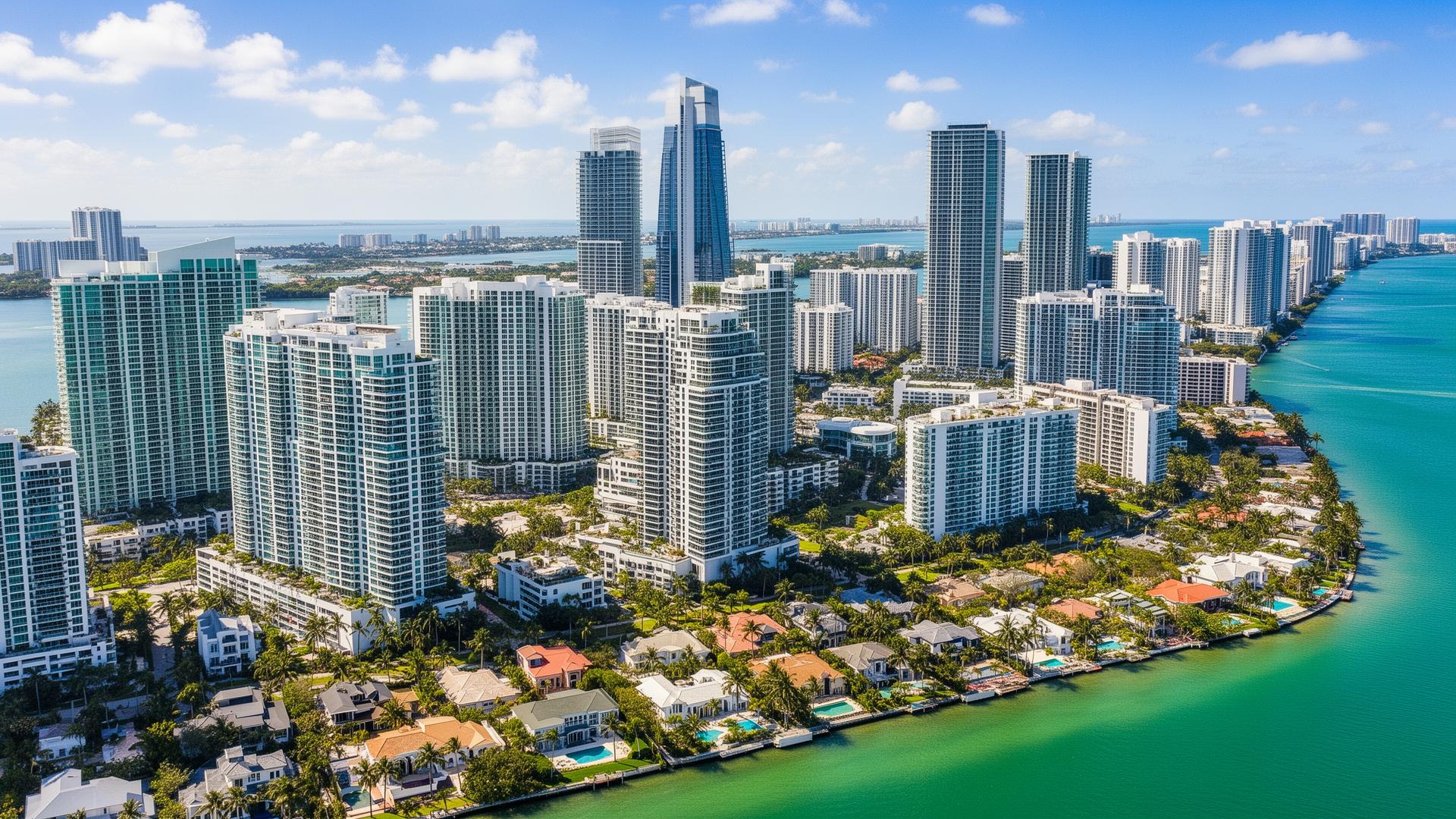
South Florida industrial warehouse market trends in 2026
South Florida industrial remains a functional investment market in 2026, but the headline numbers have moved. Miami-Dade industrial vacancy was 6.8% in Q1 2026, with availability at 9.6% and average asking rent of $16.84 per square foot, up 2.4% year over year, per CBRE [1]. That is a balanced market, not the record-tight conditions of 2022 and 2023. Demand is still positive, with 540,000 square feet of net absorption in Q1 2026, and the construction pipeline has fallen to 4.1 million square feet from a prior 6.6 million, so new supply is moderating on its own [1]. The result is a market where rents hold and well-located space leases, without the automatic rent spikes of the prior cycle.
Last updated: July 2026
What the current data shows
The prior version of this article cited a 4.2% vacancy rate and $18 to $22 per square foot rents without a source. The sourced Q1 2026 CBRE figures are different and more current: 6.8% vacancy and $16.84 per square foot average asking rent across Miami-Dade [1]. The gap matters, because underwriting to a 4.2% vacancy assumption would overstate rent-growth prospects and understate re-lease risk. Use the sourced number.
Net absorption of 540,000 square feet in Q1 2026 was positive but 24% below the same quarter a year earlier, which is consistent with a market that is still growing but at a slower, more sustainable pace [1].
What is driving demand
Two structural drivers continue to support Miami-Dade industrial:
- Trade through PortMiami and the airport. International trade volume feeds warehousing and distribution demand near the port and Miami International Airport, keeping the airport-west and Medley submarkets active.
- Last-mile logistics. E-commerce and same-day delivery expectations concentrate demand for smaller-bay warehouses close to dense residential areas. These small-bay assets tend to hold occupancy because they serve a broad tenant base rather than a single large user.
Land scarcity near the urban core continues to push some development outward and upward, but I have removed the prior claim of a specific "$150 per square foot" land price because I could not source it to a named report.
Regional structure across the tri-county market
Pricing steps down as you move north and away from the port. The most reliable market-wide figure is the Miami-Dade average asking rent of $16.84 per square foot in Q1 2026 [1]. Broward and Palm Beach submarkets generally trade at a discount to core Miami-Dade product, which is what draws mid-sized logistics and flex users north, though you should confirm current submarket rents against a broker's rent survey before underwriting a specific deal. If you are weighing a move between submarkets, a buyer consultation can help you compare rent, clear height, and power capacity side by side.
Financing and the rate backdrop
Industrial values, like all commercial values, are sensitive to the cost of debt. The Federal Reserve held its target range at 3.50% to 3.75% in June 2026 [2]. Stable but elevated rates mean buyers underwrite to current debt costs, and deals that relied on cheaper 2021 financing do not pencil. For owners, that argues for confirming your equity position with a current listing valuation before assuming a peak-cycle sale price.
Sustainability and building infrastructure
A quieter shift in the 2026 industrial market is that building infrastructure, not just square footage, increasingly determines value. Institutional buyers now scrutinize a building's electrical capacity, roof condition and solar-readiness, and whether it can support automation or electric delivery fleets. A warehouse that cannot deliver the power a modern tenant needs can sit at a rent discount to an otherwise comparable building that can. For an owner, that means capital spent on power and structure is not just maintenance; it can be a value driver at resale. For a buyer, it means the due-diligence checklist should include a power study and a roof assessment, not only a lease review.
Clear height is the other physical attribute that has quietly separated modern product from older stock. Newer distribution buildings with higher clear heights and more dock doors serve the tenants driving current demand, while older, low-clearance buildings compete on price. When you underwrite, treat clear height and dock configuration as constraints on your tenant pool, because they determine who can actually use the space.
Timing an exit or a 1031 exchange
For owners weighing a sale, the balanced 2026 market is a reasonable window to test value, but not one where buyers overpay. Well-located, income-producing industrial with strong physical attributes continues to draw interest, while older commodity product moves more slowly. If you are selling to reposition into a different submarket or asset type, a 1031 exchange can defer federal capital gains tax when you follow the IRS timelines, so line up your replacement search before you close the sale. The scarcity of developable land near the urban core means well-located existing product tends to hold value even as rent growth normalizes.
What actually drives value now
With rent growth normalizing, physical and operational attributes matter more to value:
- Clear height and dock configuration determine which tenants can use the building.
- Power capacity increasingly matters for tenants running automation or electric fleets.
- Location relative to population density drives last-mile demand.
Underwrite these building-level attributes rather than assuming market-wide rent growth will carry the return.
How a buyer should read the 2026 industrial market
If you are entering the market this year, the balanced conditions favor a disciplined approach over a speculative one. Start with the sourced market figures, a 6.8% vacancy rate and $16.84 per square foot average asking rent [1], then adjust down to the specific submarket and building. A small-bay building in a dense last-mile location with strong occupancy and diversified tenants is a different risk than a single-tenant big-box in a peripheral submarket, even at the same headline rent. Underwrite the tenant roster, the remaining lease terms, and the physical attributes before you underwrite market rent growth, because in a balanced market the income you can count on is the in-place income, not a projected increase.
For a first-time industrial buyer, the most common underwriting error is assuming the tight conditions of 2022 and 2023 still apply. They do not; the market has normalized. Build your pro forma on the current, sourced fundamentals and a conservative re-lease assumption, and the deal will be more resilient if absorption continues to run below its recent peak [1].
Frequently asked questions
What is the Miami-Dade industrial vacancy rate in 2026?
Miami-Dade industrial vacancy was 6.8% in Q1 2026, with availability at 9.6%, per CBRE [1]. That reflects a balanced market rather than the record-tight conditions of 2022 to 2023.
What are current warehouse asking rents in Miami-Dade?
The Miami-Dade average asking rent was $16.84 per square foot in Q1 2026, up 2.4% year over year [1]. Class A and small-bay product can trade above or below that average depending on location and configuration.
Is South Florida industrial still absorbing space?
Yes. Net absorption was 540,000 square feet in Q1 2026, positive but about 24% below the prior-year quarter, consistent with slower, sustainable growth [1].
Is new supply a risk in 2026?
The construction pipeline fell to 4.1 million square feet from 6.6 million, so new supply is moderating, which supports rent stability [1].
Gabriel
Sources
Gabriel A. Moyers, PA. eXp Realty. Florida License #3407280. Equal Housing Opportunity. This article is general information as of July 2026 and is not legal, tax, or financial advice. Verify current figures against authoritative sources before acting.
Thinking of selling your luxury property in Miami? Find out what your home is worth.
Get Your Home ValuationLooking for your dream home in Miami? Take our personalized home search quiz.
Start Your Home Search Quiz