
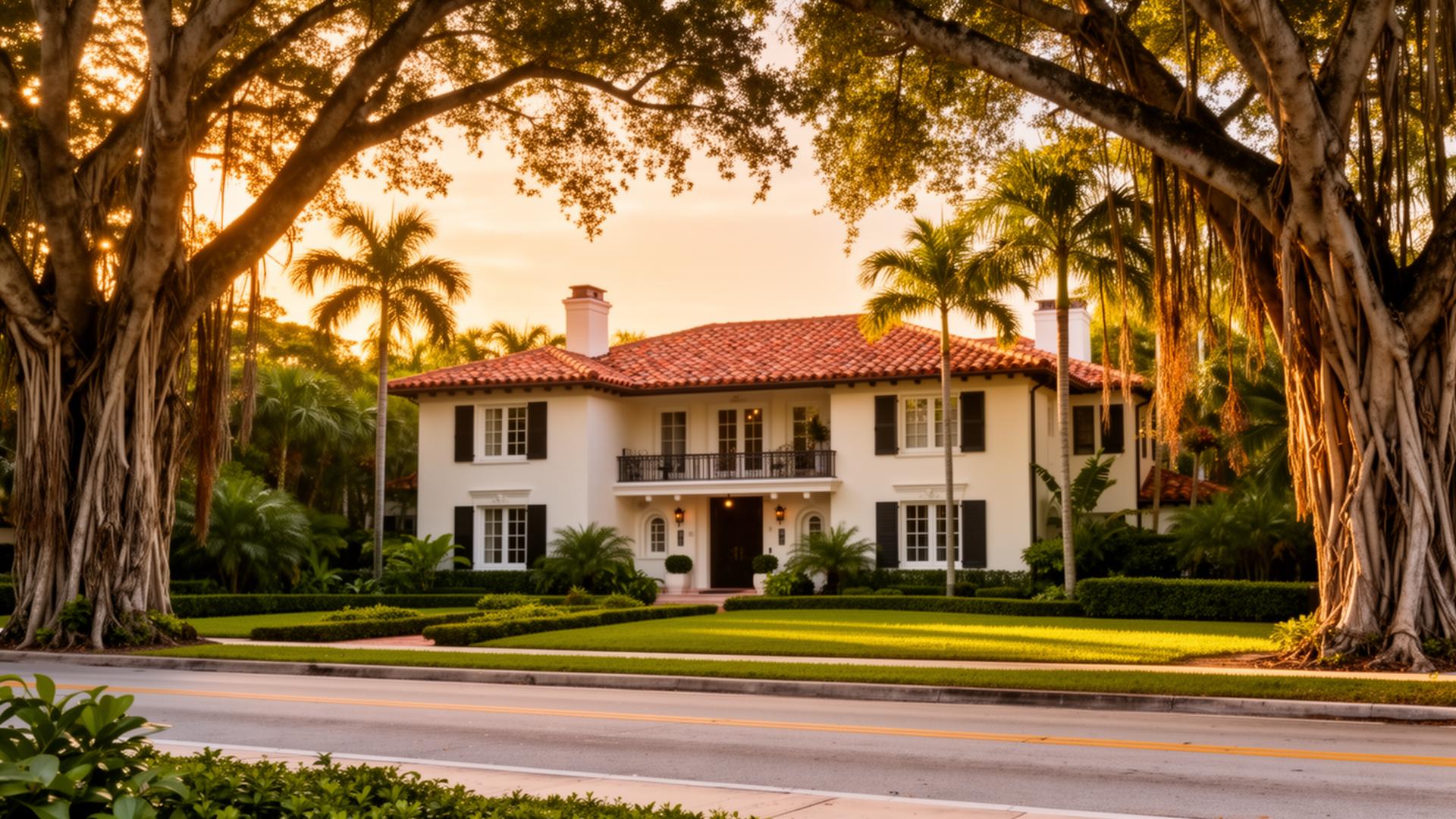
South Miami Real Estate: The University District Advantage
Last updated: July 2026
South Miami real estate sits in a compact incorporated city just south of Coral Gables, wrapped around a walkable town center at Sunset Drive and next to a University Metrorail one-seat ride into the job core. Buyers weighing South Miami are usually choosing it for that combination: a small-city footprint, single-family streets and mid-rise condos within walking distance of shops and transit, and pricing that runs above the county single-family median. Over the three months ending April 2026, the median sale price in the City of South Miami was about $921,000, and homes were taking roughly 103 days to sell versus 52 a year earlier, a clear sign the market has shifted toward buyers with more negotiating room [1]. For comparison, Miami-Dade County's single-family median was $699,990 in January 2026, up 3.7 percent year over year, so South Miami trades at a premium to the county as a whole [2].
This article lays out what that premium buys, how the location actually works, and where the numbers sit today.
What "South Miami" actually refers to
The name gets used loosely, so precision matters when you underwrite a purchase here. The City of South Miami is a separate incorporated municipality of a few square miles with its own government, bordered by Coral Gables to the north and the Village of Pinecrest to the south. It is not the same as the broader "south Miami" region people mean casually.
One point worth correcting up front: the University of Miami's main campus is in Coral Gables, not inside the City of South Miami [3]. The campus sits right against the city's northern edge, which is why South Miami feels like a university-adjacent town, but the campus itself and the University Metrorail station are in Coral Gables [3]. If you are buying with campus proximity in mind, verify the exact municipal boundary of any given address, because it affects your taxing authority, your city services, and your permitting.
The Sunset Drive town center
The commercial heart of the city runs along Sunset Drive east of US-1. The Shops at Sunset Place, an open-air center at Dixie Highway and Red Road that opened in 1999, anchors the district, and the surrounding blocks hold restaurants, local retail, and offices [4]. For a buyer, the practical appeal is walkability: a portion of the housing stock sits within a short walk of dining, groceries, and the Metrorail, which is unusual in a county built mostly around cars.
That walkability is the main reason the town-center condos and the closest single-family blocks hold a pricing premium. When you compare two otherwise similar homes, the one inside comfortable walking distance of Sunset Drive and the station tends to command more.
Transit and location
South Miami station is on Metrorail's main line, one stop south of University station in Coral Gables [3]. From there the line runs north toward the Health District, downtown, and connects to the free Metromover loop. For a household with commutes into those cores, a home near the station changes the daily math in a way that a comparable home deeper into the suburbs cannot.
US-1 (South Dixie Highway) is the other spine, giving direct road access north toward Coral Gables and downtown and south toward Pinecrest, Palmetto Bay, and Kendall. The tradeoff is traffic: US-1 is heavily traveled at peak hours, so test-drive your specific commute before committing.
Housing stock and who each type suits
South Miami's inventory splits into two broad categories. The first is single-family homes on established streets, many mid-century, on modest lots by suburban standards, valued heavily for location and walkability rather than acreage. The second is condos and townhomes, concentrated near the town center, that give a lower entry point and a lock-and-leave profile close to transit.
Because the city is small and largely built out, new supply is limited, which supports values over time but also means you are usually buying an older home. Budget for the underwriting realities of coastal South Florida: roof age, wind-mitigation features, and insurance quotes should be priced in before you settle on a number. Mortgage costs also matter to your monthly figure; the 30-year fixed rate averaged 6.49 percent the week of July 9, 2026, down from 6.72 percent a year earlier [5].
How to read the current market
The longer days-on-market and the year-over-year price pullback in the 2026 data point to a market where buyers have leverage they did not have in the frenzied years [1]. That does not mean South Miami is cheap; it means well-priced homes still move and overpriced ones sit. For a seller, that argues for disciplined pricing against genuine recent comparables rather than last year's peak. For a buyer, it argues for underwriting to the property's fundamentals and not overpaying for a listing that has already been on the market for months.
If you are comparing South Miami against the neighbor most people cross-shop, the Coral Gables neighborhood guide is a useful next read, since the two markets sit side by side and the university campus straddles the line. When you are ready to model an actual purchase, a buyer consultation is where we turn these market dynamics into a specific number and offer strategy.
Frequently asked questions
Is the University of Miami in South Miami?
No. The University of Miami's main campus is in Coral Gables, adjacent to the northern edge of the City of South Miami [3]. The city feels university-adjacent because the campus sits right against its border, and the University Metrorail station is one stop north of the South Miami station [3]. Always confirm the municipal boundary of a specific address.
How much do homes cost in South Miami?
Over the three months ending April 2026, the median sale price in the City of South Miami was about $921,000, above the Miami-Dade County single-family median of $699,990 recorded in January 2026 [1][2]. Individual prices vary widely by proximity to the town center and transit.
Is South Miami a buyer's or seller's market right now?
The 2026 data shows homes taking roughly 103 days to sell versus 52 a year earlier, alongside a year-over-year price pullback, which points toward more buyer negotiating room than in prior years [1]. Well-priced homes still sell; overpriced ones tend to sit.
Can you get around South Miami without a car?
Partly. The blocks around Sunset Drive and the South Miami Metrorail station are genuinely walkable to shops, dining, and transit, which is uncommon in Miami-Dade [4]. Homes deeper into the single-family streets still rely on a car for most trips.
What is the primary keyword for a South Miami home search?
Most buyers search "South Miami real estate" and then narrow by property type, either single-family homes on established streets or condos near the town center. Deciding which of those two profiles fits your household is the first underwriting question.
Gabriel
Sources
- South Miami Housing Market, Redfin
- Miami-Dade Total Home Sales, Single-Family Transactions Climb Again, MIAMI REALTORS
- University station (Miami-Dade County), Wikipedia
- The Shops at Sunset Place, Wikipedia
- Mortgage Rates Hover in Mid-Six Percent Range, Freddie Mac PMMS (July 9, 2026)
Gabriel A. Moyers, PA. eXp Realty. Florida License #3407280. Equal Housing Opportunity. This article is general information as of July 2026 and is not legal, tax, or financial advice. Verify current figures against authoritative sources before acting.
Thinking of selling your luxury property in Miami? Find out what your home is worth.
Get Your Home ValuationLooking for your dream home in Miami? Take our personalized home search quiz.
Start Your Home Search Quiz