
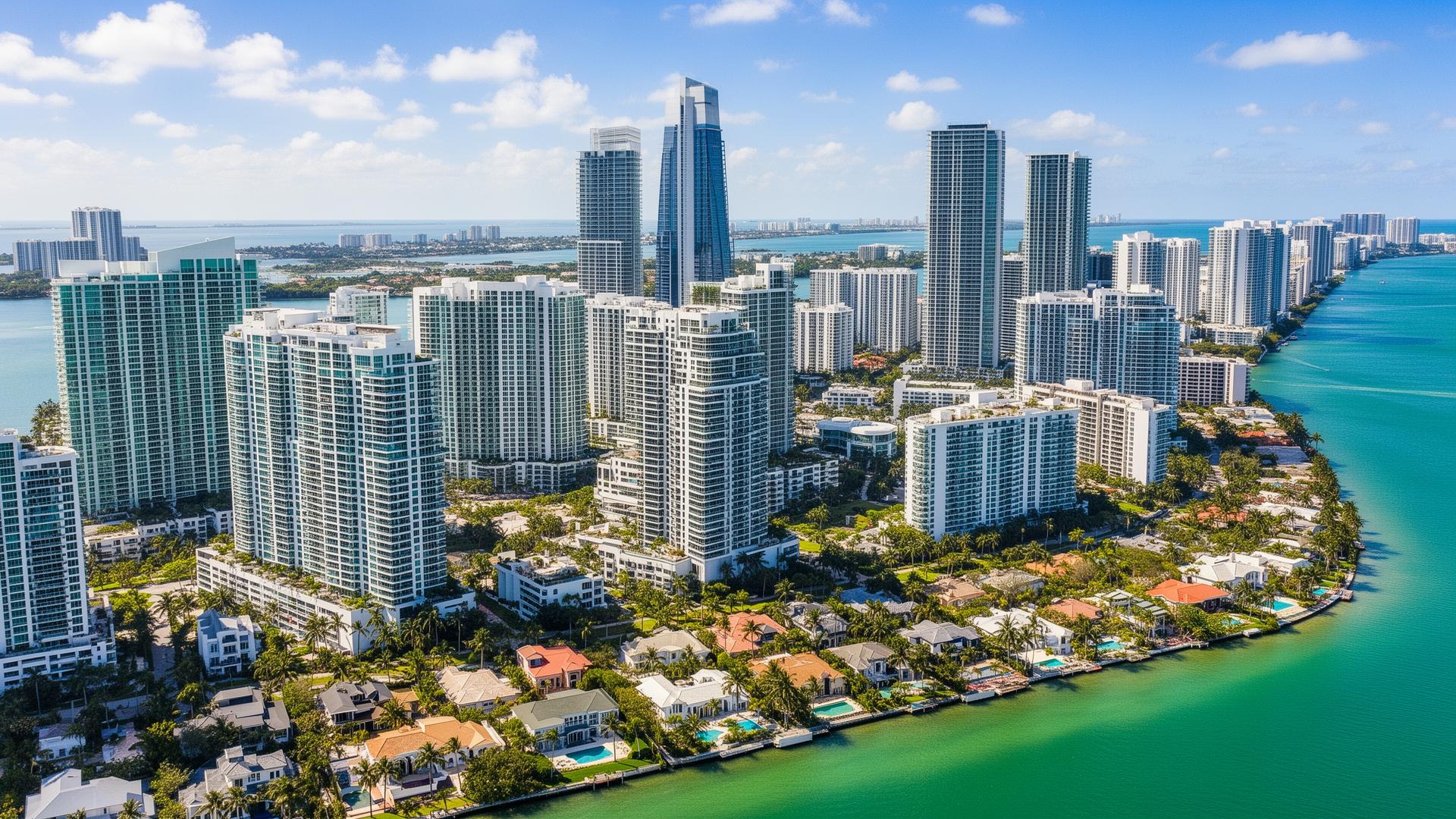
Miami home price appreciation rates in 2026
Is Miami real estate still appreciating in 2026? Yes, but at a moderate, sourced pace rather than the double-digit surge of 2021 and 2022. The FHFA House Price Index for the Miami-Miami Beach-Kendall division showed about 4.37% annual appreciation through the first quarter of 2026 [1]. The picture splits by property type: the Miami-Dade single-family median rose modestly year over year while the condo median slipped, per the MIAMI Association of Realtors [2]. So the honest answer is that appreciation continues, it is uneven, and any specific forward number you see should be attributed to a named forecaster rather than stated as fact.
Last updated: July 2026
What the appreciation data actually shows
The most reliable metro-level gauge is the FHFA House Price Index, which measures repeat sales of the same properties. For the Miami-Miami Beach-Kendall division, it showed roughly 4.37% annual appreciation through Q1 2026, with about 77.61% cumulative appreciation over the prior five years [1]. That five-year figure explains why headlines still call Miami strong even as the annual pace has cooled to mid-single digits.
At the transaction level, the split by property type is clear. In May 2026, the Miami-Dade single-family median sale price was $680,000, up 0.74% year over year, while the existing-condo median was $415,000, down 2.35% [2]. Averaging those together hides the divergence, which is why you should look at your specific property type and submarket.
What is driving values in 2026
Two structural factors continue to support single-family prices. First, supply is tight: Miami-Dade single-family active listings fell about 19% year over year to roughly 4,599 in May 2026 [2]. Fewer houses for sale limits downward price pressure. Second, in-migration to Florida from higher-cost, higher-tax states has continued, sustaining demand for houses.
The condo segment faces the opposite dynamics. Heavier standing inventory and higher carrying costs tied to insurance and structural-reserve assessments have weighed on condo pricing, which is why the condo median declined year over year while houses held [2].
Neighborhood-level appreciation varies
Metro averages mask block-by-block differences. Land-constrained single-family markets such as Coconut Grove and Coral Gables behave differently from condo-dominated corridors, and waterfront submarkets follow their own supply logic. I avoid publishing neighborhood-specific appreciation percentages unless a named source supports the exact figure, because unsourced neighborhood numbers are how buyers get misled. For a defensible read on a specific property, a listing valuation built from recent nearby closings beats any metro average.
How forecasters see the rest of 2026
Forward appreciation should always be attributed. Nationally, Fannie Mae's outlook has projected home-price growth of roughly 3% in 2026, a figure it later revised lower toward about 1% on a fourth-quarter-over-fourth-quarter basis [3]. The National Association of Realtors has projected the national median price rising about 4% in 2026 [4]. These are national projections and they get revised as data arrives, so treat any single number as a snapshot of one forecaster's view, not a Miami guarantee.
Speculation versus long-term equity
The 20%-plus annual gains of the pandemic period were an anomaly, not a baseline. A mid-single-digit metro appreciation rate [1] is consistent with a mature market where returns come from holding through cycles rather than short flips. For buyers, that argues for underwriting on fundamentals: purchase price relative to comparable closings, carrying costs, and how long you plan to hold. A buyer consultation can frame those numbers before you make an offer.
Is Miami in a bubble?
The 2026 data does not resemble the 2008 setup, which was driven by subprime lending. Today's market shows tight single-family supply [2] and a large share of cash buyers, particularly in condos where cash accounted for nearly half of existing-condo sales in May 2026 [2]. Cash-heavy demand and constrained supply are stabilizing forces, not the leverage-driven fragility of the last crash. That is not a prediction of continued gains, it is a description of the current structure.
Why the FHFA index is the number to trust
Not all appreciation figures are built the same way. Median-price changes can move simply because the mix of homes selling shifts, for example if more high-end homes close in a given month. The FHFA House Price Index avoids that trap by measuring repeat sales of the same properties over time, which is why it is a cleaner read on true appreciation than a raw median. Its Q1 2026 reading of about 4.37% annual appreciation for the Miami-Miami Beach-Kendall division [1] is therefore a more defensible headline number than any single month's median move, and it is the figure I anchor to when a client asks how much their equity has actually grown.
Appreciation is not the same as return
A common mistake is to treat the appreciation rate as your return. It is not. Your actual return on a home depends on your leverage, your carrying costs, and your holding period. A 4.37% metro appreciation rate [1] applied to a property you bought with 20% down produces a much larger percentage gain on your invested equity, before costs. On the other side of the ledger, insurance, taxes, maintenance, and, for condos, assessments and reserves all subtract from that gain. This is why I push buyers to underwrite the whole picture rather than fixate on the appreciation headline, and why the condo segment, with its heavier carrying costs, can underperform even where the metro index is positive [2].
What could change the trajectory
The moderate appreciation of early 2026 rests on tight single-family supply [2] and continued in-migration. The variables most likely to shift it are mortgage rates, which the MBA and Fannie Mae both project to stay in a range near current levels [3][4], and the cost of insuring and maintaining property, which weighs most heavily on condos. If single-family inventory loosens materially or carrying costs climb further, the appreciation picture softens. If supply stays tight and rates hold, the mid-single-digit pace is more likely to persist. Neither path is a certainty, which is why every forward figure here is attributed rather than asserted.
Frequently asked questions
What is the current Miami home appreciation rate?
The FHFA House Price Index for the Miami-Miami Beach-Kendall division showed about 4.37% annual appreciation through Q1 2026 [1]. At the transaction level, the single-family median was up 0.74% year over year in May 2026 while the condo median was down 2.35% [2].
Are Miami condos a good investment in 2026?
Condo pricing softened, with the existing-condo median down 2.35% year over year in May 2026 [2], reflecting higher inventory and carrying costs. That can create negotiating room, but underwrite insurance and reserve assessments carefully before buying.
Will Miami home prices keep rising?
Forecasters project modest national gains, with Fannie Mae around 3% (later revised lower) [3] and NAR about 4% for 2026 [4]. These are projections, not guarantees, and Miami's path varies by property type and submarket.
Why are single-family homes outperforming condos in Miami?
Single-family supply is tight, down about 19% year over year in May 2026 [2], while condo inventory is heavier and condo carrying costs have risen. That supply gap is the main reason houses held value as condos softened.
Gabriel
Sources
- FHFA House Price Index Summary Tables
- MIAMI Association of Realtors, Miami-Dade monthly statistical reports
- Fannie Mae Housing Forecast
- National Association of Realtors, 2026 housing forecast
Gabriel A. Moyers, PA. eXp Realty. Florida License #3407280. Equal Housing Opportunity. This article is general information as of July 2026 and is not legal, tax, or financial advice. Verify current figures against authoritative sources before acting.
Thinking of selling your luxury property in Miami? Find out what your home is worth.
Get Your Home ValuationLooking for your dream home in Miami? Take our personalized home search quiz.
Start Your Home Search Quiz