
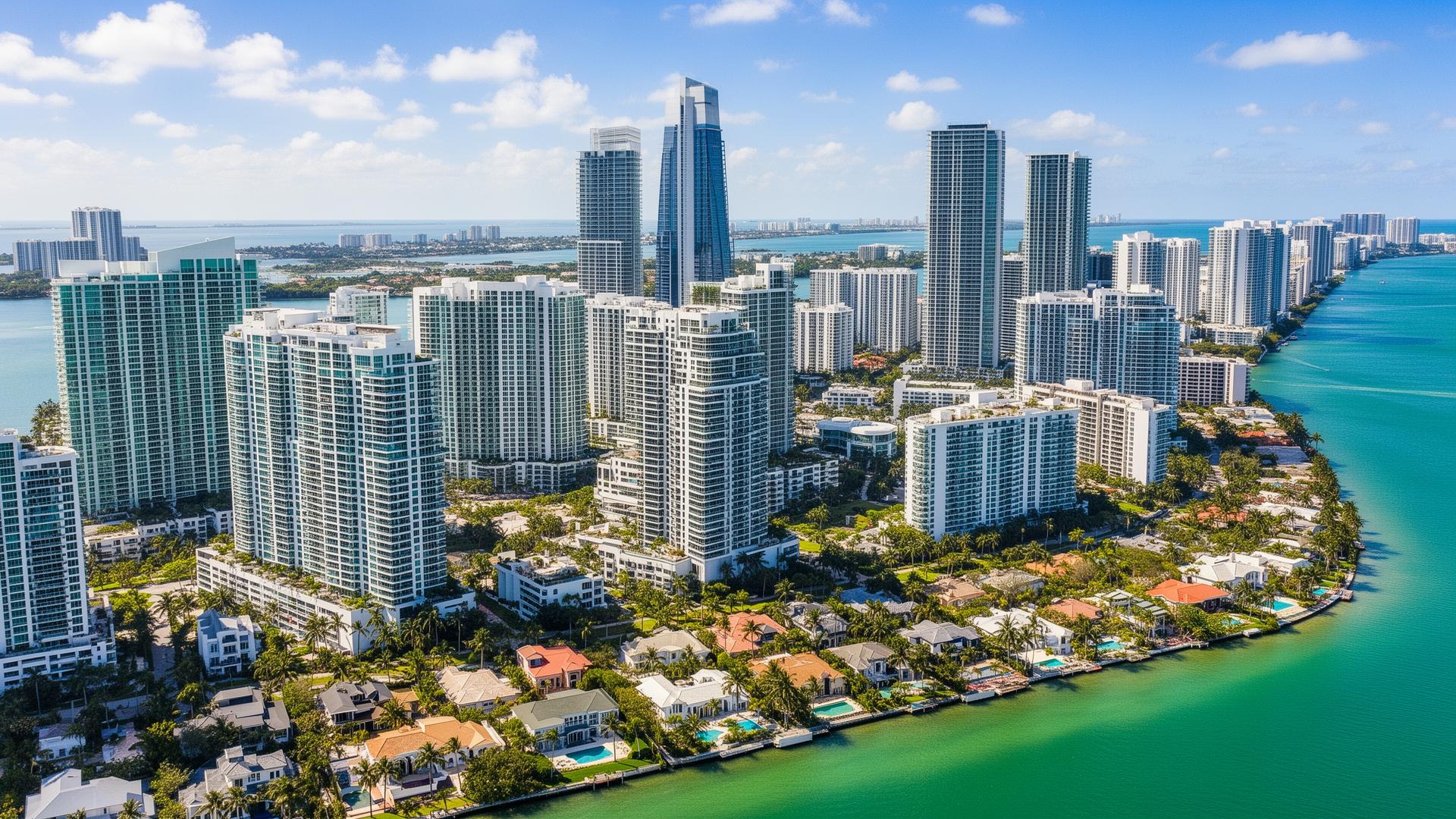
Miami Real Estate Appreciation: 10-Year Performance Data
Miami single-family homes appreciated roughly 139% over the ten years ending May 2025. MIAMI REALTORS reports the single-family median price rose from about $282,000 in May 2015 to about $675,000 in May 2025, a 139.4% increase [1]. That is the headline number most articles stop at. It is not the return. Consumer prices rose about 35% over the same window per the Bureau of Labor Statistics, so the inflation-adjusted gain was closer to 77% [2]. And appreciation is not yield: before you count a dollar of it as return, you have to net out property taxes, insurance, maintenance, and the cost of buying and selling. This post walks the actual index data, states the window and source for every figure, and applies an underwriting lens so the number means something.
Last updated: July 2026
The 10-year number, nominal and real
Start with the cleanest on-window figure. MIAMI REALTORS tracks the Miami-Dade single-family median monthly. From May 2015 to May 2025 that median moved from about $282,000 to about $675,000, a 139.4% nominal gain [1]. The same source reports the single-family median has risen in 167 of the past 168 months, a long run of monthly increases [1].
Now deflate it. The BLS Consumer Price Index for All Urban Consumers (CPI-U, 1982-84=100) stood at 237.805 in May 2015 and 321.465 in May 2025, about 35% cumulative inflation [2]. Restate the 2015 basis in 2025 dollars: $282,000 times 1.352 is about $381,000. Against an actual May 2025 median near $675,000, the real, inflation-adjusted appreciation is roughly 77% [1][2]. Still a strong decade. But the gap between 139% and 77% is the difference between a headline and a return, and it is the first thing an underwriter looks at.
What the repeat-sales indexes show, and their limits
Median price is a blunt instrument. It moves when the mix of what sold changes, not only when values change. Repeat-sales indexes were built to fix that by tracking the same properties across successive sales.
The S&P Cotality (formerly CoreLogic) Case-Shiller FL-Miami Home Price Index (series MIXRSA on FRED, seasonally adjusted, January 2000=100) reached a record high of about 444.05 in July 2024 and read about 441.70 in February 2025 [3]. Read that alongside the median: the metro index set a peak and then flattened, consistent with a market that appreciated hard and then cooled rather than kept sprinting.
Every index has a lens you need to know before you lean on it:
- Case-Shiller weights repeat sales and covers the broad metro. It is not Miami luxury, not any single neighborhood, and not new construction, which never has a prior sale to pair.
- The FHFA House Price Index (purchase-only) is also repeat-sales, but it only sees homes financed with conforming, Fannie- or Freddie-backed mortgages. It excludes all-cash deals and jumbo loans, which is a large share of Miami's high end, so it understates the top of this market.
- Median price (the MIAMI REALTORS figure above) captures cash and jumbo, but is exposed to sales-mix shifts.
None of these is wrong. They answer different questions. When you see one appreciation number quoted with no index named and no window, treat it as marketing, not data.
Appreciation is not return: netting out the carry
An owner does not keep the gross appreciation. They carry the asset every year, and in Florida the carry has climbed.
Property taxes. Miami-Dade is among Florida's higher-taxed counties. The 2025 millage tables from the Miami-Dade Property Appraiser put combined rates in the high-teens per thousand of taxable value, which works out to an effective burden roughly in the 1.5% to 2% range of market value per year after the homestead exemption for a primary residence [5]. On a $675,000 home that is on the order of $10,000 to $13,000 a year, and non-homestead and investment properties are assessed and capped differently.
Insurance. Florida homeowners insurance has risen sharply. The Florida Office of Insurance Regulation reported the average all-perils single-family premium near $3,668 in the third quarter of 2024, up about 31% since 2022, and coastal and older homes run well above that average [4]. Insurance is now a material line item in any Miami underwriting, not a rounding error.
Maintenance, HOA, and transaction costs. A common planning assumption is roughly 1% of value per year for upkeep, plus HOA or condo dues where they apply, plus the round-trip cost of buying and selling (commissions, title, transfer taxes) that typically runs several percent of price. Spread those over a ten-year hold and they take a real bite out of the 77% real figure.
The point is not that Miami was a poor decade to own. It was a good one. The point is that gross appreciation overstates what an owner actually netted, and any honest comparison to other assets has to run after carry and after inflation.
Houses and condos have diverged
The indexes above are led by single-family houses. Condos have gone the other way, and the split is structural. After the 2021 Surfside collapse, Florida enacted SB 4-D (2022) and SB 154 (2023), which require milestone structural inspections for older buildings and fully funded reserves through a Structural Integrity Reserve Study. The result is special assessments, in some aging high-rises reaching six figures per unit, and buyers steering toward buildings with cleaner reserve profiles.
That shows up in price. Redfin data has shown Miami-area condo median sale prices falling year over year in 2025, on the order of 6% in the spring, while single-family held up [6]. MIAMI REALTORS reported the Miami-Dade condo median slipping below $400,000 late in 2025 as condo inventory built into buyer's-market territory [1]. If you are underwriting a Miami condo today, the reserve study, the milestone inspection report, and a written disclosure of pending assessments matter more to your basis than any headline appreciation figure. This is a good moment to pressure-test the numbers on a specific building with a listing valuation before you anchor to a market-wide trend.
What the next five years might hold
Honestly: no one can tell you, and past performance does not predict future returns. A decade of 139% nominal appreciation was driven by conditions (in-migration, low-rate years, limited supply, no state income tax) that may or may not repeat, and higher carry costs are now a headwind that did not exist at the start of the window. Anyone quoting you a five-year Miami forecast to the decimal is selling certainty that the data does not support.
What you can do is underwrite the deal in front of you: known basis, realistic carry after taxes and insurance, a conservative appreciation assumption, and a plan for the downside. If you are weighing a purchase, start with the neighborhood you actually want, since Brickell underwrites differently from a single-family pocket, and think in terms of hold period and net return rather than the headline percentage. Owners considering a sale can start from a data-driven view of today's value on the sell your Miami home page rather than a remembered peak.
Frequently asked questions
How much has Miami real estate appreciated in 10 years? The Miami-Dade single-family median rose about 139% from May 2015 to May 2025, from roughly $282,000 to roughly $675,000, per MIAMI REALTORS [1]. Adjusted for about 35% cumulative inflation over that window, the real gain was closer to 77% [1][2].
Is nominal appreciation the same as my return? No. Return is what you keep after carry (property taxes, insurance, maintenance, HOA) and after the cost of buying and selling, and after inflation. The gross appreciation number always overstates the return.
Which index should I trust, Case-Shiller, FHFA, or median price? Each answers a different question. Case-Shiller and FHFA are repeat-sales indexes that control for sales mix, but FHFA excludes cash and jumbo deals common in Miami luxury, and Case-Shiller covers the broad metro rather than one neighborhood. Median price (MIAMI REALTORS) captures cash and jumbo but is exposed to mix shifts. Read them together and always ask which index and which window a quoted number came from.
Have Miami condos appreciated like houses? Not recently. Post-Surfside laws (SB 4-D and SB 154) require milestone inspections and funded reserves, which has driven special assessments and softened condo prices, with some 2025 condo medians down year over year while single-family held [6][1].
Where can I get a figure for a specific property? Market-wide numbers do not price your home. A listing valuation starts from the recorded basis and comparable sales for the actual property rather than a metro average.
Gabriel
Sources
- MIAMI REALTORS, monthly market statistics
- U.S. Bureau of Labor Statistics, Consumer Price Index (CPI-U), May 2025 release
- S&P Cotality Case-Shiller FL-Miami Home Price Index (MIXRSA), FRED, St. Louis Fed
- Florida home insurance cost trends, reporting Florida Office of Insurance Regulation data
- Miami-Dade County Property Appraiser, 2025 millage rate tables
- Redfin Data Center, Miami housing market
Gabriel A. Moyers, PA. eXp Realty. Florida License #3407280. Equal Housing Opportunity. This article is general information as of July 2026 and is not legal, tax, or financial advice. Verify current figures against authoritative sources before acting.
Thinking of selling your luxury property in Miami? Find out what your home is worth.
Get Your Home ValuationLooking for your dream home in Miami? Take our personalized home search quiz.
Start Your Home Search Quiz