
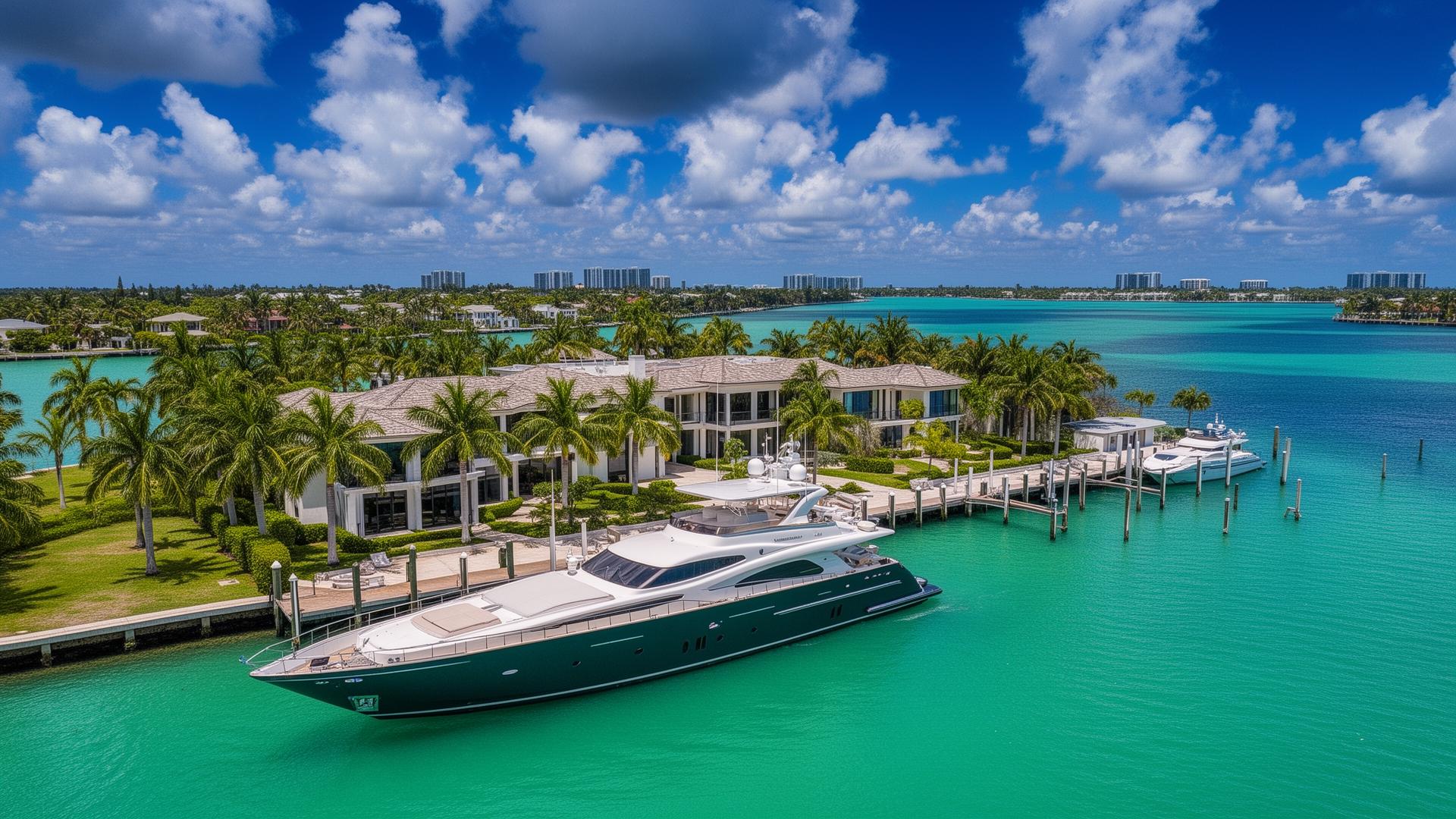
Miami Waterfront Living: Canal vs. Ocean vs. Bay
Last updated: July 2026
Miami waterfront homes fall into three practical categories, and the differences matter more to your budget and your insurance file than to your view. Canal-front and dockable homes sit on man-made or natural canals that feed into Biscayne Bay, and they are the most common way to own a private dock. Direct oceanfront homes face the Atlantic on the barrier islands, command the widest water views, and carry the highest premium and the highest exposure. Bay-front homes sit on Biscayne Bay itself, offering open water and, in many locations, deep-water dockage without a fixed-bridge restriction to the ocean.
Across global markets, waterfront property has traded at roughly 48% above comparable non-waterfront homes, and beachfront specifically has carried about a 76% premium [1]. Miami follows that pattern, and inside the waterfront tier the price ladder generally runs canal, then bay, then direct ocean. Before you weigh view or lifestyle, underwrite the three variables that actually move the numbers: boating access, flood zone and elevation, and the insurance cost that follows both. This guide compares the three categories on each.
Price and the waterfront premium
Start with the base market. The Miami-Dade single-family median sale price was about $680,000 in May 2026, and prices have risen in 171 of the last 174 months [2]. Waterfront sits well above that median in every category, and the spread between the three types is driven by scarcity and access rather than by finishes.
Canal-front homes are the entry point to dockable waterfront. Supply is larger because canal systems run through many neighborhoods, so the premium over a comparable dry-lot home is real but the narrowest of the three. Bay-front homes carry a wider premium because open-water frontage is finite and cannot be manufactured. Direct oceanfront is the smallest and least elastic supply, which is why it sits at the top of the ladder and why the Knight Frank beachfront figure runs so far above the all-waterfront average [1].
For an underwriting read, treat the premium as a function of three things: the width and depth of the water, whether the dock reaches open water without a fixed bridge, and the replacement cost of the seawall or dock. Two homes on the same canal can price very differently if one has a permitted, deep-water dock and a recent seawall and the other does not. If you want a category-specific read on a particular street, a listing valuation grounded in recent sold comps is more reliable than any per-category rule of thumb.
Boating access, the variable buyers underprice
Boating access is where the three categories separate most sharply, and it is the factor buyers most often misjudge.
Canal-front and dockable
Canal homes are the most common way to own a private dock, but access quality varies widely. The two questions that decide value are bridge clearance and water depth at low tide. A canal that reaches Biscayne Bay only under a low fixed bridge caps the size of boat you can run to open water, and that cap follows the home at resale. Deep, no-fixed-bridge canals in areas like the finger islands off Miami Beach trade at a premium precisely because they clear that hurdle. Verify permitted dock length, dredged depth, and any bridge heights between the dock and the bay before you assign value to the word dockable.
Bay-front
Bay-front homes on Biscayne Bay often combine open-water frontage with deep dockage and no bridge restriction, which is the configuration serious boaters pay the most for. The tradeoff is exposure. Open frontage means wind, chop, and storm surge hit the seawall directly, so seawall condition and height carry more weight in the underwriting than they do on a protected canal. Neighborhoods such as Coconut Grove offer bay frontage with mature tree canopy that moderates some of that exposure.
Direct oceanfront
Direct Atlantic oceanfront rarely comes with a private dock, because you cannot moor a boat on an open ocean beach. Oceanfront buyers are paying for the beach, the horizon view, and the frontage, not for boating. If a private vessel is the goal, oceanfront is usually the wrong category, and a bay-front or deep-water canal home delivers the boating that oceanfront cannot.
Flood zone, elevation, and insurance exposure
Every waterfront category sits in a FEMA flood zone, and the specific zone and the home's elevation drive both the flood premium and the wind premium. This is the line item that most often surprises buyers who underwrote only the purchase price.
Direct oceanfront carries the highest combined exposure. It faces the open Atlantic, sits in the highest-risk surge and wind bands, and its insurance file reflects that. Bay-front is next, with open-water surge exposure but generally less direct wave action than the beach. Canal-front is typically the most protected of the three, though a low-lying canal lot can still price insurance like open water if its elevation is poor. Elevation certificate, seawall height, roof age, and construction type matter more to the premium than the category label.
Florida's property insurance market has been repricing, and the direction recently turned. Citizens Property Insurance, the state-backed insurer many coastal homes rely on, recommended a statewide average rate decrease of about 2.6% for 2026, with three of five policyholders seeing an average reduction near 11.5%, effective June 1, 2026 [3]. That is a modest improvement, not a return to cheap coverage, and coastal waterfront still underwrites well above an inland home. Pull an actual insurance quote and a flood determination during your inspection period rather than estimating, because the number varies street to street.
Lifestyle and resale, read as an underwriting input
Lifestyle preference is real, but treat it as a resale-liquidity input rather than a soft factor. The deepest buyer pool in Miami waterfront is for turnkey boating access, which favors bay-front and deep-water canal homes. Oceanfront draws a narrower, higher-budget pool that prizes the beach and the view, so it can take longer to trade but holds its scarcity premium. Canal homes have the broadest resale audience because they span the widest price range and appeal to both boaters and view buyers.
Neighborhood fabric matters too. Gated bay and canal enclaves in areas like Coral Gables and Key Biscayne tend to hold value on the strength of the location and the boating access together. When you compare two waterfront homes, score them on the same three axes a future buyer will use: access, exposure, and the all-in cost to carry. If you want that scoring applied to a specific short list, a buyer consultation is the fastest way to pressure-test each option before you write.
Frequently asked questions
Which Miami waterfront type is most expensive?
Direct Atlantic oceanfront generally sits at the top of the price ladder because beachfront supply is the smallest and least elastic. Globally, beachfront has carried about a 76% premium over comparable non-waterfront homes, versus roughly 48% for waterfront overall [1]. Bay-front typically prices below oceanfront, and canal-front is usually the entry point to dockable waterfront.
Can I keep a large boat on a Miami canal home?
It depends on two things: the water depth at low tide and whether any fixed bridge sits between your dock and open water. A low fixed bridge caps the size of boat that can reach Biscayne Bay, and that cap follows the home at resale. Verify permitted dock length, dredged depth, and bridge clearances before assuming a canal home is deep-water dockable.
Is waterfront insurance always more expensive?
Waterfront underwrites above a comparable inland home, but the gap varies by elevation, seawall height, roof age, and construction type more than by the category label. Citizens recommended a statewide average rate decrease near 2.6% for 2026, with many policyholders seeing larger cuts, effective June 1, 2026 [3]. Always pull an actual quote and a flood determination during your inspection period.
Do bay-front homes offer better boating than oceanfront?
Usually yes. Bay-front homes on Biscayne Bay often combine open-water frontage with deep dockage and no bridge restriction, which is what serious boaters pay for. Direct oceanfront rarely includes a private dock, because you cannot moor a boat on an open beach, so oceanfront buyers are paying for the beach and the view rather than boating access.
How much is the Miami market moving right now?
The Miami-Dade single-family median sale price was about $680,000 in May 2026, and single-family prices have risen in 171 of the last 174 months [2]. Waterfront sits above that median in all three categories, so use category-specific sold comps rather than the countywide median when you underwrite a purchase.
Gabriel
Sources
- Knight Frank 2023 Global Waterfront Index, waterfront and beachfront premiums (via Benoit Properties)
- MIAMI REALTORS / PRNewswire, Miami-Dade single-family median sale price and appreciation streak, May 2026
- Citizens Property Insurance Corporation, 2026 recommended rate changes, December 2025
Gabriel A. Moyers, PA. eXp Realty. Florida License #3407280. Equal Housing Opportunity. This article is general information as of July 2026 and is not legal, tax, or financial advice. Verify current figures against authoritative sources before acting.
Thinking of selling your luxury property in Miami? Find out what your home is worth.
Get Your Home ValuationLooking for your dream home in Miami? Take our personalized home search quiz.
Start Your Home Search Quiz