
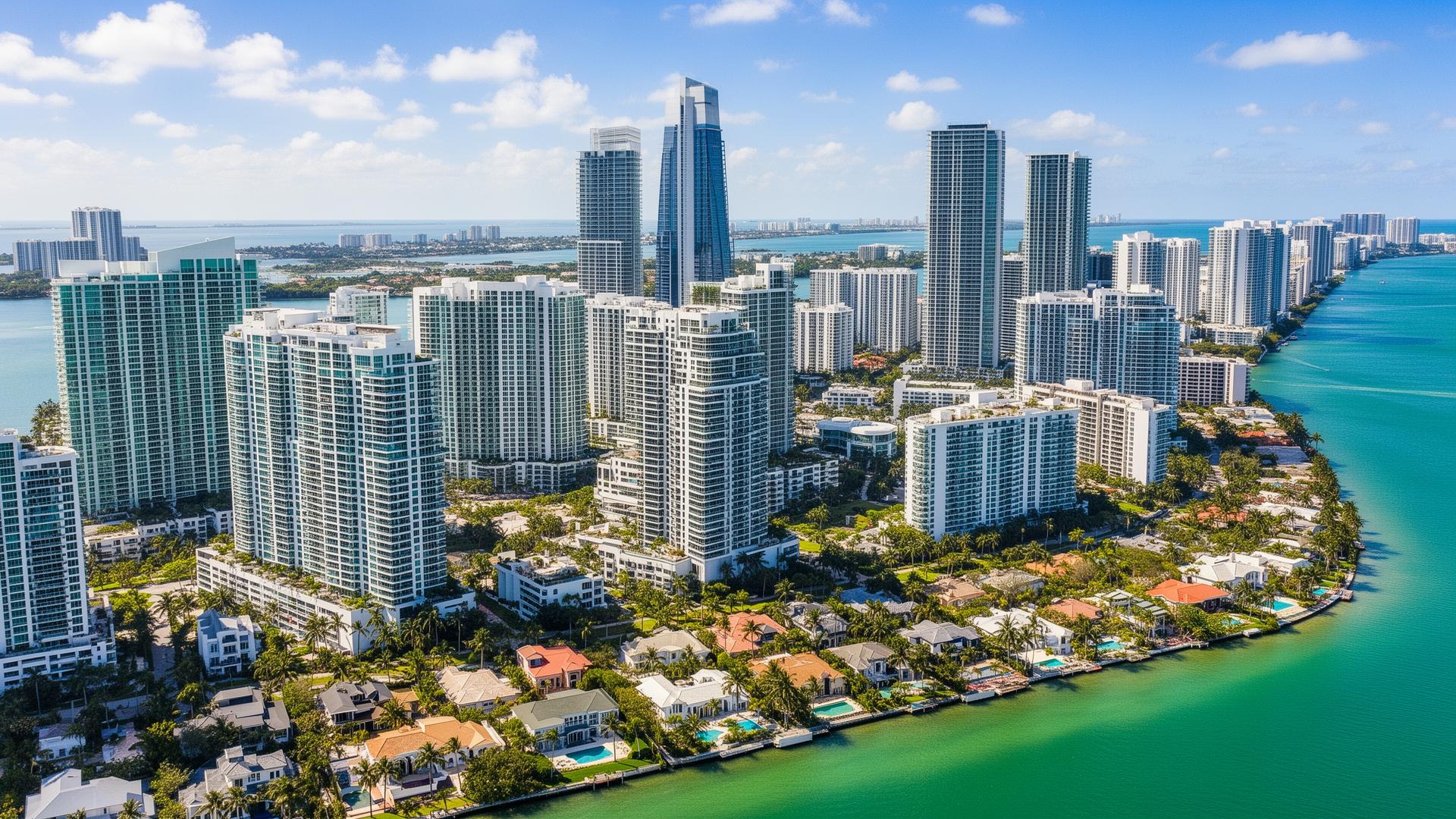
Florida mortgage rates in 2026: 30-year fixed trends
What is the 30-year fixed mortgage rate in Florida in 2026? Florida borrowers price off the national benchmark, and as of the Freddie Mac Primary Mortgage Market Survey for the week of July 2, 2026, the average 30-year fixed rate was 6.43%, down from 6.67% a year earlier [1]. Your actual quote moves with credit score, loan size, and whether you need a jumbo loan, which is common in South Florida's higher-priced corridors. The headline for 2026 is stability: the rate has held in a tight band through the first half of the year, and no major forecaster expects a return to the sub-4% financing of 2021.
Last updated: July 2026
Where 30-year fixed rates sit in 2026
The Freddie Mac 30-year average was 6.43% for the week of July 2, 2026 [1]. That is a national survey figure. Florida rates track it closely, with individual quotes varying by borrower profile and loan type. Two forecasts frame the rest of the year. The Mortgage Bankers Association projects the 30-year fixed to average about 6.5% across 2026 [2]. Fannie Mae's outlook has projected rates easing toward the high-5% range by year-end [3]. Present both to yourself as sourced projections, not certainties, and underwrite your purchase at the rate you can actually lock today.
Why South Florida quotes can differ from the national average
Much of the Miami luxury market trades above conforming loan limits, which pushes buyers into jumbo territory. Jumbo pricing and qualification standards differ from conforming loans and vary by lender, so a headline national average is a starting point, not the rate a buyer in a higher-priced neighborhood such as Coral Gables or Coconut Grove will necessarily receive. Portfolio lenders and private-bank credit lines are common at the upper end. If you are financing near or above the jumbo threshold, get quotes from lenders who actively work that segment.
How rates are shaping the local market
Stable borrowing costs have produced a split market by property type. In Miami-Dade, the single-family median sale price was $680,000 in May 2026, up 0.74% year over year, while the existing-condo median was $415,000, down 2.35% [4]. Single-family inventory tightened, falling roughly 19% year over year to about 4,599 active listings [4], which supports single-family values. Condo inventory is heavier, which is one reason condo pricing has softened. Redfin data for the city of Miami showed homes averaging about 113 days on market in 2026, up from around 100 a year earlier [5], evidence that buyers have regained time and negotiating room.
Rates and buyer strategy by price band
- Entry and mid-range buyers feel rate moves most because financing is a larger share of the purchase. Paying discount points or negotiating a seller-funded buy-down can lower the effective rate and is often worth modeling against the cash outlay.
- Move-up buyers who carried a low pandemic-era rate are increasingly transacting anyway as life needs outweigh holding a cheap loan.
- Ultra-luxury buyers frequently pay cash or use private-bank credit lines, so retail mortgage pricing matters less to that segment.
Whatever the band, define your financing before you shop. A buyer consultation that pins down budget and loan structure is more useful than chasing daily rate movements.
Credit and the rate you are quoted
Lenders price risk. Borrowers with strong credit and lower debt-to-income ratios receive lower pricing, while weaker profiles are quoted higher. Rather than repeat rules of thumb, get a written quote tied to your actual credit and income, and compare a few lenders. The spread between offers on the same profile can exceed the daily change in the national average.
What stable rates mean for sellers
Steady rates keep a consistent pool of qualified buyers in the market, but those buyers are selective and take their time. Price to your current comparable set. With buyers underwriting near 6.43% [1] and shopping deliberately, an overpriced listing tends to sit and then trade lower. A grounded listing valuation based on recent closings is the right starting point.
The 2027 outlook
Forecasters generally expect the 30-year fixed to stay in a range near current levels absent a significant shift in Federal Reserve policy. The MBA projects roughly 6.5% for 2026 [2], and Fannie Mae has projected a gradual easing toward the high-5% area by the end of 2026 [3]. These are projections that get revised as data arrives, so revisit them rather than treating any single number as fixed.
Fixed versus adjustable in a stable-rate market
When rates are range-bound, the case for a 30-year fixed is straightforward: you lock a known payment for the life of the loan and remove interest-rate risk entirely. Adjustable-rate products can carry a lower initial rate, but they reintroduce the uncertainty that a stable market has removed, and they only pay off if rates fall enough during your hold to make refinancing worthwhile. With the Freddie Mac 30-year average at 6.43% for the week of July 2, 2026 [1] and forecasters projecting a similar band through the year, from the MBA near 6.5% [2] to Fannie Mae easing toward the high-5% range [3], the refinance-later bet is less obviously in the money than it was during periods of falling rates. Model both structures against your expected hold before you decide.
Points, buy-downs, and seller credits
In a market where buyers have regained leverage, financing concessions are back on the table. A permanent rate buy-down, funded by discount points, lowers your rate for the life of the loan in exchange for cash at closing. A temporary buy-down reduces the rate for the first year or two. A seller credit can cover either. Whether any of these pencils out depends on how long you hold and how the cash outlay compares to the monthly savings, so run the breakeven before you pay for points. In practice, a seller-funded credit that reduces your effective rate can be more valuable than shopping several lenders for a marginal quote difference.
What stable rates do to affordability over time
A predictable rate does not by itself make a home affordable, but it makes affordability something you can plan around. Because your payment on a fixed loan will not change, you can budget with certainty, build a reserve, and avoid the payment shock that priced buyers out during the volatile years. The affordability question in 2026 is therefore less about the daily rate and more about price relative to income and the specific submarket you are buying in, which is why a written pre-approval and a defined budget matter more than the rate ticker.
Frequently asked questions
What is the average 30-year mortgage rate in Florida right now?
Florida tracks the national benchmark. The Freddie Mac PMMS reported a 30-year fixed average of 6.43% for the week of July 2, 2026 [1]. Individual quotes vary with credit, loan size, and loan type.
Will Florida mortgage rates go down in 2026?
Forecasts differ. The MBA projects about 6.5% for 2026 [2], while Fannie Mae has projected rates easing toward the high-5% range by year-end [3]. Both are projections, not guarantees.
Why is my Miami rate quote higher than the national average?
Many South Florida purchases require jumbo loans, which price and qualify differently from conforming loans. Credit, down payment, and property type also affect your quote.
Is 2026 a good time to buy in South Florida?
Stable rates have restored appraisal and financing contingencies and given buyers more time and leverage. Whether it is right for you depends on your finances and hold period.
Gabriel
Sources
- Freddie Mac Primary Mortgage Market Survey
- Mortgage Bankers Association, Forecasts and Commentary
- Fannie Mae, Mortgage Rates Expected to Move Below 6 Percent by End of 2026
- MIAMI Association of Realtors, Miami-Dade monthly statistical reports
- Redfin, Miami Housing Market
Gabriel A. Moyers, PA. eXp Realty. Florida License #3407280. Equal Housing Opportunity. This article is general information as of July 2026 and is not legal, tax, or financial advice. Verify current figures against authoritative sources before acting.
Thinking of selling your luxury property in Miami? Find out what your home is worth.
Get Your Home ValuationLooking for your dream home in Miami? Take our personalized home search quiz.
Start Your Home Search Quiz