
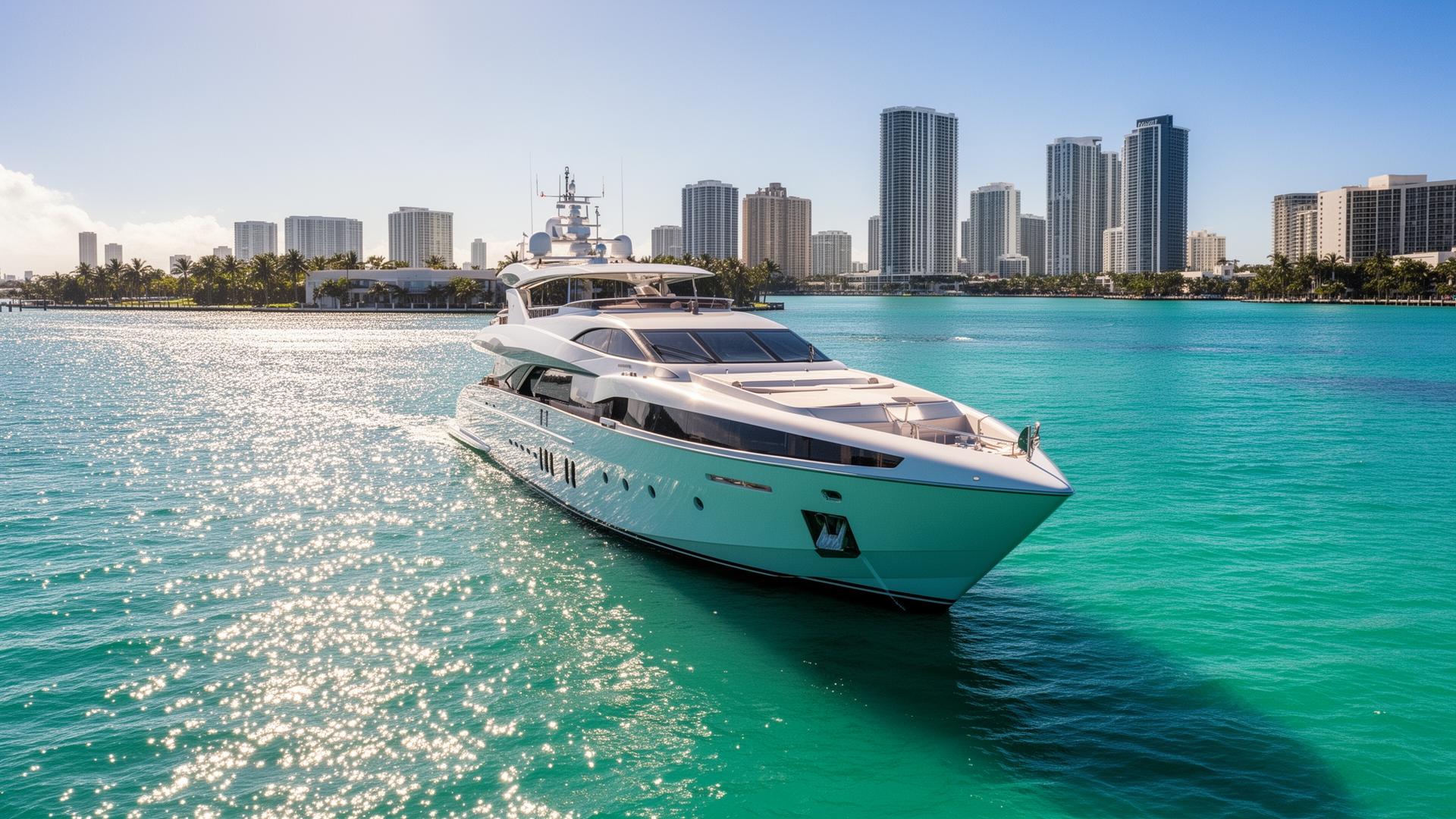
Star Island and Hibiscus Island: Guard-Gated Miami Beach Real Estate
Last updated: July 2026
Star Island is a guard-gated, man-made island in Biscayne Bay that sits within the City of Miami Beach and holds fewer than three dozen single-family waterfront estates. It is reached only from the MacArthur Causeway, and along with neighboring Palm Island and Hibiscus Island it forms a small chain of dredged islands off that causeway. These are not the Venetian Islands, which are a separate island chain on their own causeway to the north. If you are researching Star Island Miami real estate, the practical takeaways are simple: supply is fixed, lots are large and waterfront, access is controlled by a private gate, and pricing sits at the trophy end of the Miami-Dade market. The island was completed in 1922 when the Army Corps of Engineers dredged sand to create it. [1] In March 2025 a Star Island estate traded for $120 million, which set a Miami-Dade County home-price record. [2] This article explains how the market is structured, what drives value here, and how a buyer or seller should underwrite a purchase or listing on a controlled-access island.
Where Star Island and Hibiscus Island actually sit
Star Island, Palm Island, and Hibiscus Island are artificial islands built by dredging in Biscayne Bay, and all three are part of Miami Beach in Miami-Dade County. [1] Access is by a single bridge road off the MacArthur Causeway, which runs between downtown Miami and South Beach. Star Island is south of the Venetian Islands and just east of Palm and Hibiscus. [1]
The distinction matters for anyone comparing neighborhoods. The Venetian Islands are a separate chain served by the Venetian Causeway, and they carry a different mix of housing, including multi-family and smaller lots. The MacArthur-Causeway islands covered here are zoned for single-family estates, which is a large part of why their pricing behaves the way it does. For broader context on the surrounding market, see the Miami Beach neighborhood overview.
What the market looks like
Two features define pricing on Star Island: large waterfront parcels and a fixed number of them. The record 2025 sale was a 2.5-acre waterfront estate at 26 Star Island Drive that sold for $120 million; the same property had been acquired in 2009 for $16 million, which frames the long-hold appreciation this micro-market has produced. [2] Trades at this level are infrequent, so a handful of transactions can move the reported averages sharply in either direction.
Because inventory is measured in a few listings at a time, standard "median price" and "days on market" statistics are thin and volatile here. A more useful lens is land value: buyers are underwriting waterfront frontage, lot size, dock access, and the ability to build or renovate, rather than the existing structure alone. Many transactions are effectively land sales where the improvement is expected to be replaced.
Why pricing holds: scarcity, privacy, and security
Three structural factors support the price floor on these islands.
Fixed supply. The islands cannot be enlarged and the lots cannot be subdivided into higher density under current single-family zoning, so the number of estates is effectively capped.
Controlled access. A private guard gate at the bridge limits who reaches the island, which is a durable amenity that does not depend on any single home.
Waterfront and boating. Deepwater frontage with private docks and open-bay or skyline views is the core of the value, and it is the feature least able to be reproduced elsewhere.
None of these depend on who owns a particular house. Describing this market means describing the land, the water, and the gate, not any individual resident.
Underwriting a purchase or a sale on a controlled-access island
If you are buying, budget diligence time for the items that carry cost and risk on older waterfront estates: seawall condition and permitting, dock and marine-structure permits, elevation and flood-zone status, wind and flood insurance quotes obtained before you are under contract, and survey confirmation of the actual waterfront footage. On a thin-comp island, an appraisal can lag an aggressive contract price, so cash or a strong appraisal-gap position often matters.
If you are selling, price discovery is the central challenge because directly comparable recent sales may not exist. That argues for pricing off land value and current replacement economics rather than stale averages. A disciplined pricing analysis for a unique waterfront property is exactly the kind of work covered in a listing valuation, and buyers weighing an entry here can start with a buyer consultation to map diligence and financing before touring.
Frequently asked questions
Are Star Island and Hibiscus Island the same as the Venetian Islands?
No. Star Island, Palm Island, and Hibiscus Island are dredged islands reached from the MacArthur Causeway and are part of Miami Beach. [1] The Venetian Islands are a separate chain on the Venetian Causeway. They are often confused but are distinct.
Is Star Island really guarded?
Access is via a single bridge road with a private gate that controls entry to the island, which is a defining feature of the neighborhood.
What kind of homes are on these islands?
Single-family waterfront estates on large lots, most with private docks. The 2025 record sale was a 2.5-acre parcel. [2] Zoning is single-family, so you will not find high-rise condos on the islands themselves.
Why is pricing so high?
Supply is fixed, lots are large and waterfront, and access is controlled. In 2025 a Star Island estate set a Miami-Dade record at $120 million. [2] Land and waterfront frontage, not the existing structure, drive most of the value.
How should I value a home here?
Underwrite the land: waterfront footage, lot size, dock rights, elevation and insurance cost, and current build economics. Because comparable sales are scarce, a land-based valuation is usually more reliable than a median-price approach.
Gabriel
Sources
- Star Island (Miami Beach) - Wikipedia
- Developer Vlad Doronin sells waterfront Star Island estate for record $120M - The Real Deal
Gabriel A. Moyers, PA. eXp Realty. Florida License #3407280. Equal Housing Opportunity. This article is general information as of July 2026 and is not legal, tax, or financial advice. Verify current figures against authoritative sources before acting.
Thinking of selling your luxury property in Miami? Find out what your home is worth.
Get Your Home ValuationLooking for your dream home in Miami? Take our personalized home search quiz.
Start Your Home Search Quiz