
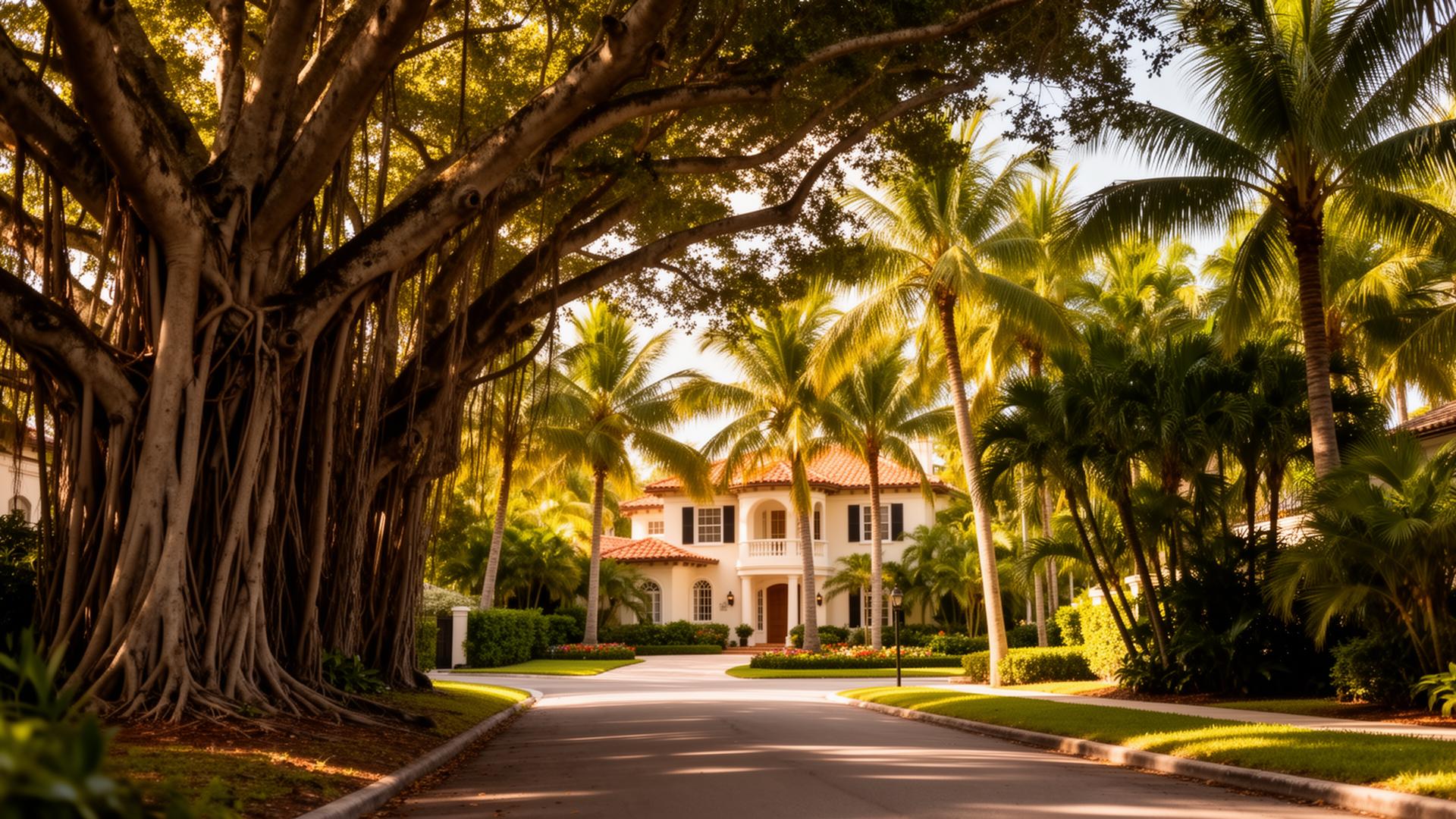
Sustainable Luxury Homes in Miami: Green Building Trends
Last updated: July 2026
Sustainable Miami homes are luxury properties built or retrofitted to cut energy use, generate their own power, and hold up in a coastal, hurricane-exposed climate. In practice that means some combination of LEED or Energy Star certification, rooftop solar paired with battery backup, impact-rated windows and doors, high-efficiency cooling, and a building envelope that resists heat, moisture, and wind. For buyers, the appeal is twofold: lower carrying costs on properties that run air conditioning most of the year, and resilience during storm season and grid outages. For sellers, third-party certification and documented efficiency can support price. A meta-analysis of green-home studies found LEED-certified homes sold at roughly an 8.3% premium over comparable non-certified homes [1], though results vary widely by market and certification type.
The underwriting question is whether a given green feature pays back through lower bills, insurance treatment, resilience, or resale, or whether it is a preference you are choosing to fund. This piece walks through the main features, the Florida-specific programs that finance and reward them, and how to think about cost versus value before you write an offer or list.
What makes a Miami home "sustainable"
There is no single definition, so it helps to separate certification from the underlying systems.
Certification: LEED and Energy Star
LEED, run by the U.S. Green Building Council, and Energy Star, run by the U.S. EPA and Department of Energy, are the two labels you will see most often. LEED scores a home across energy, water, materials, and site categories and awards Certified, Silver, Gold, or Platinum. Energy Star focuses more narrowly on energy performance against a benchmark. Both give a buyer third-party documentation rather than a builder's marketing claim, which matters at resale and in appraisal support. Studies on price premiums are consistent in direction but wide in range: LEED sales premiums have been estimated near 8.3% in one meta-analysis [1], while Energy Star and general energy-efficient homes tend to show smaller premiums in the low single digits to high single digits depending on the study and region.
Solar plus battery backup
Rooftop solar is common on newer luxury builds, and in Florida it is increasingly paired with battery storage. The battery is the part that matters for resilience: solar panels alone typically shut down during a grid outage for safety, while a battery system can keep essential circuits running. In a market where storm-season outages are a real risk, backup capacity is often the feature buyers value most, separate from the utility-bill math.
Impact windows and resilient design
Impact-rated windows and doors, reinforced roofing, and a tight building envelope do double duty. They reduce cooling load, which lowers energy bills in a climate where cooling can be the largest line on the electric bill, and they harden the home against wind and water. Impact glazing is also frequently relevant to insurance underwriting, because wind-mitigation features can affect how a property is rated. Treat the insurance question as property-specific and confirm it with a licensed agent rather than assuming a discount.
Energy efficiency
Efficient HVAC, heat-pump water heating, LED lighting, and smart controls are the least glamorous features and often the highest-return ones. Florida homes run cooling most of the year, and the U.S. Energy Information Administration reports that Florida's residential sector consumes more electricity than nearly every other state, driven largely by air conditioning [2]. That usage pattern is exactly why efficiency upgrades tend to pay back faster here than in milder climates.
Florida programs that finance and reward green homes
Two Florida-specific mechanisms shape the economics: how you pay for upgrades, and how you are credited for the power you generate.
PACE financing
Property Assessed Clean Energy, or PACE, lets homeowners finance qualifying energy-efficiency and hurricane-hardening improvements and repay them as a fixed-rate assessment on the property tax bill. Eligible projects include solar, HVAC, impact windows and doors, roofing, and storm protection. PACE can cover up to 100% of eligible project costs, with fixed rates that in 2025 generally ran in the 6% to 9% range [3]. The tradeoffs matter for underwriting: the assessment attaches to the property, so it can complicate a future sale or refinance, and some mortgage lenders have specific requirements around PACE liens. It is a useful tool, not a free one, so read the terms before committing.
Net metering
Net metering determines what a utility pays you for excess solar power. Under Florida Public Service Commission Rule 25-6.065, investor-owned utilities credit residential solar customers for the energy their systems export to the grid, and customers who interconnect are generally grandfathered on their terms for about 20 years [4]. That grandfathering is a meaningful part of the payback calculation, because it locks in the crediting arrangement in place when the system is connected. If you are buying a home with existing solar, ask when the system was interconnected and what net-metering terms transfer with it.
Cost versus value: an underwriting lens
Green features fall into three buckets, and it helps to underwrite each separately.
First, features that pay back through lower operating costs: efficient HVAC, insulation, and a tight envelope. In a high-cooling climate these tend to have the clearest math. Second, features that pay back through resilience and risk: impact windows, reinforced roofing, and battery backup. The return here is partly avoided loss and continuity during outages, and partly potential insurance treatment, which is property-specific. Third, features that pay back mainly through resale and buyer preference: LEED or Energy Star certification and marquee solar arrays. The premium studies point in a positive direction, but the range is wide and market-dependent, so do not assume a specific dollar recovery.
For buyers, the practical move is to price the home on its fundamentals and treat verified green systems as a documented reduction in future carrying cost plus a resilience feature, rather than paying a large premium on the expectation of one. Ask for utility bills, certification paperwork, permits for solar and impact windows, and the age and warranty status of major systems. For sellers, third-party certification and clean documentation are what let a green premium show up in an appraisal instead of living only in the listing description.
Neighborhood matters too. Newer construction and major renovations in areas like Brickell and Coral Gables are more likely to carry current impact glazing and efficient systems, while established single-family enclaves such as Coconut Grove often trade older housing stock where green features are a retrofit decision. If you want a property-specific read on how green systems affect value in your target area, a buyer consultation or a listing valuation is the place to work through the numbers.
Frequently asked questions
Do sustainable Miami homes actually sell for more?
Studies point to a positive premium for certified homes. One meta-analysis estimated LEED-certified homes sold at roughly 8.3% over comparable non-certified homes [1], while Energy Star and general energy-efficient homes show smaller premiums in most research. The range is wide and depends on market, certification type, and how well the features are documented, so treat any single figure as directional rather than a guaranteed return.
Is solar worth it in Florida given the net-metering rules?
It depends on the system, your usage, and when it was interconnected. Under Florida PSC Rule 25-6.065, solar customers are credited for exported power and are generally grandfathered on their terms for about 20 years [4]. When buying a home with existing solar, confirm the interconnection date and what terms transfer, since that drives the payback math.
What is PACE financing and should I use it?
PACE lets you finance energy and hurricane-hardening upgrades and repay through a fixed-rate assessment on your property tax bill, covering up to 100% of eligible costs at rates that generally ran 6% to 9% in 2025 [3]. The assessment attaches to the property and can affect a future sale or refinance, so review the terms and check your mortgage lender's requirements before using it.
Do impact windows lower my insurance?
Impact-rated windows and other wind-mitigation features can affect how a property is underwritten, but the effect is property-specific and depends on your insurer and the home's overall wind-mitigation profile. Confirm any expected treatment with a licensed insurance agent rather than assuming a set discount.
How do I verify a home's green claims before buying?
Ask for third-party certification paperwork, permits for solar and impact windows, recent utility bills, and the age and warranty status of HVAC and roofing. Verified documentation is what supports value at appraisal and separates a genuine efficiency upgrade from a marketing line.
Gabriel
Sources
- Cambridge University, "The Green Premium: A Meta-Analysis"
- U.S. Energy Information Administration, Florida State Electricity Profile
- Florida PACE Funding Agency, Home Improvement Financing
- Florida Statutes, Section 366.91 (net metering) and Florida PSC Rule 25-6.065
Gabriel A. Moyers, PA. eXp Realty. Florida License #3407280. Equal Housing Opportunity. This article is general information as of July 2026 and is not legal, tax, or financial advice. Verify current figures against authoritative sources before acting.
Thinking of selling your luxury property in Miami? Find out what your home is worth.
Get Your Home ValuationLooking for your dream home in Miami? Take our personalized home search quiz.
Start Your Home Search Quiz