
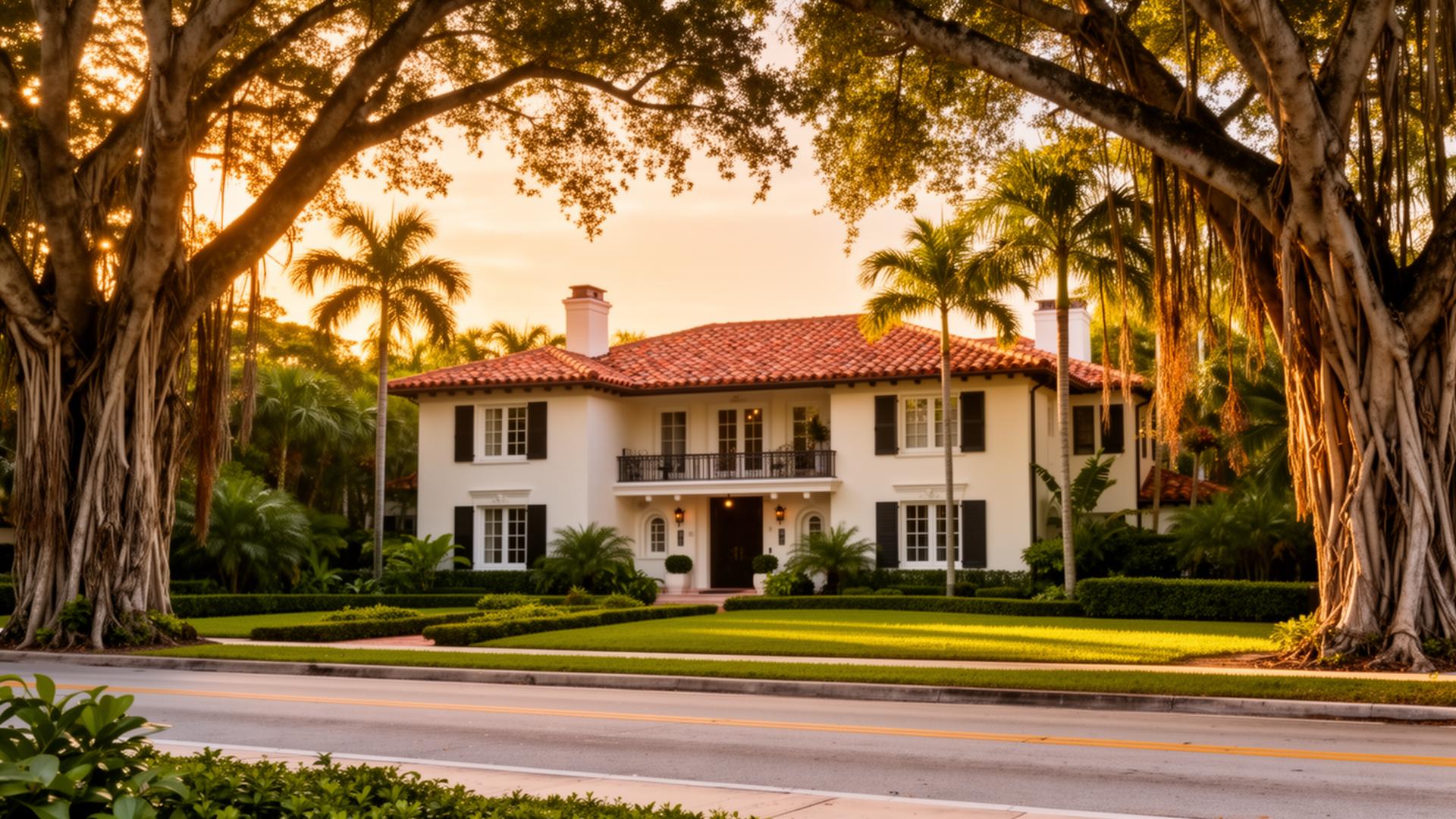
Aging in Place in Miami: Single-Story and Accessible Home Features
Buyers planning to age in place in Miami should screen for a short, consistent list of physical features: single-level living space, a zero-step entry, doorways and hallways wide enough for a walker or wheelchair, a step-free shower, lever handles, and good lighting. In a condo, the equivalent question is whether the building has reliable elevator access, a no-step path from the parking or drop-off area to the unit, and common areas you can navigate without stairs. These are property characteristics you can verify on a showing, and they are what make a home work over a long horizon rather than just at move-in.
The demand side is large and the supply side is thin. In AARP's 2024 Home and Community Preferences Survey, 75% of adults age 50 and older said they want to stay in their current homes as they age [1]. Yet at last measure, fewer than 4% of US homes offered all three core accessibility features at once: single-floor living, a no-step entry, and wide hallways and doorways, according to Harvard's Joint Center for Housing Studies [2]. That gap is the underwriting reality. The features are widely wanted and rarely present, which means finding them is a search-and-screen problem, and adding them is a renovation budget line.
Last updated: June 2026
What single-floor living actually requires
Single-floor living does not just mean a one-story house. The functional test is whether everything needed for daily life sits on one level: a bedroom, a full bathroom, the kitchen, and the main living area, all reachable without climbing stairs. A two-story house with a ground-floor primary suite can satisfy this. A one-story house with a sunken living room or a step down into the lanai may not.
In Miami's single-family stock, ranch-style and mid-century homes in areas like Pinecrest and parts of Coral Gables more often present true single-level layouts, while newer luxury construction frequently stacks living space across two or three floors. When a multi-level home is otherwise the right property, the practical question becomes whether the floor plan can accommodate a ground-floor primary suite now or be reconfigured for one later. That is a question to answer before you write an offer, not after.
The accessibility features that matter most
When older adults are asked which universal design features they value, the same items come up repeatedly. In AARP research, 67% cited wider doorways and hallways, 64% cited nonslip flooring, and 57% cited step-free showers [3]. Those preferences line up closely with what remodelers actually install. In the National Association of Home Builders' Q1 2025 data, 56% of professional remodelers reported taking on aging-in-place projects, and the most common modifications were grab bars (87%), curbless showers (78%), and wider doorways (52%) [4].
The useful takeaway for a buyer is that these features cluster into a checklist you can run on any property:
- Zero-step entry. At least one entrance with no step, or one that can be ramped without major structural work.
- Door and hallway width. Interior doors of roughly 32 inches of clear width or more, and hallways wide enough to turn a mobility device.
- Bathroom geometry. A curbless or low-threshold shower, blocking in the walls for grab bars, and enough floor clearance to maneuver.
- Lever hardware and rocker switches. Easier to operate than knobs and toggles.
- Lighting and contrast. Bright, even lighting and visual contrast at thresholds and stair edges.
Some of these are cheap to add. Others, like widening a doorway in a load-bearing wall or converting a curbed shower, carry real cost and should be priced before purchase so the renovation is part of your basis, not a surprise.
Condos and elevator buildings
For buyers who prefer a low-maintenance home, a condominium can deliver single-level living by definition, since the unit itself is on one floor. The variables move to the building. The questions worth asking are whether the building has more than one elevator (so a single outage does not strand residents on upper floors), whether there is a no-step path from the garage or porte-cochere to the elevator, and whether the unit's interior doorways and bathroom meet the same width and clearance standards a house would.
Miami also has a building-specific layer that affects long-term ownership cost. After the 2021 Surfside collapse, Florida law now requires milestone structural inspections and fully funded reserves for many older condo buildings, which has pushed assessments and reserve contributions higher in some associations. For a buyer planning to stay put for many years, the financial health of the association is as much a part of the accessibility picture as the elevator, because a building that cannot fund its reserves may defer the very maintenance that keeps common areas safe and usable. Review the association's reserve study and milestone inspection status the same way you would review a home inspection.
Neighborhood amenities and walkability
The home is half the equation. The other half is what sits within a short distance of it. Proximity to healthcare, pharmacies, groceries, and parks reduces dependence on driving over time, and walkable street networks make daily errands feasible on foot. Miami as a whole carries a Walk Score in the high 70s, which places it among the more walkable large US cities, though walkability is highly local and concentrated near commercial corridors rather than spread evenly.
Coral Gables illustrates the point. Its Miracle Mile and downtown form a compact, walkable core with restaurants, shops, and services, while many residential blocks outside that core are car-dependent. The Gables also sits near major medical infrastructure, including the University of Miami health campus. Pinecrest is the opposite profile: leafy, low-density, and quiet, with larger single-story lots but more reliance on a car for daily needs. Neither is better in the abstract. The right answer depends on whether you prioritize walk-out access to services or space and a true ground-floor footprint, and that is a tradeoff worth mapping deliberately against the specific addresses on your list.
How to underwrite the purchase
Treat aging-in-place suitability as an underwriting line item. Run the feature checklist on every candidate property, get renovation quotes for the gaps before you remove your inspection contingency, and fold those costs into your effective purchase price. A home that needs a curbless shower, two doorway widenings, and an entry ramp might still be the right buy, but only if you priced it that way going in. In a condo, add the reserve study and any pending special assessments to the same math.
If you want a second set of eyes on a specific property, a buyer consultation is where we walk the checklist against real addresses and rough out the renovation numbers. You can also browse common questions on the FAQ page.
Frequently asked questions
What does aging in place mean for a home purchase?
It means buying a property whose physical layout supports living there over a long horizon without major obstacles: single-level living space, a no-step entry, wide doorways and halls, and an accessible bathroom. It is about home features and neighborhood access, not about who a home is for.
Are single-story homes hard to find in Miami?
True single-level layouts exist but are a minority of the stock, especially among newer luxury construction that tends to build vertically. Nationally, fewer than 4% of homes have single-floor living, a no-step entry, and wide doorways together [2], so finding them takes a targeted search and a willingness to renovate for the missing features.
Can a condo work as well as a single-story house?
Yes, because a condo unit is on one level by definition. The key checks move to the building: multiple elevators, a step-free path from parking to the unit, adequate door and bathroom clearances inside, and a financially healthy association with funded reserves and current milestone inspections.
Which accessibility features add the most cost to add later?
Widening doorways in load-bearing walls and converting a curbed shower to a curbless one are typically the larger line items. Grab bars, lever hardware, rocker switches, and improved lighting are comparatively inexpensive. Pricing the expensive items before purchase keeps them in your basis rather than turning them into a surprise.
How walkable are Miami's residential neighborhoods?
It varies block by block. Miami's citywide Walk Score sits in the high 70s, but walkability concentrates near commercial corridors like Coral Gables' Miracle Mile, while lower-density areas such as Pinecrest are more car-dependent. Map proximity to healthcare, groceries, and pharmacies for the specific address, not the neighborhood average.
Gabriel
Sources
- AARP - 2024 Home and Community Preferences Survey
- Harvard Joint Center for Housing Studies - Housing America's Older Adults 2023
- AARP Public Policy Institute - Older Americans Underscore the Importance of Universal Design in Housing
- NAHB - Practical Strategies for Aging-in-Place Remodels (Q1 2025 data)
Gabriel A. Moyers, PA. eXp Realty. Florida License #3407280. Equal Housing Opportunity. This article is general information as of June 2026 and is not legal, tax, or financial advice. Verify current figures against authoritative sources before acting.
Thinking of selling your luxury property in Miami? Find out what your home is worth.
Get Your Home ValuationLooking for your dream home in Miami? Take our personalized home search quiz.
Start Your Home Search Quiz