
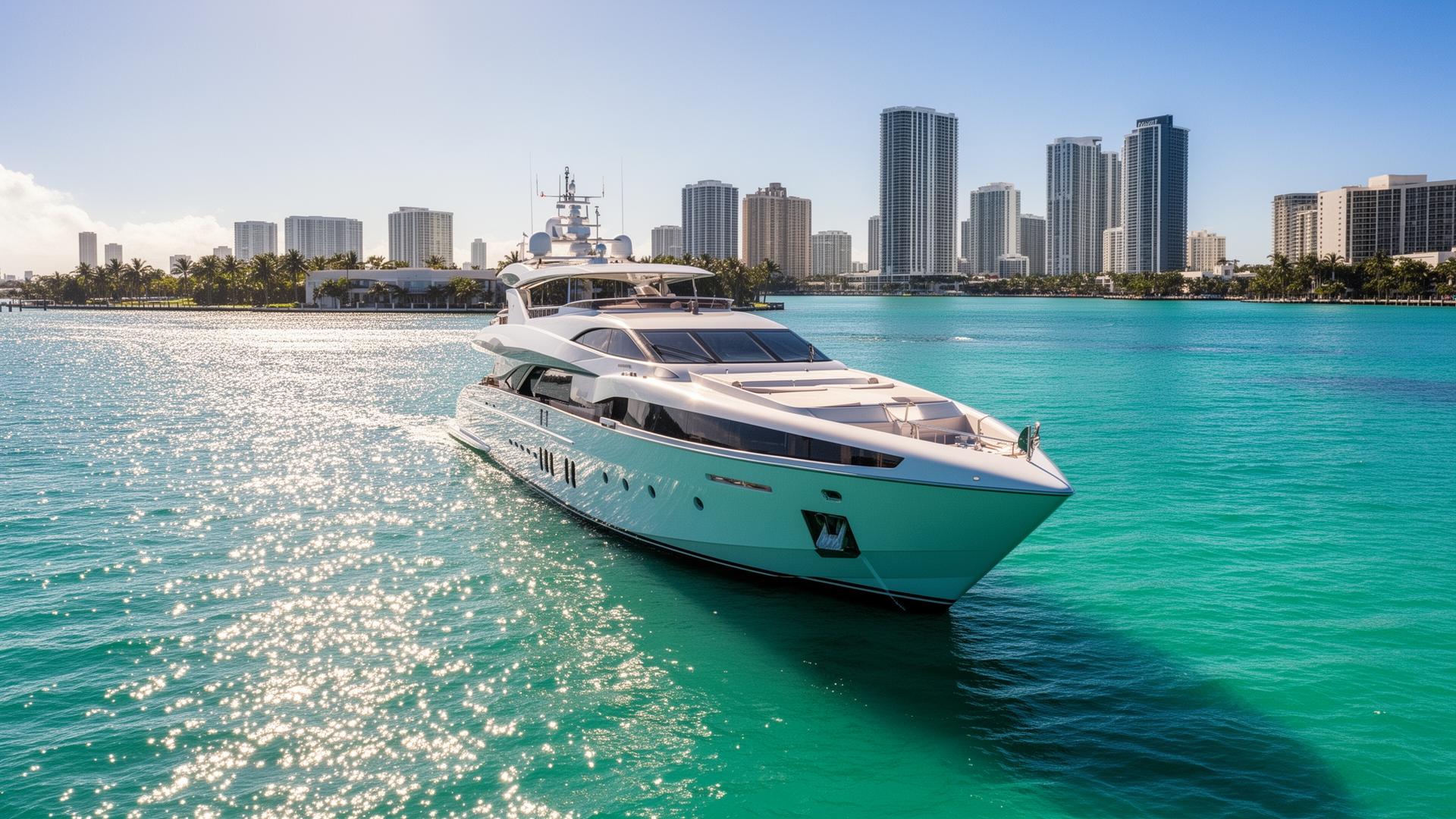
Miami yacht club living: what to underwrite in a home with marina access
If you are buying a Miami home for the water access, the house is only half the asset. The other half is the slip, the dock, the seawall, and the water it sits on, and each of those carries its own title question, permit history, and repair liability. Before you price the premium a waterfront listing asks over a comparable inland house, work through five items: how the slip conveys (deeded, leased, or a membership), the fixed-bridge clearance between the dock and open water, whether the dock is permitted through Miami-Dade and the Army Corps of Engineers, the age and condition of the seawall, and the flood-insurance carry under FEMA's current pricing. Any one of these can move value more than a kitchen renovation. The bridge-clearance question in particular is the item buyers most often skip, and it is the one that can quietly cap what you are allowed to keep at the dock.
Last updated: July 2026
The slip is a separate question from the house
Water access conveys in three broadly different ways, and the difference changes what you own and what you can finance.
A deeded slip is real property attached to the title. It conveys with the home when you sell, it can usually be pledged to a lender as part of the collateral, and you are not exposed to a landlord raising rent or declining to renew. It is the strongest form and typically the one that supports the largest price premium.
A leased slip is a contract, not ownership. Leases expire, may not be transferable, and often require the marina or association to approve an assignment at closing. If the lease is short-dated or non-assignable, the water access you are paying for may not follow you or your buyer, and that is a real underwriting risk rather than a formality.
A marina or yacht club membership grants use rights, sometimes an assigned slip in perpetuity, through a membership certificate or an association that owns the docks and common areas. Read the governing documents for transfer rules, assessments, and whether the right is personal to you or runs with the home.
Get the conveyance type in writing before you underwrite the premium. A private dock behind a house in Coconut Grove is a different asset from a leased transient slip a mile away, even if both are marketed as "marina access."
Bridge air draft is the most under-priced item on the water
Here is the diligence step buyers skip most often. A dock is only as useful as the largest boat that can actually reach open water from it, and fixed bridges set a hard ceiling on that. On the Atlantic Intracoastal Waterway the fixed bridges are built to a standard vertical clearance of 65 feet, with a notable Miami exception: the Julia Tuttle Bridge carries a reported clearance of about 56 feet [1].
Air draft is the height from the waterline to the top of the boat, including the mast, antennas, and hardtop. If the route from a given dock to Biscayne Bay or the ocean passes under a fixed span, the clearance of that span, not the depth of the slip, defines the boat that can live there. A sailboat that will not clear a 56-foot bridge has to detour, in some cases running offshore between Port Everglades and Government Cut, which is a materially different ownership experience than a straight run to the ocean.
Map the actual water route from the dock to open water and confirm every fixed bridge clearance along it before you assign any premium to the boating use. A home marketed to sport-fishing or sailing buyers whose route is capped by a low bridge should not carry the same water premium as one with an unobstructed run.
Docks need DERM, the state, and the Army Corps to sign off
A dock, pier, boatlift, or seawall work in Biscayne Bay is regulated construction over sovereign submerged land, not a backyard project. Properties along the tidally connected parts of the bay generally require a Miami-Dade County Class I permit, a State of Florida authorization, and a U.S. Army Corps of Engineers permit, since most submerged land beneath the bay is owned by the State of Florida and its use requires consent [2].
What this means in diligence: ask for the permits on file for the existing dock and lift, and confirm the structure as built matches what was approved. An unpermitted or non-conforming dock is a liability you inherit. It can trigger enforcement, force removal or costly retroactive permitting, and complicate any future expansion. If part of the value story is adding or enlarging a dock or lift, treat that as a permitting question with an uncertain outcome, not a given, and price it accordingly.
Seawall condition is a deferred-capex liability
Every waterfront home with a seawall is carrying a large future repair item, and the only question is when it comes due. Full seawall replacement (new panels, tiebacks, deadmen, and cap) runs on the order of $500 to $1,200 per linear foot in the Florida market, with repairs varying widely by material, damage, and access [3].
Do the arithmetic on your own lot. A 75-foot waterfront line at replacement cost is a five-to-six-figure obligation sitting behind the house whether or not it appears on the inspection summary. A tired seawall with a near-term replacement horizon should come off your offer the same way a failing roof would. Look for cap cracking, rust staining, voids or sinkholes behind the wall, and tilting, and get a marine-contractor opinion on remaining life rather than relying on a general home inspection. Local elevation rules can also require engineered plans and drive the number higher, so treat any quoted range as a floor.
What a public slip costs, as a benchmark
When a listing bundles "included" dockage into the price, you need an outside number to test it against. Miami-Dade County and the City of Miami operate public marinas that publish per-foot rate schedules, which gives you a market benchmark for what water access is worth on its own. Transient dockage at the public marinas runs roughly $2.75 per foot per day as a directional figure, before tax, with monthly and annual rates published on the official schedules [4].
Use that to sanity-check the premium. If a home is asking a large amount extra for a slip, compare it against the annualized cost of renting equivalent footage at a public or private marina nearby. Sometimes the deeded slip clearly earns its premium. Other times the cheaper answer is a modestly priced inland or fixed-bridge home plus a rented slip sized to the boat you actually own.
Flood zone and Risk Rating 2.0 carry
Waterfront proximity is priced directly into flood insurance now. Under FEMA's Risk Rating 2.0, the National Flood Insurance Program no longer sets premiums off flood-zone maps alone. Pricing reflects property-specific features including distance to water, the type and frequency of flooding, foundation type, the height of the lowest floor relative to base flood elevation, and the structure's replacement cost value [5].
For a home a few feet from the bay, that combination tends to push carry up rather than down. Pull the actual current premium and any elevation certificate during diligence rather than assuming a prior owner's grandfathered rate transfers cleanly, because Risk Rating 2.0 prices the individual structure. Fold that annual number into your carry alongside taxes and any association dues before you decide the waterfront premium pencils. The same discipline applies whether you are looking at Key Biscayne or a canal-front lot elsewhere on the bay.
Frequently asked questions
What is the difference between a deeded slip and a leased slip? A deeded slip is real property that conveys with the home and can generally be financed as part of the collateral. A leased slip is a contract that can expire, may not transfer at sale, and often needs marina or association approval to assign. Confirm which one you are buying before you pay a premium for it.
Why does bridge clearance matter so much? Fixed bridges set a hard ceiling on the air draft, the total height, of any boat that can reach open water from a dock. Atlantic ICW fixed bridges are built to a 65-foot standard, but Miami's Julia Tuttle Bridge is reported at about 56 feet [1]. If your route passes under a low span, the bridge, not the slip, defines the boat you can keep.
Do I need a permit to build or replace a dock in Miami? Generally yes. Work in Biscayne Bay usually requires a Miami-Dade Class I permit, a state authorization, and a U.S. Army Corps of Engineers permit, because most submerged land is state-owned [2]. Verify that the existing dock is permitted and matches what was approved.
How much should I budget for the seawall? Full replacement runs on the order of $500 to $1,200 per linear foot in Florida, and repairs vary with material and damage [3]. Multiply by your waterfront footage and get a marine-contractor opinion on remaining life, then treat a near-term replacement like any other deferred capital item in your offer.
Will flood insurance be more expensive on the water? Usually. FEMA's Risk Rating 2.0 prices each structure on features that include distance to water and replacement cost, so a home close to the bay tends to carry a higher premium [5]. Pull the current quote before you close.
Gabriel
Sources
- Soundings, "Q&A: Bridge Heights on the ICW"
- Miami-Dade County, Class I Permit for Coastal Construction (permit information)
- HomeGuide, "2026 Seawall Costs: Bulkhead & Lake Seawall Costs Per Foot"
- City of Miami, Marina Rates
- FEMA, "NFIP's Pricing Approach (Risk Rating 2.0)"
Gabriel A. Moyers, PA. eXp Realty. Florida License #3407280. Equal Housing Opportunity. This article is general information as of July 2026 and is not legal, tax, or financial advice. Verify current figures against authoritative sources before acting.
Thinking of selling your luxury property in Miami? Find out what your home is worth.
Get Your Home ValuationLooking for your dream home in Miami? Take our personalized home search quiz.
Start Your Home Search Quiz